


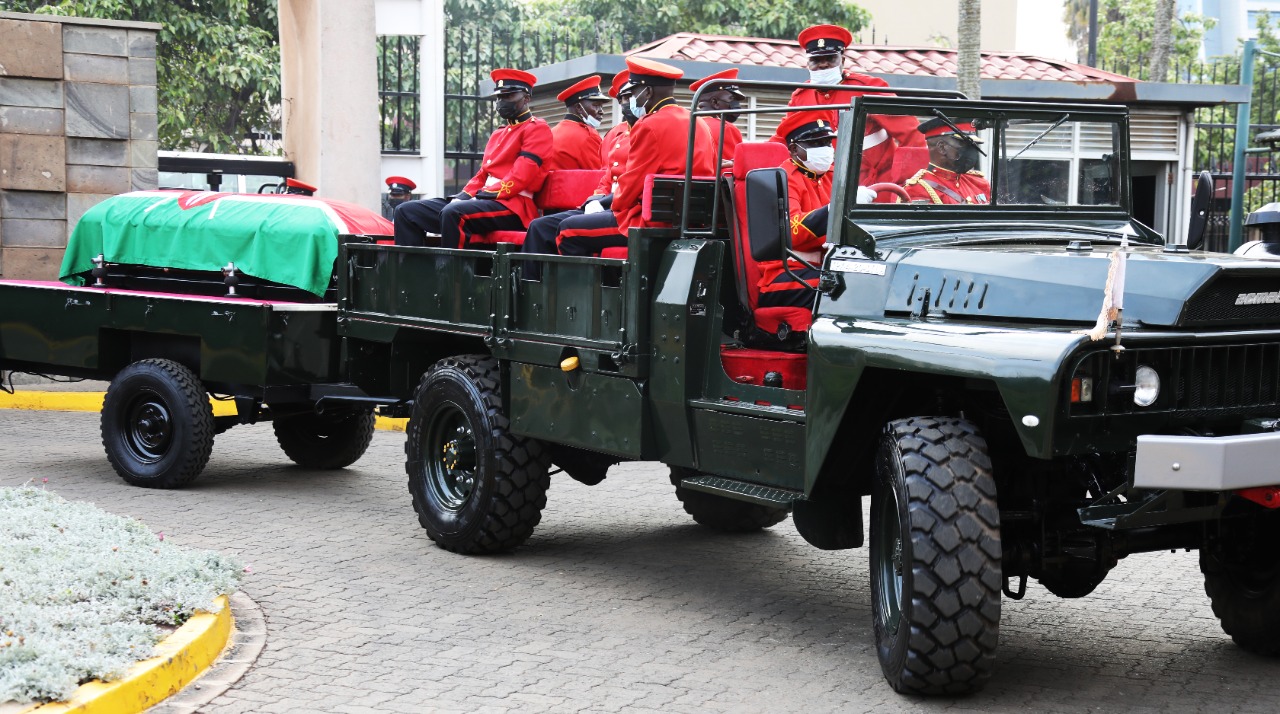
Kenya’s state funerals reflect the nation’s deepest expressions of respect and unity, blending military precision, political symbolism, and national mourning. Since independence, only a handful of leaders have been accorded full military honors — beginning with Mzee Jomo Kenyatta in 1978, followed by Daniel arap Moi (2020), Mwai Kibaki (2022), General Francis Ogolla (2024), and Raila Amolo Odinga (2025).
Each ceremony tells the story of Kenya’s evolving identity, discipline, and gratitude to its statesmen.
1. Jomo Kenyatta (1978) – The First State Funeral
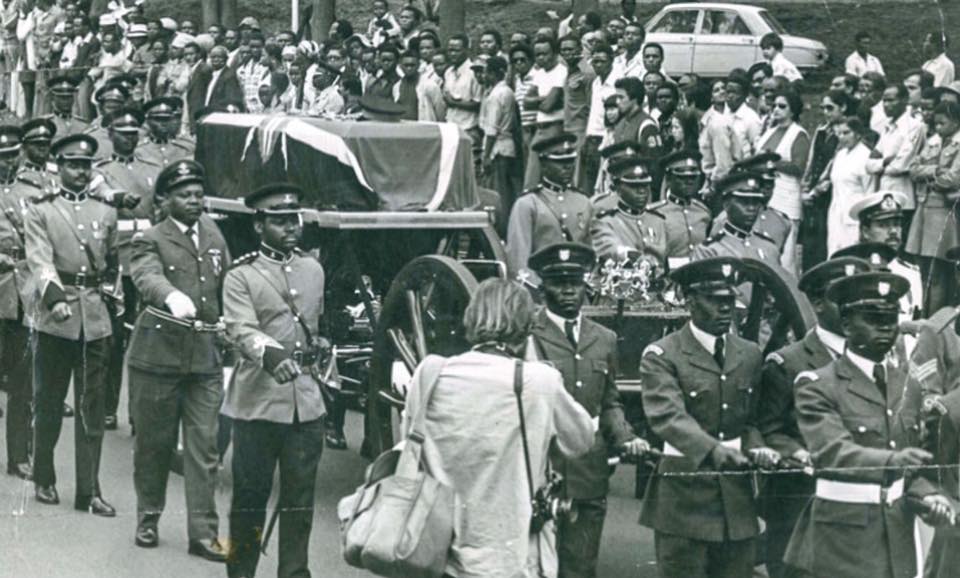
The death of Mzee Jomo Kenyatta, Kenya’s founding president, on August 22, 1978, set the blueprint for all future state funerals. His body was flown from Mombasa to Nairobi by the Kenya Air Force that same morning.
With no prior state funeral experience, General Jackson Mulinge tasked Lt. Col. Daniel Opande to develop Kenya’s first ceremonial plan. Opande, after consulting with Maj. Joel Mumbo, obtained Royal British Army funeral guidelines that became the foundation for Kenya’s state funeral protocols.
The United Kingdom provided the gun carriage and blank ammunition for the 21-gun salute. A five-member British advisory team trained the Kenya Army in ceremonial drills. On August 31, 1978, Kenyatta’s flag-draped casket was pulled by a tri-service bearer party — drawn from the Army, Navy, and Air Force — from State House to Parliament Buildings, where he was laid to rest.
Thousands lined the streets of Nairobi, and the Kenya Defence Forces (KDF) led the procession in perfect synchrony. The ceremony introduced key traditions — the gun carriage, full military honors, and 24-hour mausoleum guard — that remain to this day.
2. Daniel arap Moi (2020) – The Modern Military Farewell
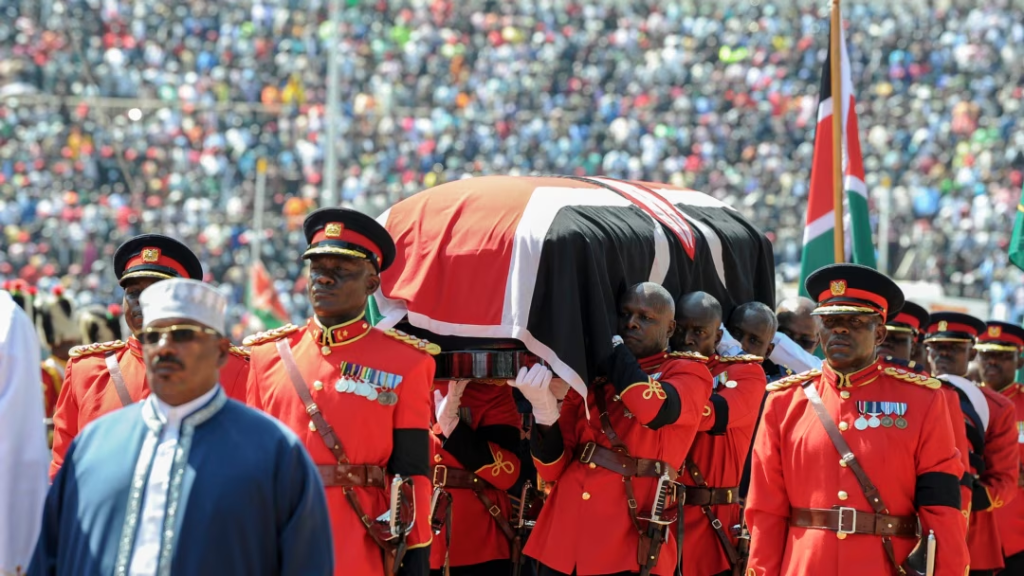
Forty-two years later, former President Daniel Toroitich arap Moi received a similar honor. Following his death on February 4, 2020, the Kenya Defence Forces revived the traditions established in 1978.
Moi’s body was placed on an ACMAT VLRA tactical truck, a French-made military vehicle converted into a ceremonial gun carriage, and towed from Lee Funeral Home to Parliament Buildings.
The 19th Battalion, Kenya Artillery, led the escort, while thousands of citizens viewed his body over three days. The final state funeral at Nyayo Stadium included a 19-gun salute, a fly-past formation, and military pallbearers. Moi was later buried at his Kabarak home with full honors — the first modern-era funeral conducted under the 1978 protocol.
3. Mwai Kibaki (2022) – Dignified Farewell to a Reformer
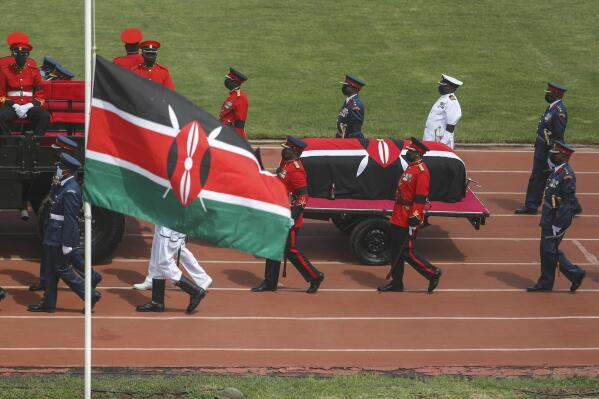
In April 2022, Kenya honored President Emilio Mwai Kibaki, the country’s third president, with an equally solemn military farewell.
The KDF once again used the ACMAT VLRA gun carriage, the same one that had carried Moi’s remains two years earlier. Kibaki’s casket, draped in the national flag, was transported from Lee Funeral Home to Parliament Buildings and then to Nyayo Stadium for the national service.
The military escort included the Kenya Army Band, Air Force officers, and Navy representatives, symbolizing unity across the armed forces. Kibaki’s state funeral concluded with a 21-gun salute and a “Last Post” ceremony before his burial at Othaya, Nyeri County.
4. General Francis Ogolla (2024) – Military Honors for a Fallen Commander
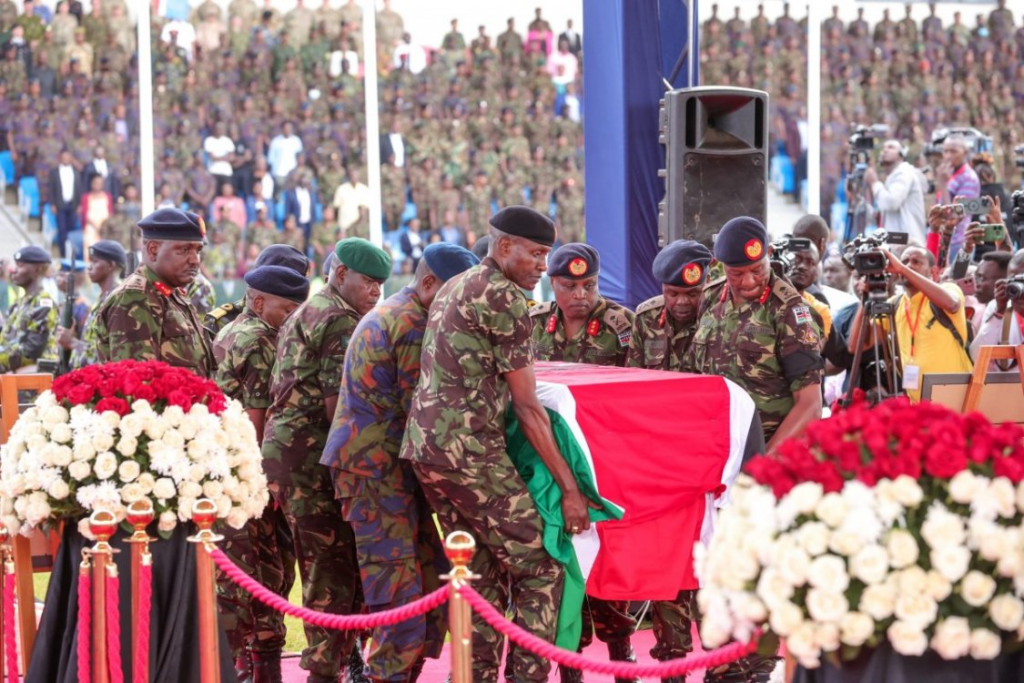
The death of Chief of Defence Forces (CDF) General Francis Omondi Ogolla in a helicopter crash on April 18, 2024, marked a rare state funeral for a serving military officer.
The Kenya Defence Forces organized an elaborate ceremony befitting his rank. His flag-draped casket was mounted on a KDF gun carriage and moved from Mashujaa Funeral Home to the Ulinzi Sports Complex, Lang’ata, for a national memorial service attended by President William Ruto, senior military officers, and foreign envoys.
Later, the same gun carriage carried his remains to Ngi’ya Village, Siaya County, where he was laid to rest.
The funeral featured a 19-gun salute, a missing wingman fly-past by the Air Force, and the playing of “The Last Post”, marking the end of his service to the Republic. It was the first time a military commander-in-chief was buried with full state honors.
5. Raila Amolo Odinga (2025) – A Statesman’s Final Journey
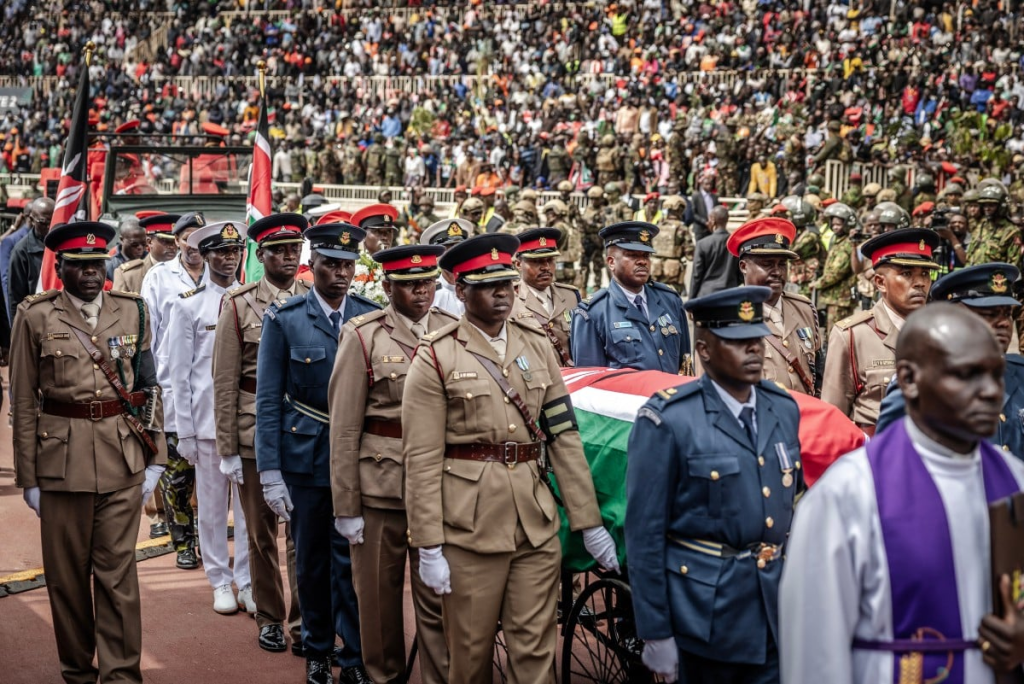
When former Prime Minister Raila Amolo Odinga died in India on October 15, 2025, Kenya and the world paused to honor one of Africa’s longest-serving democracy icons.
His body was flown back aboard a special Indian Air Force aircraft and accorded full military honors upon arrival at Jomo Kenyatta International Airport (JKIA). The KDF gun carriage, escorted by the military band, carried the casket from JKIA to Lee Funeral Home, and later to Moi International Stadium, Kasarani, for public viewing.
A state funeral service was held at Nyayo Stadium, attended by President William Ruto, former President Uhuru Kenyatta, and several African heads of state, including Somalia’s Hassan Sheikh Mohamud and Ethiopia’s Taye Atske Selassie.
Afterward, the body was flown to Kisumu, where a regional memorial was held, before being transported to Opoda Farm, Bondo, for burial beside his father, Jaramogi Oginga Odinga.
The military guard of honor, national anthem, and 21-gun salute reflected the respect earned by a man who shaped Kenya’s political destiny for six decades.
Legacy of Kenya’s State Funerals
Kenya’s state funeral protocol, first developed in 1978, has evolved into one of Africa’s most disciplined ceremonial frameworks. It represents the intersection of tradition, military order, and public mourning.
The use of the gun carriage, flag-draped caskets, and 21-gun salutes symbolize not only loss but also continuity — a reminder that service to the nation transcends life itself.
From Kenyatta’s foundational farewell to Raila Odinga’s unifying sendoff, Kenya’s state funerals stand as powerful national rituals — moments when political divides vanish and the nation speaks with one voice in honor of its fallen heroes.
State Funerals in Kenya (1978–2025)
| No. | Leader / Figure | Year | Position / Title | Main Venues | Gun Salute | Key Military Feature | Unique Aspects / Notes |
|---|---|---|---|---|---|---|---|
| 1 | Mzee Jomo Kenyatta | 1978 | 1st President of Kenya | State House → Parliament Buildings, Nairobi | 21-gun salute | British-supplied gun carriage pulled by tri-service bearer party (Army, Navy, Air Force) | First-ever Kenyan state funeral; UK provided gun carriage and ammunition; funeral manual created by Lt. Col. Daniel Opande; Idi Amin’s surprise arrival caused security stir |
| 2 | Daniel arap Moi | 2020 | 2nd President of Kenya | Lee Funeral Home → Parliament → Nyayo Stadium → Kabarak | 19-gun salute | ACMAT VLRA 4×4 gun carriage operated by 19th Battalion Kenya Artillery | Revival of 1978 state funeral traditions; thousands viewed body for three days; full military procession and national holiday |
| 3 | Mwai Kibaki | 2022 | 3rd President of Kenya | Lee Funeral Home → Parliament → Nyayo Stadium → Othaya, Nyeri | 21-gun salute | ACMAT VLRA tactical truck re-used from Moi’s funeral | Procession led by Brig. Jeff Nyagah; national unity theme; full honors accorded with military band and flag-draped casket |
| 4 | Gen. Francis Ogolla | 2024 | Chief of Defence Forces (CDF) | Mashujaa Funeral Home → Ulinzi Sports Complex → Ngi’ya Village, Siaya | 19-gun salute | KDF ceremonial gun carriage and air force fly-past | First serving military chief accorded full state honors; featured “missing wingman” formation and national memorial service |
| 5 | Raila Amolo Odinga | 2025 | Former Prime Minister & ODM Leader | JKIA → Lee Funeral Home → Kasarani → Nyayo Stadium → Kisumu → Bondo | 21-gun salute | KDF gun carriage escorted by military band | First opposition leader accorded a full state funeral; attended by multiple African presidents; nationwide mourning declared |
Highlights
- Gun Carriage Tradition: Introduced in 1978 for Jomo Kenyatta and preserved through every subsequent state funeral.
- Military Honors: Each state funeral includes flag-draped caskets, gun salutes, pallbearers, and The Last Post.
- Venues of Significance: Parliament Buildings, Nyayo Stadium, Ulinzi Sports Complex, and Opoda Farm in Bondo remain iconic sites of national mourning.
- Evolution of Protocol: Kenya’s state funeral manual, established by Lt. Col. Daniel Opande in 1978, continues to guide the Ministry of Defence and KDF in every modern ceremony.


