


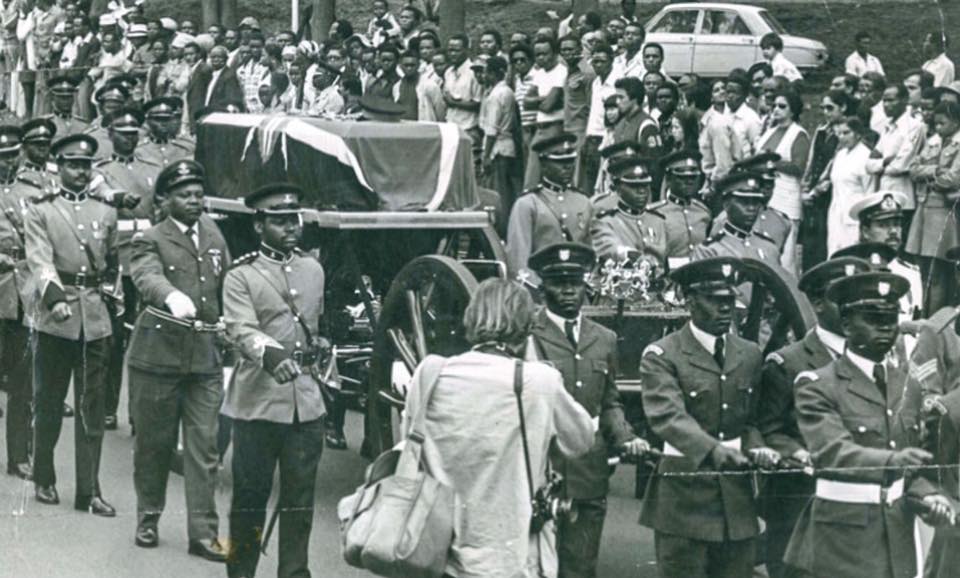
The death of Mzee Jomo Kenyatta, Kenya’s founding president, in August 1978 marked a turning point in the country’s ceremonial and military history. His funeral on August 31, 1978, became Kenya’s first full state funeral with military honors, introducing traditions that would later be replicated for Presidents Daniel arap Moi, Mwai Kibaki, General Francis Ogolla, and Raila Amolo Odinga.
Early Planning and British Involvement
Preparations for Kenyatta’s funeral began long before his death. As early as 1968, following a heart attack, British and Kenyan officials started confidential contingency planning for the inevitable state funeral. The United Kingdom remained deeply involved due to its ongoing advisory relationship with Kenya’s post-independence military.
When Kenyatta died on August 22, 1978, Britain supplied both the gun carriage used in the procession and the blank ammunition for the 21-gun salute. The Foreign and Commonwealth Office in London coordinated the overflight and shipment of the military equipment, classified as “munitions of war.” Kenya’s government covered the full cost of logistics and ceremony.
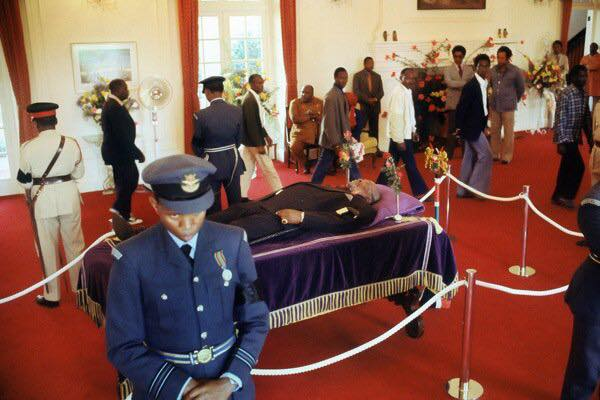
A five-member British advisory team — comprising military and civil service experts — was dispatched to Nairobi to guide the Kenya Army in ceremonial procedures. These advisors trained Kenyan troops in state funeral protocols, parade formations, and ceremonial escort duties.
Their involvement ensured that the ceremony adhered to international military standards while publicly reinforcing Kenya’s post-colonial ties with Britain.
Lt. Col. Daniel Opande and Kenya’s Military Preparations
At the time of Kenyatta’s death, Kenya’s military had no prior experience conducting a state funeral. The task fell to Lt. Col. Daniel Opande, then Staff Officer in charge of ceremonial duties at Army Headquarters. Working under General Jackson Mulinge, he was directed to develop Kenya’s first full military funeral plan within days.
Lacking reference material locally, Opande contacted Maj. Joel Mumbo, Kenya’s military attaché in London, who obtained Royal British Army funeral guidelines. Adapting these documents, Opande and a planning team at the Department of Defence (DoD) designed Kenya’s own blueprint.
A joint civilian-military task force, including representatives from the Office of the President and Ministry of Foreign Affairs, met daily to finalize logistics, security, and protocol for the visiting heads of state. The military took charge of pallbearing, honor guards, and crowd control, assisted by the Kenya Police Service.
The Gun Carriage and Procession
The military gun carriage, a four-wheeled field artillery carrier, was reportedly the same vehicle used in the 1965 funeral of British Prime Minister Winston Churchill. In Kenya, it was pulled manually — not by horses, but by a tri-service bearer party drawn from the Army, Navy, and Air Force. This mirrored the British naval tradition where sailors pull the gun carriage instead of animals.
The casket, draped in Kenya’s national flag, bore the coat of arms, and was escorted by soldiers in formation. The Kenya Army Band played slow marches as the Kenya Air Force, Navy, and Police formed a unified escort.
The funeral procession departed State House and moved solemnly through Nairobi’s streets to the Parliament Buildings, where Kenyatta would be buried. Thousands of Kenyans lined the route, waving flags and singing hymns, as military precision met raw national emotion.
International Attendance and Security Challenges
The ceremony drew heads of state and global dignitaries. Among them was Ugandan President Idi Amin, whose unexpected arrival caused a momentary security crisis. According to Lt. Gen. (Rtd) Daniel Opande, Amin landed unannounced in two Ugandan military helicopters, bypassing normal diplomatic protocol.
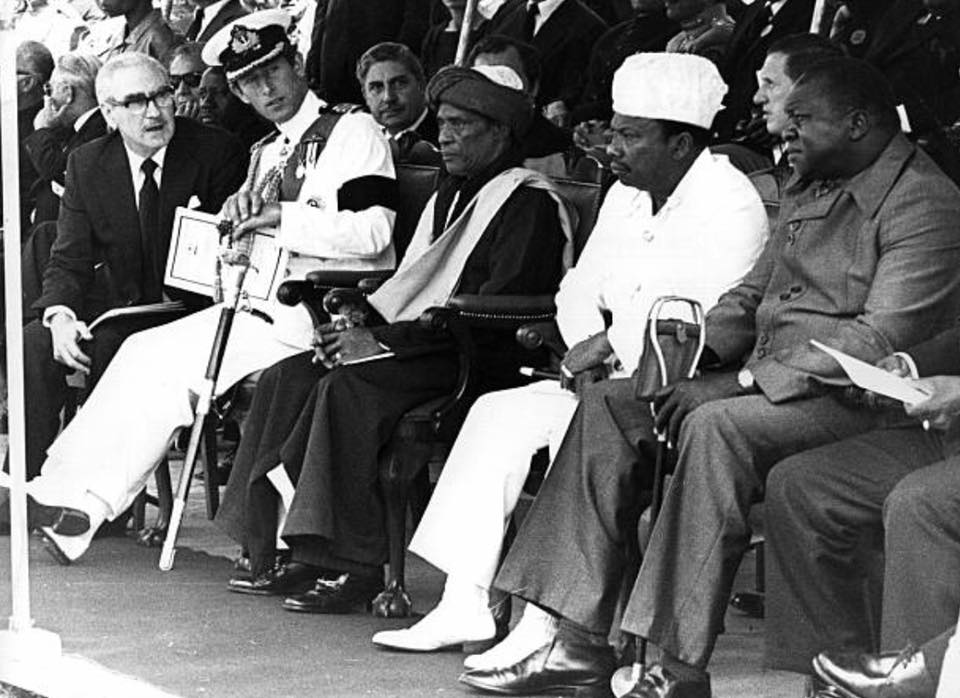
Amin created further commotion by walking from the Hilton Hotel to the funeral venue near Parliament, drawing massive crowds and alarming security officers. Despite this, the military kept the procession on schedule — a testament to their discipline and newly acquired ceremonial expertise.
Burial and Military Honors
Upon arrival at Parliament Grounds, a 21-gun salute was fired, followed by the playing of “The Last Post” to signal the end of service. The tri-service bearer party lowered the casket into the mausoleum, marking the first time a Kenyan president was laid to rest with full military honors.
The Jomo Kenyatta Mausoleum, still guarded 24 hours by the Kenya Defence Forces, remains one of the most sacred national monuments.
Legacy and Institutionalization of the State Funeral Protocol
After the funeral, Lt. Col. Opande and Lt. Col. Kipsaita compiled a detailed document outlining all procedures used. This manual was officially adopted by the Ministry of Defence as Kenya’s state funeral protocol, providing a reference for future ceremonies.
The 1978 event became the template for all subsequent state funerals — from Daniel arap Moi (2020) and Mwai Kibaki (2022) to General Francis Ogolla (2024) and Raila Odinga (2025). Each ceremony retained the signature gun carriage procession, military escort, and gun salute — traditions born out of the Kenyatta funeral.
Historical Significance
Kenyatta’s state funeral marked Kenya’s transition from colonial guidance to national command. The coordination between British advisors and Kenyan officers symbolized both continuity and independence.
The gun carriage, introduced in 1978, became a permanent fixture of national mourning — a moving symbol of discipline, unity, and reverence. Its presence in every subsequent state funeral serves as a living tribute to Kenya’s first president and the military officers who crafted the blueprint for honoring the nation’s greatest leaders.


