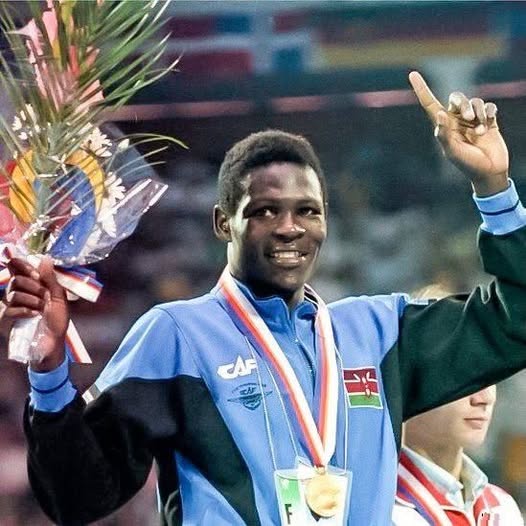
Robert Wangila’s burial in 1994 became the subject of a complex legal and family dispute, as competing claims over his next of kin, religious wishes, and place of burial delayed funeral arrangements following his death in the United States.
Before his body was repatriated to Kenya, a woman identified as Grace Akinyi, whom Wangila had married before relocating to the United States, was officially recognized by the government as his lawful widow. Wangila had named her as his next of kin in his will, placing her at the center of burial arrangements and communication with authorities in the United States.
Robert Wangila Burial and Legal Recognition
Grace Akinyi was included in the national funeral committee and was expected to receive Wangila’s body on behalf of the family. As the legally designated next of kin, she was responsible for implementing his burial wishes.
According to his will, Wangila had converted to Islam about a year before leaving Kenya and directed that he be buried according to Islamic rites. This required arrangements for a Muslim cemetery, religious officials, and adherence to specific burial timelines.
Robert Wangila Burial Dispute and Family Claims
However, disagreements soon emerged within Wangila’s family. It was alleged that Wangila had separated from Akinyi after moving to the United States. Family members argued that she had remarried, raising questions about her status.
Wangila had also married another woman, Queen Noble, in Las Vegas on May 16, 1992, further complicating the situation and suggesting a possible separation from Akinyi, despite her inclusion in his will.
These developments led to attempts by family members to challenge Akinyi’s authority over the burial process.
Robert Wangila Burial and High Court Intervention
On August 5, 1994, Wangila’s mother, Eunice Moraa Mabeche, together with John Mabeche, who claimed to be his father, and Karani Ang’ira Kanyimbo, who also claimed paternity, filed a case at the High Court.
They sought to stop Akinyi from proceeding with the burial. Justice Andrew Hayanga granted a temporary injunction, halting burial plans pending further hearing.
The case introduced competing claims not only over burial rights but also over Wangila’s parentage.
Competing Burial Claims from Busia
At the same time, another legal case was filed by three individuals from Busia, including John Nandike Bwire, Washington Wafula, and David Wandera.
They claimed to represent Daudi Magero Obuke, whom they described as Wangila’s biological father. Their petition sought to prevent Wangila’s burial in Kisii and instead have him buried in Busia according to Samia customs.
The two cases were later consolidated, and a hearing date was set for August 11, 1994.
Financial Dispute Over Repatriation Costs
The burial dispute was further complicated by financial claims related to the return of Wangila’s body. Akbar Muhammed, a boxing promoter who had facilitated Wangila’s move to the United States in 1989, stated that he had arranged for the repatriation.
Muhammed demanded payment of US$25,000, equivalent to approximately KSh 1 million at the time. He said the amount covered embalming and transportation costs and sought payment from Akinyi and members of the funeral committee.
Robert Wangila Burial and Religious Intervention
The Supreme Council of Kenya Muslims (SUPKEM) also entered the case, advocating for burial in accordance with Islamic rites. The organization proposed Kariokor cemetery as the appropriate burial site.
Their involvement underscored the importance of Wangila’s religious conversion and the need to respect his stated wishes.
Legal Teams and Representation
The case involved multiple legal teams representing different parties. Akinyi was represented by lawyers including Murtaza Jaffer, Nancy Baraza, Abida Ali, Swaleh Kanyeki, Grace Githu, Memba Muriuki, and Betty Mwenesi.
Other parties were represented by prominent lawyers such as Paul Buti, Charles Nyachae, Abel Ogenche, Patrick Kiage, Ahmednasir Abdullahi, Betty Murungi, and Dr. John Khaminwa.
Broader Implications of Robert Wangila Burial Dispute
The dispute highlighted the complexities surrounding burial rights in cases involving multiple legal, cultural, and religious claims. It also raised questions about the enforcement of wills and recognition of next of kin in Kenyan law.
Outlook on Historical Significance
The Robert Wangila burial dispute remains one of the most notable legal cases involving a public figure in Kenya’s history. It brought together issues of family, law, religion, and identity, reflecting broader societal dynamics at the time.