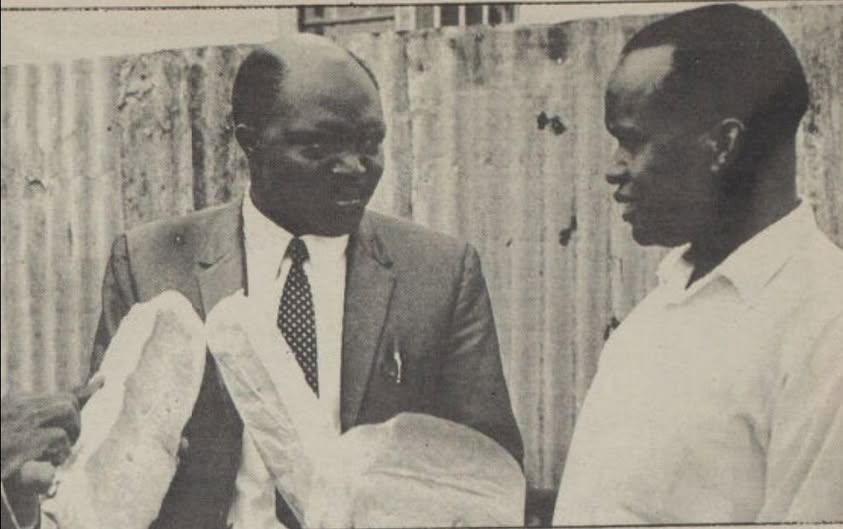
Robert Magotsi emerged as one of the earliest African entrepreneurs in Kakamega Town after establishing the first African-owned bakery in the area, marking a significant shift in local enterprise during the late colonial period. His journey from small-scale bread production to factory expansion reflects broader efforts by Africans to enter sectors previously dominated by European and Asian businesses.
Magotsi began his baking venture in 1951 at Shikulu market, where he used self-taught skills to produce bread which he distributed by bicycle. At the time, African participation in commercial baking remained limited, and access to formal training was rare.
Robert Magotsi Early Beginnings in Kakamega
Robert Magotsi’s early years in business were defined by modest resources and manual effort. He baked bread himself and transported it to customers by bicycle, operating within a local market environment that was largely informal.
Despite these constraints, his products gained traction among customers. However, Magotsi soon recognized the limitations of operating without formal training, particularly when competing with established bakeries that served European and Asian clientele.
As a result, he concluded that professional skills would be essential to expand his business and improve product quality.
Robert Magotsi Training in Britain
In 1961, Magotsi travelled to the United Kingdom to pursue formal training in baking. He enrolled at Borough Polytechnic near London Bridge, an institution that later became London South Bank University.
This move represented a significant investment in skill development. At a time when few African entrepreneurs had access to overseas training, Magotsi used personal savings to acquire technical knowledge that would enhance his competitiveness.
His training provided exposure to modern baking techniques, equipment, and production standards, which were largely unavailable locally.
Robert Magotsi Business Expansion After Return
Upon returning to Kenya, Magotsi expanded his bakery operations in Kakamega Town. He transitioned from small-scale production to a more structured business model, employing approximately 30 workers.
This expansion marked a shift from individual entrepreneurship to enterprise-level production. It also contributed to job creation within the town, supporting local economic activity.
The bakery became one of the few African-owned businesses capable of competing with established operators.
Robert Magotsi and ICDC Financing
To support further growth, Magotsi secured a loan of 250,000 shillings from the Industrial and Commercial Development Corporation (ICDC). The funding enabled him to establish a baking factory in Kakamega Town.
ICDC loans played a key role in supporting African entrepreneurs during the transition from colonial rule to independence. For Magotsi, the financing allowed him to scale production and invest in infrastructure.
Despite these efforts, demand for bread continued to exceed supply, highlighting both the success of his enterprise and the growing market for locally produced goods.
Robert Magotsi and Changing Business Landscape
Magotsi’s success reflected broader changes in Kenya’s economic structure. African entrepreneurs were increasingly entering sectors that had previously been restricted.
His ability to move from informal trade to industrial production demonstrated the impact of training, access to capital, and market demand.
At the same time, his business illustrated the challenges faced by early entrepreneurs, including competition, limited infrastructure, and rising demand.
Broader Impact of Robert Magotsi
The establishment of the first African bakery in Kakamega contributed to local economic development. It provided employment, increased access to bread, and demonstrated the viability of African-owned enterprises.
Magotsi’s journey also highlighted the importance of skill acquisition. His decision to seek training abroad positioned him to compete effectively in a changing market environment.
Outlook on Robert Magotsi Legacy
Robert Magotsi’s story remains part of Kakamega’s economic history. His progression from bicycle-based trade to factory-level production reflects the evolution of African entrepreneurship during a critical period.
His legacy continues to be referenced in discussions on business development, local industry, and economic empowerment in Kenya.