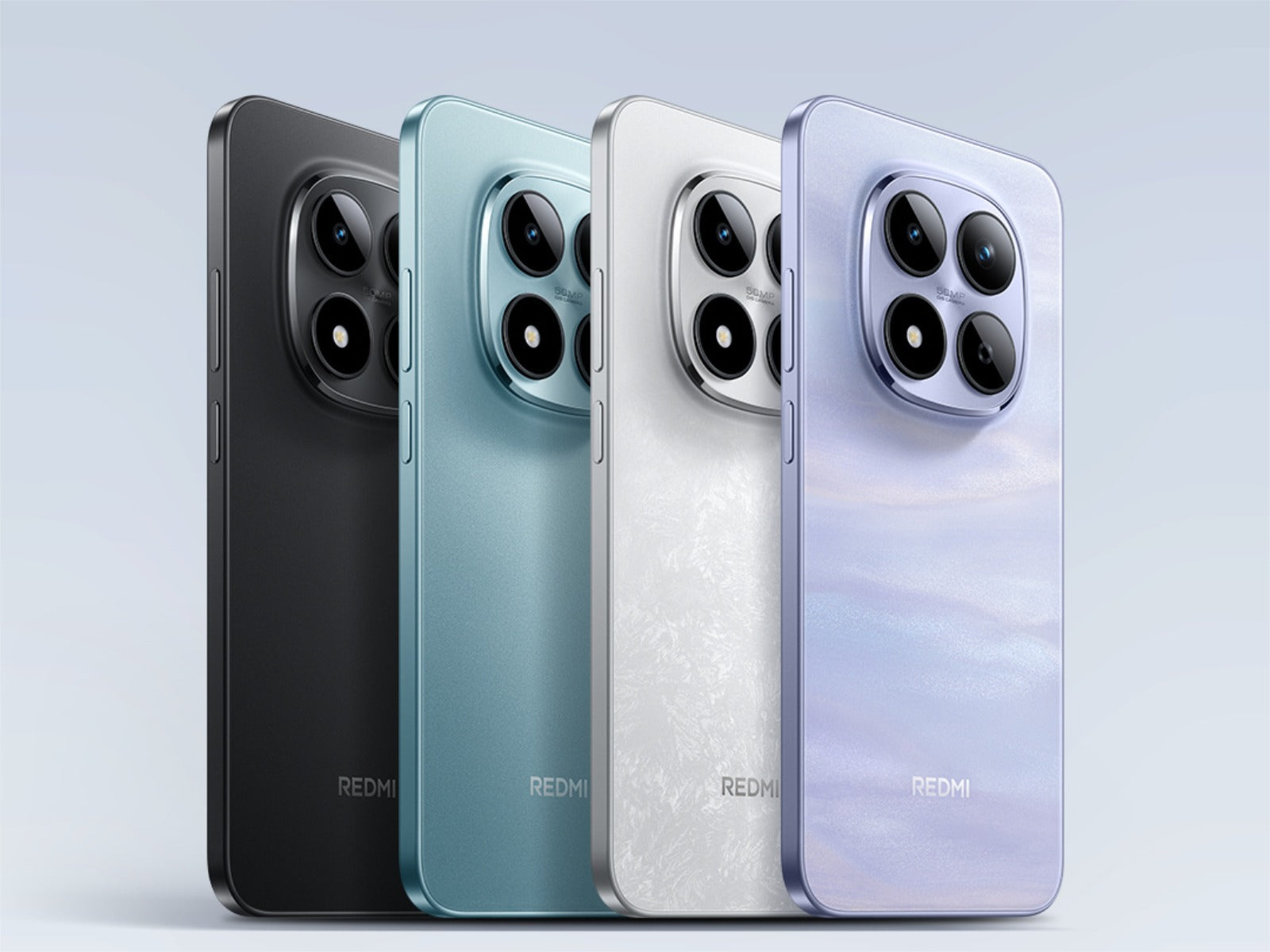
The Redmi Note 15 Pro 5G review shows Xiaomi doing what it often does best: refining a winning formula without changing too much. This phone is not the flashiest in the Redmi Note 15 family, but it lands in a practical middle position with a bright AMOLED display, a very large battery, a durable body, and a dependable main camera. On paper, it looks like a sensible mid-range choice rather than an attention-grabbing one.
That is exactly how it behaves in real use too. The Redmi Note 15 Pro 5G is not trying to outmuscle performance-focused rivals or beat camera-heavy flagships. Instead, it tries to be solid in nearly every area. It succeeds in many of them, though a few compromises remain obvious, especially with the ultrawide camera, trimmed AI features, and pricing that feels a little too ambitious at launch.
Redmi Note 15 Pro 5G at a glance
| Feature | Redmi Note 15 Pro 5G |
|---|---|
| Display | 6.83-inch AMOLED, 1280 x 2772, 120Hz, HDR10+, Dolby Vision |
| Chipset | MediaTek Dimensity 7400 Ultra |
| RAM and storage | Up to 12GB RAM, up to 512GB UFS 2.2 |
| Rear cameras | 200MP main, 8MP ultrawide |
| Front camera | 20MP |
| Battery | 6580mAh |
| Charging | 45W wired, 22.5W reverse wired |
| Software | Android 15, HyperOS 2 |
| Durability | Gorilla Glass Victus 2, IP68/IP69K |
| Connectivity | 5G, eSIM, Wi-Fi 6, NFC, IR blaster |
Design and build quality
Xiaomi changed the shape of the Redmi Note 15 Pro 5G more than the raw specs might suggest. The phone now uses a flatter design with a flat front, flat back, and a wider, more uniform side frame. That gives it a more modern look than the previous model and also makes screen protector fitting easier.
The build is one of the phone’s strongest points. Gorilla Glass Victus 2 protects the front, the body feels very sturdy, and Xiaomi gives it IP68 and IP69K protection. The company also claims strong drop resistance, which helps the Redmi feel tougher than many midrange rivals. Even though the frame is plastic, it does a convincing job imitating brushed metal in both look and feel.
At 210 grams, it is not a light phone, but the extra weight is easier to accept once you remember the large 6580mAh battery inside. The color-matched frame and clean camera island also help the phone look more polished than cheap. Overall, this is a well-built and practical design rather than an especially exciting one.
Display quality
The display is one of the biggest reasons to consider this phone. Xiaomi gives the Redmi Note 15 Pro 5G a 6.83-inch 12-bit AMOLED panel with a sharp 2772 x 1280 resolution, 120Hz refresh rate, Dolby Vision, HDR10+, and Widevine L1 support. That is an excellent set of specs for the segment.
In testing, the screen reached over 830 nits manually and around 1900 nits in auto mode under bright light. Those are very strong results, and they help the phone stay comfortable outdoors. Color presentation is also a strength, with little visible banding and very good DCI-P3 support.
Refresh rate handling is flexible too. The phone can switch between 30Hz, 60Hz, 90Hz, and 120Hz in its adaptive mode, and there is also a custom mode for choosing which apps can use the highest refresh rate. It is not an LTPO panel, so it does not offer the most advanced adaptive behavior, but it is still a strong display experience overall.
Battery life and charging
Battery life is another major highlight in this Redmi Note 15 Pro 5G review. Xiaomi uses a 6580mAh silicon-carbon battery, and the results are impressive. In standardized testing, the phone achieved about 15 and a half hours of active use, which is comfortably strong for this class.
That translates well to daily life. This is the kind of phone that should get most users through a full day very easily, with enough reserve left over to avoid battery anxiety. Xiaomi also includes battery protection features like charge limits and smart charging behavior, which are increasingly useful on large-battery phones designed for long-term use.
Charging is decent rather than outstanding. The 45W wired charging gets the phone to 27% in 15 minutes and 47% in 30 minutes, with a full charge taking about 73 minutes. That is perfectly usable, but it does not stand out in a market where some rivals charge much faster. Reverse wired charging at 22.5W is a nice bonus.
Speakers and audio
The Redmi Note 15 Pro 5G uses a stereo speaker setup with one bottom-firing speaker and one top-firing speaker. Loudness is one of its main strengths. Xiaomi’s 400% volume boost lets the phone reach an “Excellent” loudness score, though sound quality suffers when you use that feature aggressively.
At more normal listening levels, the speakers sound much better. The soundstage is reasonably wide and mids are fairly rich, though bass is predictably weak and highs can become harsh when pushed. Dolby Atmos support and equalizer options help, but this remains a speaker system that prioritizes volume more than finesse.
Software and user experience
The software experience is competent, though not especially forward-looking. The Redmi Note 15 Pro 5G ships with Android 15 and HyperOS 2, while some newer Xiaomi devices already offer Android 16 and HyperOS 3. Xiaomi promises 4 major OS updates and 6 years of security patches, which is respectable, even if the out-of-box software still feels slightly behind.
HyperOS 2 remains familiar if you have used recent Xiaomi or Redmi phones. It offers an app drawer option, a light mode with bigger icons, separate notification and control center pages, and a generally polished feel. In normal use, it works well enough.
The odd part is the AI feature set. Google Gemini and Circle to Search are present, but Xiaomi’s own AI tools appear limited on the reviewed unit. Some image editing features exist in Gallery, but many of the more advanced tools promoted in Xiaomi marketing were missing. That makes the software feel a little inconsistent.
Performance
The Dimensity 7400 Ultra is a mild update over the previous Dimensity 7300 Ultra, and the benchmark results reflect that. Performance is solid for general use, but it is not a major leap. In CPU and GPU terms, this is dependable midrange performance rather than anything more ambitious.
That sounds less exciting than it actually feels. In normal use, the Redmi Note 15 Pro 5G runs smoothly, the UI behaves well, and everyday apps are handled without fuss. Xiaomi’s thermal management is also excellent. The phone stays only lukewarm under stress and shows very little throttling, which helps the experience feel stable and predictable.
This is not the phone to buy if gaming performance is your top priority. But for regular use, it is perfectly capable, and the strong thermal behavior is genuinely a plus.
Main camera performance
The main camera does most of the heavy lifting here, and overall it performs well. The 200MP Samsung sensor delivers pleasing daylight photos with solid detail, attractive colors, and good dynamic range. Compared with the previous Redmi Note 14 Pro 5G, image rendering is a little nicer, though the improvement is not dramatic.
The 1x photos are strong enough for this class, and the 2x crop zoom is also surprisingly usable. In fact, the 2x mode is one of the better aspects of the camera system, offering consistent detail and a generally pleasant look. The 4x crop zoom is where image quality starts falling apart, especially in tougher lighting.
Low-light performance from the main camera is especially good for the class. Photos are clean, detailed, and colorful, with strong dynamic range. This is one of the areas where the Redmi Note 15 Pro 5G makes a very solid impression and feels like a dependable point-and-shoot option.
Ultrawide and selfie cameras
The ultrawide camera is clearly the weak link. It uses an 8MP sensor, and the results are only average by day and unimpressive at night. Photos are soft, lacking in fine detail, and often feel mushy due to the low-contrast rendering. This is the area where Xiaomi’s cost-saving is most obvious.
The 20MP selfie camera is basically unchanged from the previous generation, and it shows. Selfies are acceptable, with okay skin tones and passable dynamic range, but they are not especially detailed or memorable. They are fine for casual use, but nothing more.
Video quality
Video from the main camera is good enough to be a selling point. The phone records 4K at 30fps from the main camera, and both daytime and low-light footage are solid for the class. At 1x and 2x, videos are sharp enough, colors are pleasing, and dynamic range is respectable.
Stabilization is decent, though a bit jerky at times. The low-light 4K video from the main camera is especially impressive for the price range, with good detail and better shadow handling than some pricier siblings.
The ultrawide video, however, is underwhelming in both daylight and darkness. It is soft, lacking in punch, and never really becomes a standout. So if video matters most, the main camera is doing almost all of the work.
Connectivity and extras
The Redmi Note 15 Pro 5G is fairly complete when it comes to connectivity. It supports dual-SIM 5G, eSIM on supported units, Wi-Fi 6, Bluetooth 5.4, NFC in some markets, and an IR blaster. There is no 3.5mm headphone jack, no FM radio, and the USB-C port is only USB 2.0 speed.
One annoyance is the use of a virtual proximity sensor instead of a proper physical one. It is not a deal-breaker, but it is one of those details that reminds you this is still a mid-range phone trying to hit a price target.
Competition and value
This is where the Redmi Note 15 Pro 5G gets harder to recommend without qualification. It is a good phone, but it launches into a segment full of more interesting alternatives. Xiaomi’s own Poco X7 Pro offers much stronger performance, while phones like the Galaxy A56, Xiaomi 15T, and Motorola Edge 60 Pro can make stronger cases in cameras, software, or raw value depending on market pricing.
That does not make the Redmi a bad device. It just makes it a phone that needs the right price. If discounted, it becomes much easier to recommend because the basics are genuinely strong: great display, long battery life, good durability, and a dependable main camera. At full MSRP, it is a little too easy to find something more distinctive.
Final verdict
The Redmi Note 15 Pro 5G is a polished and practical midranger. It does not reinvent the Redmi formula, but it improves it in meaningful places. The display is excellent, the battery life is very good, durability is stronger than ever, and the main camera is dependable in both daylight and low light. Thermal management is also a quiet strength.
Its compromises are familiar. The ultrawide camera is weak, the selfie camera is just okay, performance is solid but not exciting, and the software situation feels slightly behind Xiaomi’s best efforts. Most importantly, the price makes it harder to recommend than the phone’s actual quality would suggest.
For buyers who want a balanced phone with a great screen, large battery, and strong everyday reliability, this Redmi makes sense. For buyers chasing standout value, sharper cameras across all lenses, or better gaming performance, there are stronger alternatives nearby.
The Review
Xiaomi Redmi Note 15 Pro 5G
Xiaomi's Redmi Note 15 Pro 5G is exactly what you'd expect from a "middle-ground" Redmi Note - a sensible, polished package that does a lot of things right without trying to reinvent the wheel. There is an excellent 6.83-inch 12-bit AMOLED with Dolby Vision/HDR10+ support and proper Widevine L1, and it even gets seriously bright in our tests. The new flat design feels modern, is easy to protect with a screen protector, and the phone is sturdier than ever with Gorilla Glass Victus 2 up front and that impressive IP68/IP69K rating.
PROS
- Excellent 6.83-inch AMOLED display
- Very sturdy build with IP68 and IP69K protection
- Strong battery life
- Reliable day-to-day performance
- Excellent thermal control
- Good main camera photos, especially at night
- Solid 4K video from the main camera
- Useful extras like eSIM, NFC, and IR blaster
CONS
- Launch price feels too high
- Ultrawide camera is weak
- Selfie camera is unchanged and unremarkable
- Ships with Android 15 and HyperOS 2 instead of newer Xiaomi software
- USB 2.0 only
- Virtual proximity sensor
- 4x crop zoom quality is poor
Review Breakdown
-
Our Rating
 Xiaomi