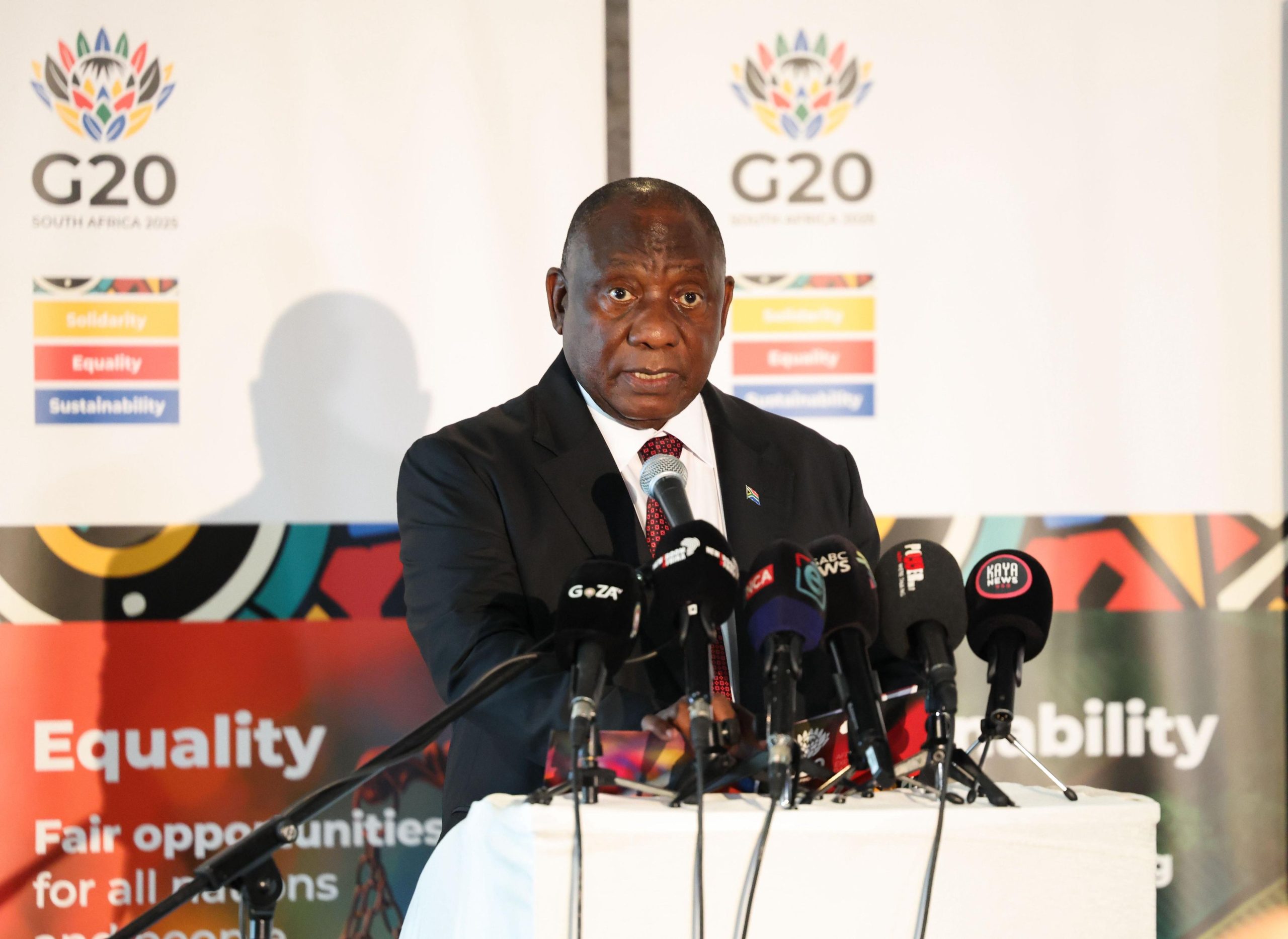
Johannesburg: In an unprecedented development, G20 negotiators in Johannesburg have finalised a draft leaders’ declaration without the participation of the United States, signalling a significant shift in the balance of global power and the future of multilateral diplomacy.
U.S. envoys remained absent from the negotiations after President Donald Trump directed the delegation to boycott discussions over South Africa’s proposed climate-adaptation and debt-relief commitments. This is the first time the world’s largest economy has opted out of the declaration drafting process at a G20 summit.
Diplomatic sources say the absence of U.S. input has both symbolic and practical implications. While the draft retains strong language on climate finance, debt restructuring and development reform priorities championed by the Global South implementation could be weakened without American support.
South Africa, however, has been widely credited for steering the process despite Washington’s withdrawal. By anchoring the summit around climate justice, economic vulnerability and equitable development, Pretoria signalled a more assertive African role in global decision-making. The ability to secure alignment among major emerging economies demonstrated that consensus within the G20 can still be achieved even when a key Western member pulls back.
India has also played a prominent role during the summit. Prime Minister Narendra Modi’s arrival in Johannesburg, met with large crowds from the Indian diaspora, underscored India’s growing diplomatic weight. Modi’s series of bilateral and high-level meetings is part of New Delhi’s push to strengthen Global South cooperation and stabilise multilateral platforms amid deepening geopolitical divides.
Analysts say the episode reflects a broader trend: the fragmentation of traditional power structures within global institutions. If the U.S. continues distancing itself from processes it cannot shape, emerging economies may increasingly drive multilateral agendas through flexible and issue-based coalitions.
China’s position remains influential but contested, with many Global South nations seeking Beijing’s participation without allowing it to dominate. This balance engaging China while maintaining autonomy is expected to define future negotiations.
While the Johannesburg draft declaration may not deliver immediate breakthroughs, diplomats say it marks a turning point. The G20 is evolving into a forum where American leadership is no longer guaranteed, and where global cooperation depends on the willingness of emerging powers to step forward.
The final declaration will be adopted at the closing session of the summit in Johannesburg.
-Alexander Peyton