UN Nairobi Investment is reshaping Kenya’s diplomatic profile after the United Nations launched a nearly $340 million expansion of its Gigiri headquarters.
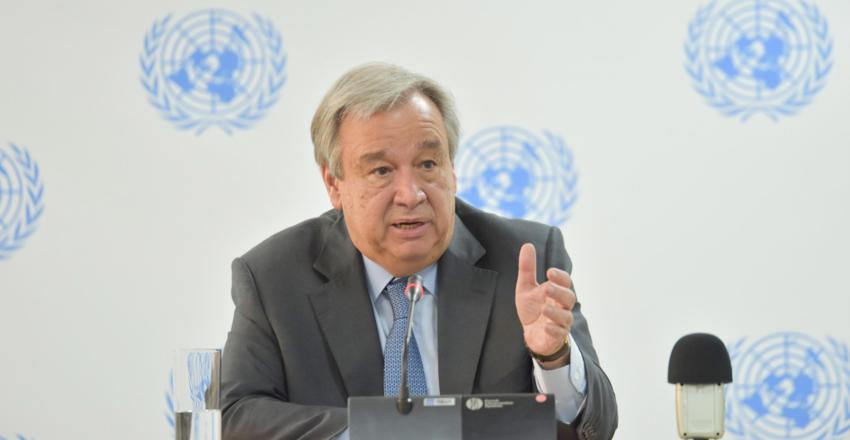
UN Secretary-General António Guterres joined President William Ruto on May 11 at the United Nations Office at Nairobi for the groundbreaking of new conference facilities and the inauguration of modern office buildings. The project, approved by UN member states through the General Assembly, marks one of the organization’s most significant infrastructure investments in Africa outside peacekeeping.
The expansion strengthens Nairobi’s position as the only UN Secretariat headquarters in the Global South. It also signals a wider shift in multilateral diplomacy: bringing decision-making capacity closer to regions where global development, climate and humanitarian challenges are increasingly concentrated.
For Kenya, the investment is more than a construction project. It reinforces Nairobi’s status as a diplomatic capital for Africa and a strategic base for global institutions working across the continent and beyond.
UN Nairobi Investment Expands Global Capacity
The project includes new climate-resilient office blocks and a major upgrade of conference facilities at the Gigiri complex.
The office component is valued at US$66.2 million and replaces aging buildings that dated back to the 1970s. The new buildings are designed to improve accessibility, cut long-term operating costs and support rising staff numbers.
The conference facilities upgrade is valued at about US$265.7 million. It will increase the number of meeting rooms from 14 to 30 and raise seating capacity from 2,000 to 9,000 delegates.
The plan also includes a 1,600-seat Assembly Hall, giving Nairobi the ability to host larger global meetings and high-level multilateral gatherings.
UNHCR has also invested US$11.2 million in new office blocks at UNON, further expanding the operational footprint of the UN system in Kenya.
Once fully realized, the expansion is expected to position Nairobi as the third-largest UN global hub after New York and Geneva, ahead of Vienna.
Nairobi’s Role in the Global South Grows
The investment comes at a time when the United Nations is under pressure to become more representative, efficient and responsive to the needs of developing regions.
Nairobi already hosts one of the most complex UN ecosystems in the world. More than 4,000 personnel and 88 UN offices are based at the Gigiri complex. Across Kenya, the UN presence includes almost 6,000 personnel and about 10,000 dependents from Kenya and neighboring countries.
The Nairobi hub supports operations in more than 160 countries. It also plays a central role in climate action, development policy, humanitarian coordination and administrative services for UN operations worldwide.
This gives Nairobi influence beyond hosting meetings. The city functions as a working center for global policy and implementation, especially in areas where Africa’s experience is central to the UN agenda.
UNON Director-General Zainab Hawa Bangura described the project as a defining moment for the United Nations in Africa. She said Nairobi is not only a host city but a strategic center for delivering UN work in the 21st century.
Kenya’s Long Support for the UN Pays Off
Kenya’s relationship with the United Nations has been built over decades.
The Gigiri complex sits on 140 acres of land donated by the Government of Kenya. In 1972, Kenya donated 100 acres to support the establishment of the United Nations Environment Programme. In 1975, it donated another 40 acres for UN-Habitat.
That land contribution remains the largest made by any host country to the UN.
UNEP and UN-Habitat are the only UN entity headquarters based in the Global South. Other UN agencies, including UNICEF, UNFPA and UN Women, have moved some global operations to Nairobi while keeping their formal headquarters elsewhere.
UNON itself was created in 1996 to provide services to UNEP and UN-Habitat. Its role has since expanded significantly, with administrative support now provided to UNEP, UN-Habitat, the UN Resident Coordinator System and other offices in 166 countries.
This makes Nairobi a practical operating center, not just a symbolic diplomatic address.
Green Design and Lower Operating Costs
The UN Nairobi Investment also carries a sustainability message.
The new buildings are designed to be climate-resilient and accessible. UNON has also positioned itself as a model for institutional sustainability, becoming the first and only UN headquarters to attain ISO 14001:2015 environmental certification.
Nairobi’s climate gives the complex another advantage. Because of the city’s weather, heating and cooling costs for buildings are effectively zero, according to the UNON note to editors.
That matters for an institution under pressure to reduce costs and improve environmental performance. A larger Nairobi hub could help the UN expand capacity while keeping long-term operating expenses under control.
The project also fits into the UN Efficiency Agenda. Nairobi is the first pilot location for the Common Back Office, which brings together services such as administration, information technology, human resources, logistics and procurement in a one-stop operational model.
Why the Expansion Matters for Africa
The nearly $340 million investment gives Africa a stronger place inside the machinery of multilateral diplomacy.
For decades, many major global decisions affecting African countries were made in institutions headquartered far from the continent. Nairobi’s expansion challenges that pattern by increasing the UN’s ability to convene, coordinate and operate from Africa.
The timing is important. Climate change, urban growth, humanitarian crises, debt pressure, migration and sustainable development are central to the UN’s agenda. Many of these issues have major African dimensions.
A stronger Nairobi hub allows the UN to engage these questions closer to affected communities, governments, experts and regional institutions.
For Kenya, the project enhances its diplomatic weight. It supports the country’s wider ambition to be seen as a center for international cooperation, climate policy, peace initiatives and development finance.
What Comes Next
The next phase will focus on delivery.
The conference upgrade will test whether the UN can complete a major infrastructure project on time, within budget and in line with sustainability goals. Kenya will also need to ensure surrounding infrastructure, security, roads, utilities and services can support a much larger international footprint.
If implemented successfully, the UN Nairobi Investment could transform Gigiri into one of the most important diplomatic campuses in the world.
The project also strengthens a wider message: Africa is no longer only a subject of global policy debates. Increasingly, it is becoming a place where those debates are hosted, shaped and implemented.
For Nairobi, that shift is already visible in concrete, steel and diplomacy.
Read Also: Kenya Africa Hub: Why Nairobi Anchors the Continent