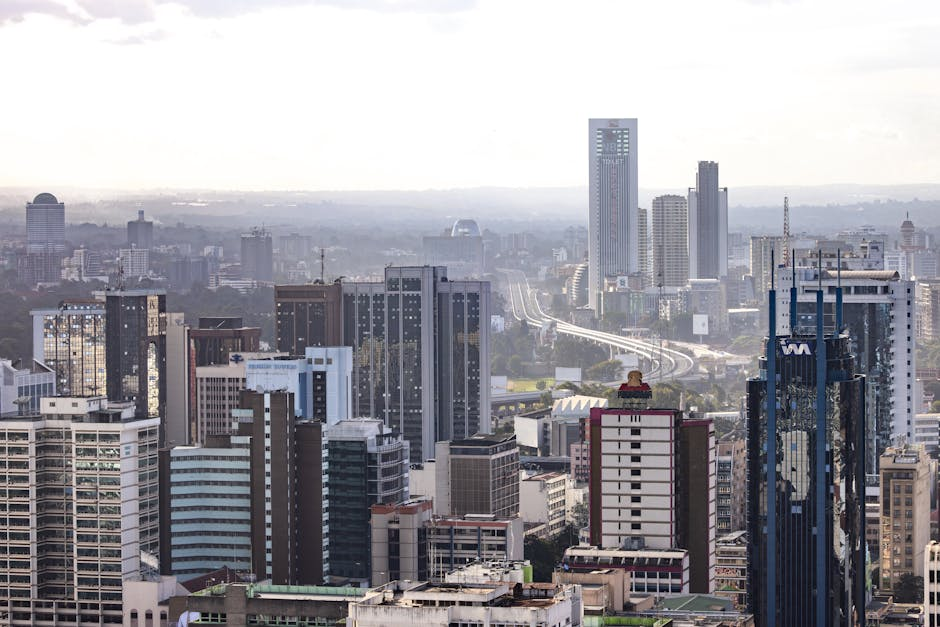
Eastern Africa cities are changing quickly in 2026 as infrastructure, trade, technology, real estate, transport, tourism, and public services reshape the region’s urban map. From Nairobi’s financial and technology influence to Addis Ababa’s diplomatic power, Dar es Salaam’s port economy, Kigali’s clean urban planning, and Kampala’s commercial energy, the region has several cities competing for attention.
This ranking is not an official government index. It is an editorial assessment based on visible infrastructure, economic activity, regional influence, transport links, business environment, urban planning, public services, investment momentum, and international relevance.
The list also avoids a common mistake: treating territories as cities. Somaliland, for example, is not a city. The city usually meant in that context is Hargeisa, the capital and main commercial centre of Somaliland.
How This Ranking Was Judged
To make the list fair, the cities were assessed using several practical indicators.
These include:
- Business and investment activity
- Road, airport, port, and transport infrastructure
- Technology and digital economy influence
- Real estate and urban growth
- Public services and city management
- Regional trade importance
- Diplomatic and administrative influence
- Tourism and hospitality strength
- Safety, stability, and liveability
- Long-term development potential
A city can rank highly even if it is not perfect. Nairobi, for example, has traffic and housing pressure, but it remains one of the strongest business centres in Africa. Kigali is smaller than Nairobi or Dar es Salaam, but it performs strongly in urban order, cleanliness, safety, and planning.
Top 10 Leading Cities in Eastern Africa 2026
| Rank | City | Country/Territory | Main Strength |
|---|---|---|---|
| 1 | Nairobi | Kenya 🇰🇪 | Finance, technology, diplomacy, media, transport |
| 2 | Addis Ababa | Ethiopia 🇪🇹 | Diplomacy, aviation, government, infrastructure |
| 3 | Dar es Salaam | Tanzania 🇹🇿 | Port economy, trade, real estate, population growth |
| 4 | Kigali | Rwanda 🇷🇼 | Clean planning, governance, safety, conferences |
| 5 | Kampala | Uganda 🇺🇬 | Commerce, education, transport, services |
| 6 | Mombasa | Kenya 🇰🇪 | Port, tourism, logistics, coastal economy |
| 7 | Hargeisa | Somaliland/Somalia 🇸🇴 | Trade, services, diaspora investment |
| 8 | Asmara | Eritrea 🇪🇷 | Heritage, order, administration |
| 9 | Mogadishu | Somalia 🇸🇴 | Recovery, construction, trade, political importance |
| 10 | Khartoum | Sudan 🇸🇩 | Historic capital role, education, trade, recovery potential |
1. Nairobi, Kenya
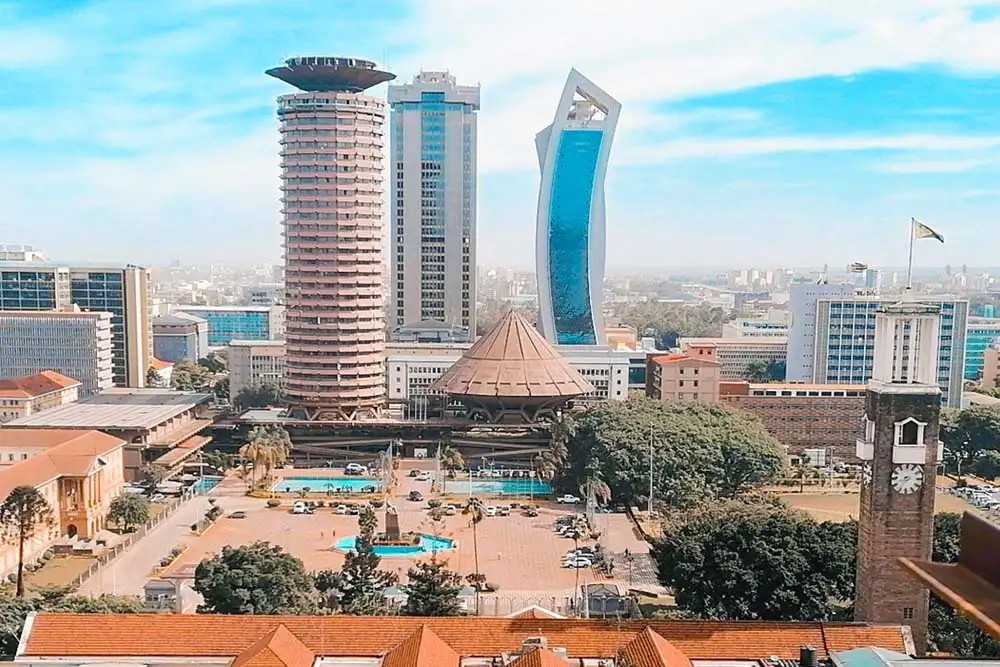
Nairobi ranks first among leading Eastern Africa cities in 2026 because it combines business power, technology influence, media presence, transport links, diplomacy, and regional headquarters activity.
The city is often seen as East Africa’s commercial capital. It hosts major banks, media houses, technology companies, universities, hospitals, diplomatic missions, and regional offices for international organizations. Nairobi also benefits from Jomo Kenyatta International Airport, the Nairobi Expressway, major road networks, and its role as a gateway to Kenya’s wider economy.
Nairobi’s technology identity also gives it an edge. The city is strongly associated with startups, fintech, mobile money, digital media, software development, ecommerce, and innovation hubs. That gives Nairobi more than just physical infrastructure. It gives the city influence in the modern digital economy.
However, Nairobi still faces major challenges. Traffic congestion, high living costs, informal settlements, drainage problems, and pressure on public services remain serious issues. Even with those problems, Nairobi’s economic weight keeps it at the top.
2. Addis Ababa, Ethiopia

Addis Ababa ranks second because of its diplomatic importance, transport links, administrative power, and growing infrastructure.
The city is Ethiopia’s capital and one of Africa’s most important diplomatic centres. It hosts the African Union headquarters and many international institutions, embassies, development organizations, and regional offices. That gives Addis Ababa political importance beyond Ethiopia.
Addis Ababa is also supported by Ethiopia’s national airline and major airport connectivity. Its role as an aviation hub makes it one of the most connected cities in Africa. The city has also seen major road, rail, real estate, and public infrastructure projects over the years.
Its challenges include congestion, housing pressure, inflation, and uneven urban development. Still, Addis Ababa remains one of the most powerful cities in Eastern Africa because of its diplomatic and administrative weight.
3. Dar es Salaam, Tanzania

Dar es Salaam ranks third because of its port economy, commercial strength, population growth, and role as Tanzania’s largest business city.
Although Dodoma is Tanzania’s official capital, Dar es Salaam remains the country’s main commercial hub. Its port is one of the most important in the region, serving Tanzania and landlocked neighbours through trade corridors.
The city has grown rapidly through real estate, transport, logistics, retail, banking, tourism, and manufacturing. Dar es Salaam’s coastal location gives it a natural advantage in trade and shipping.
Its biggest challenges include congestion, flooding risks, pressure on housing, and the need for stronger urban planning as the population expands. Even so, its economic momentum keeps it among the top Eastern Africa cities.
4. Kigali, Rwanda
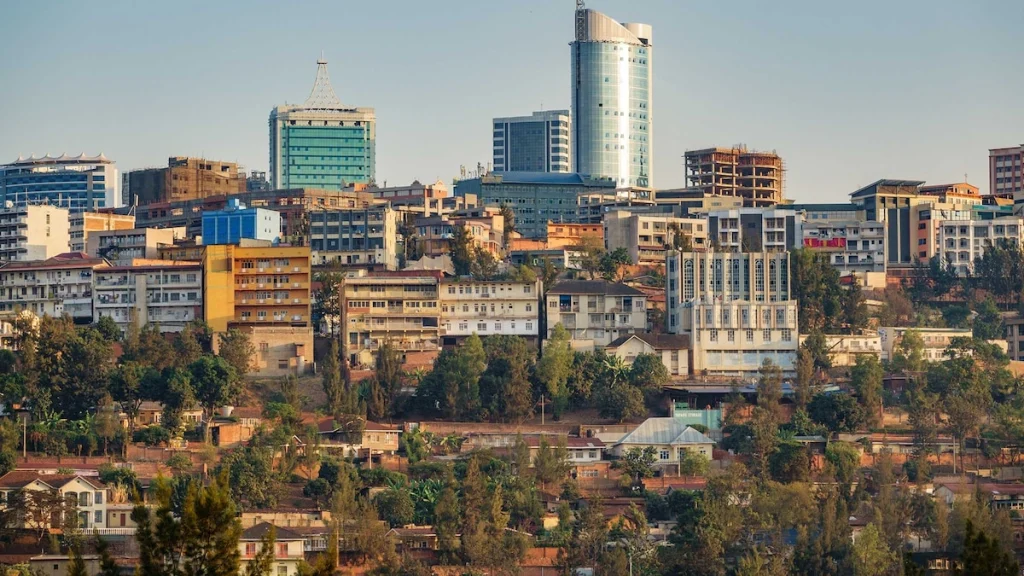
Kigali ranks fourth because of its order, cleanliness, safety, city planning, conference tourism, and governance reputation.
Kigali is smaller than Nairobi, Addis Ababa, and Dar es Salaam, but it performs strongly in urban management. The city is known for clean streets, organized neighbourhoods, security, and a strong focus on public order.
Rwanda has also positioned Kigali as a conference and investment destination. The city has hosted major international events and continues to attract attention in hospitality, real estate, technology, and services.
Kigali’s limitation is scale. It does not yet match Nairobi or Dar es Salaam in population, private-sector depth, or regional commercial reach. But in terms of planning and liveability, it is one of Eastern Africa’s strongest urban examples.
5. Kampala, Uganda
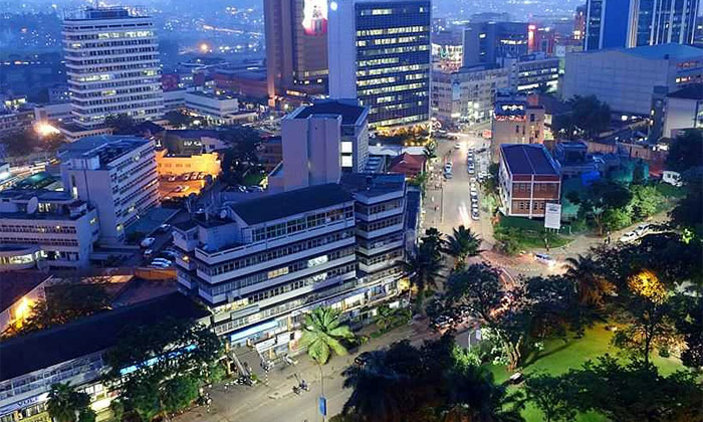
Kampala ranks fifth because of its commercial energy, education sector, services economy, and importance to Uganda’s national economy.
The city is Uganda’s main business and administrative centre. It has a busy retail sector, strong informal economy, universities, hospitals, media companies, banks, hotels, and transport links connecting Uganda to Kenya, Rwanda, Tanzania, South Sudan, and the Democratic Republic of Congo.
Kampala’s strength is its activity. It is a city of trade, movement, entrepreneurship, and services. It also benefits from Uganda’s young population and growing consumer market.
However, Kampala struggles with traffic congestion, drainage problems, unplanned growth, and pressure on roads and public services. Its ranking reflects strong economic importance, but also the need for better urban infrastructure.
6. Mombasa, Kenya

Mombasa ranks sixth because of its port, tourism, logistics role, and coastal economy.
The city is Kenya’s main seaport and one of the most important logistics centres in Eastern Africa. It supports trade not only for Kenya but also for neighbouring landlocked countries through regional transport corridors.
Mombasa is also a major tourism centre. Its beaches, hotels, culture, old town, marine attractions, and coastal identity make it one of the most recognizable cities in the region.
The city’s development is tied closely to port modernization, road and rail links, tourism recovery, real estate, and trade. Its challenges include unemployment, urban poverty, congestion, and pressure on coastal infrastructure.
Still, Mombasa remains one of Eastern Africa’s most strategically important cities because of its port and tourism economy.
7. Hargeisa, Somaliland/Somalia
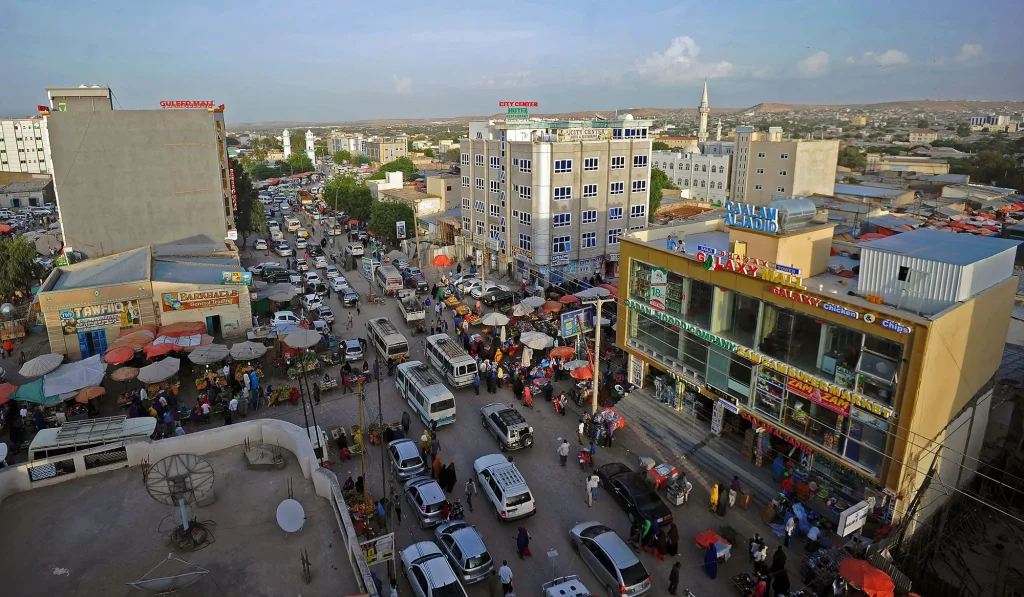
Hargeisa ranks seventh as the main urban and commercial centre of Somaliland. It appears here because many informal lists wrongly write “Somaliland” as if it were a city. The correct city name is Hargeisa.
Hargeisa has developed as a centre of trade, services, education, construction, and diaspora-backed investment. Its economy benefits from business links with Berbera port, trade routes into Ethiopia, remittances, and private-sector activity.
The city has shown notable resilience despite limited international recognition for Somaliland. Much of its growth has been driven by private enterprise, diaspora capital, local trade, and service businesses.
Its limitations are also clear. Recognition issues, infrastructure constraints, limited access to international finance, and political uncertainty affect long-term development. Still, Hargeisa deserves mention as one of the most active urban centres in the Horn of Africa.
8. Asmara, Eritrea

Asmara ranks eighth because of its historic urban character, administrative importance, and architectural identity.
The city is known for its unique modernist architecture and planned urban form. It serves as Eritrea’s capital and main administrative centre. Compared with many fast-growing cities in the region, Asmara has a calmer and more orderly feel.
Its strength is not rapid commercial expansion. Instead, Asmara stands out for heritage, government functions, urban form, and national importance.
However, the city faces limitations in investment, private-sector growth, global connectivity, and economic openness. That is why it ranks below faster-growing commercial centres such as Nairobi, Dar es Salaam, Kampala, and Mombasa.
9. Mogadishu, Somalia
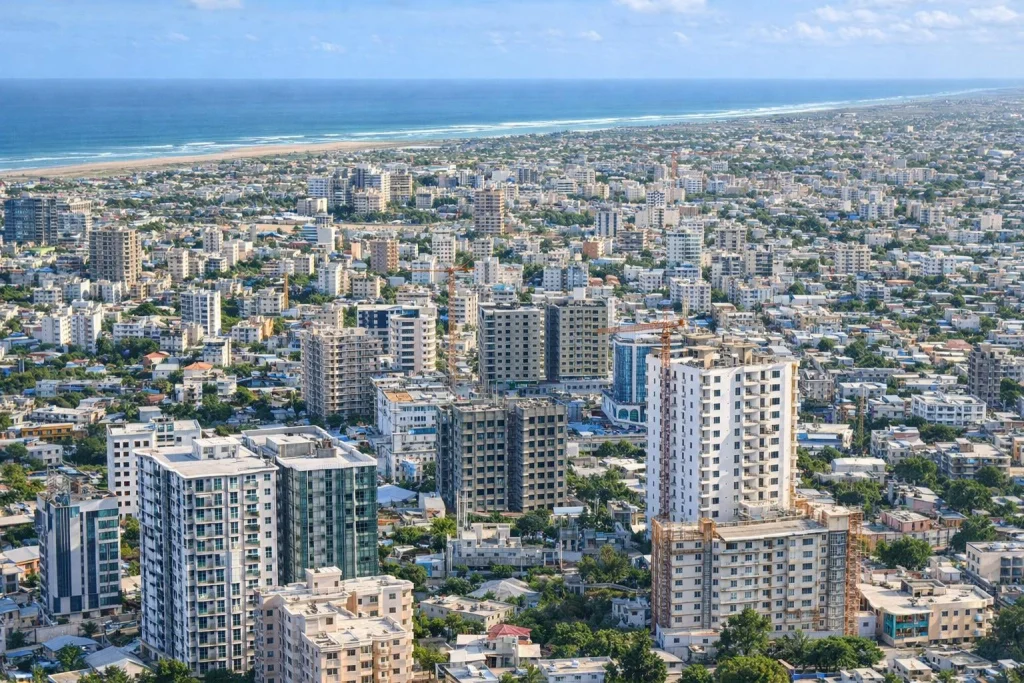
Mogadishu ranks ninth because of its recovery, construction activity, trade, coastline, and political importance.
Somalia’s capital has faced decades of instability, but it has also shown signs of rebuilding. New buildings, hotels, businesses, roads, and service-sector activity have appeared as the city slowly reclaims its role as a national centre.
Mogadishu has a strategic location on the Indian Ocean and remains Somalia’s political and economic heart. It is important for government, trade, transport, construction, media, and services.
Its challenges are significant. Security concerns, infrastructure gaps, weak public services, and political instability continue to affect development. For that reason, Mogadishu is better described as a recovering and rising city rather than one of the most developed in the region.
10. Khartoum, Sudan

Khartoum is the most difficult city to rank in 2026.
Historically, Khartoum was one of Eastern Africa’s major capitals. It served as Sudan’s political, educational, administrative, commercial, and cultural centre. It had universities, government institutions, markets, bridges, transport networks, hospitals, and major urban infrastructure.
However, Sudan’s war has badly damaged the city. Homes, hospitals, schools, public buildings, roads, factories, and key services have been affected. That means Khartoum cannot be described carelessly as one of the region’s most developed cities in the same way it might have been before the conflict.
Its place on this list is based on historic importance and recovery potential, not current urban comfort or stability. In 2026, Khartoum is better understood as a major capital trying to rebuild after severe destruction.
Why Nairobi Leads the Ranking
Nairobi leads because it performs strongly across more categories than any other city on the list.
It has:
- A large and diversified economy
- Regional headquarters for companies and organizations
- A strong technology and startup ecosystem
- Major media influence
- International airport connectivity
- Growing road infrastructure
- Strong banking and finance activity
- Diplomatic importance
- A large professional workforce
- Strong tourism links through Kenya’s wider travel sector
Nairobi is not the cleanest city in the region, and it is not the easiest city to move around. Kigali beats it on order and cleanliness. Addis Ababa beats it on diplomatic symbolism. Dar es Salaam beats it on port scale. But Nairobi combines more strengths in one city.
That is why it remains the strongest overall urban centre in Eastern Africa in 2026.
Cities That Could Rise in Future Rankings
Several cities could climb higher in future rankings if investment, stability, and infrastructure improve.
Mogadishu
Mogadishu has strong potential because of its coastline, population, trade links, and political importance. Better security and stronger infrastructure could lift its ranking.
Hargeisa
Hargeisa could rise if trade through Berbera grows and if investment in roads, utilities, finance, and services expands.
Mombasa
Mombasa could climb if port expansion, tourism growth, urban renewal, and transport links continue improving.
Kampala
Kampala has strong commercial energy. Better roads, drainage, planning, and mass transport could move it higher.
Khartoum
Khartoum’s future depends heavily on peace, reconstruction, basic services, and national recovery. Its historic importance remains, but rebuilding will take time.
Key Takeaways
- Nairobi is the leading city in Eastern Africa in 2026.
- Addis Ababa remains one of Africa’s most important diplomatic capitals.
- Dar es Salaam is a major port and commercial powerhouse.
- Kigali performs strongly in urban planning, cleanliness, and safety.
- Kampala is one of the region’s busiest commercial centres.
- Mombasa remains vital because of its port and tourism economy.
- Hargeisa should be used instead of “Somaliland” when naming the city.
- Asmara stands out for heritage, order, and administrative importance.
- Mogadishu is recovering but still faces major security and infrastructure challenges.
- Khartoum must be described carefully because of war damage and reconstruction needs.
Frequently Asked Questions
What is the most developed city in Eastern Africa in 2026?
Nairobi is the strongest overall city in Eastern Africa in 2026 based on business activity, infrastructure, technology, finance, diplomacy, transport links, and regional influence.
Why is Nairobi ranked first?
Nairobi ranks first because it combines finance, technology, media, transport, international organizations, business headquarters, and regional influence better than any other city in the region.
Is Kigali more developed than Nairobi?
Kigali is cleaner, more orderly, and better planned in many areas. However, Nairobi has a larger economy, deeper private sector, stronger regional business role, and wider international influence.
Is Somaliland a city?
No. Somaliland is not a city. The correct city name for this ranking is Hargeisa, which is the main urban and commercial centre of Somaliland.
Why is Khartoum ranked low?
Khartoum has historic importance, but the war in Sudan caused major damage to infrastructure and public services. Its ranking is based on historic significance and recovery potential, not current stability.
Which Eastern African city has the best port economy?
Dar es Salaam and Mombasa are the strongest port cities on this list. Dar es Salaam is Tanzania’s main commercial port city, while Mombasa is Kenya’s main seaport and regional logistics hub.
Which city is the cleanest in Eastern Africa?
Kigali is widely regarded as one of the cleanest and most orderly cities in Eastern Africa.
Which city is best for business in Eastern Africa?
Nairobi is the strongest business hub overall because of its financial sector, technology ecosystem, regional headquarters, media presence, and international connectivity.
Which city is rising fastest?
Dar es Salaam, Kigali, Hargeisa, and Mogadishu all have strong growth stories, although their challenges differ.
What factors were used in the ranking?
The ranking considered infrastructure, business activity, transport, technology, urban planning, investment, public services, regional influence, and long-term development potential.
Conclusion
Eastern Africa cities are becoming more important as the region grows in population, trade, technology, infrastructure, and investment. Nairobi leads the 2026 ranking because it combines business, finance, technology, transport, diplomacy, and media influence in a way no other city in the region currently matches.
Addis Ababa follows because of its diplomatic and administrative power. Dar es Salaam remains a major port-driven commercial city. Kigali stands out for planning, cleanliness, and safety. Kampala remains one of the region’s most active business centres, while Mombasa continues to serve as a vital port and tourism hub.
Hargeisa, Asmara, Mogadishu, and Khartoum complete the list, but each requires careful context. Hargeisa is the correct city name, not Somaliland. Mogadishu is recovering. Khartoum has historic importance but faces major rebuilding after war damage.
Overall, the story of Eastern Africa cities in 2026 is not just about which city is biggest. It is about which cities are building stronger economies, better infrastructure, more reliable services, and greater regional influence for the future.