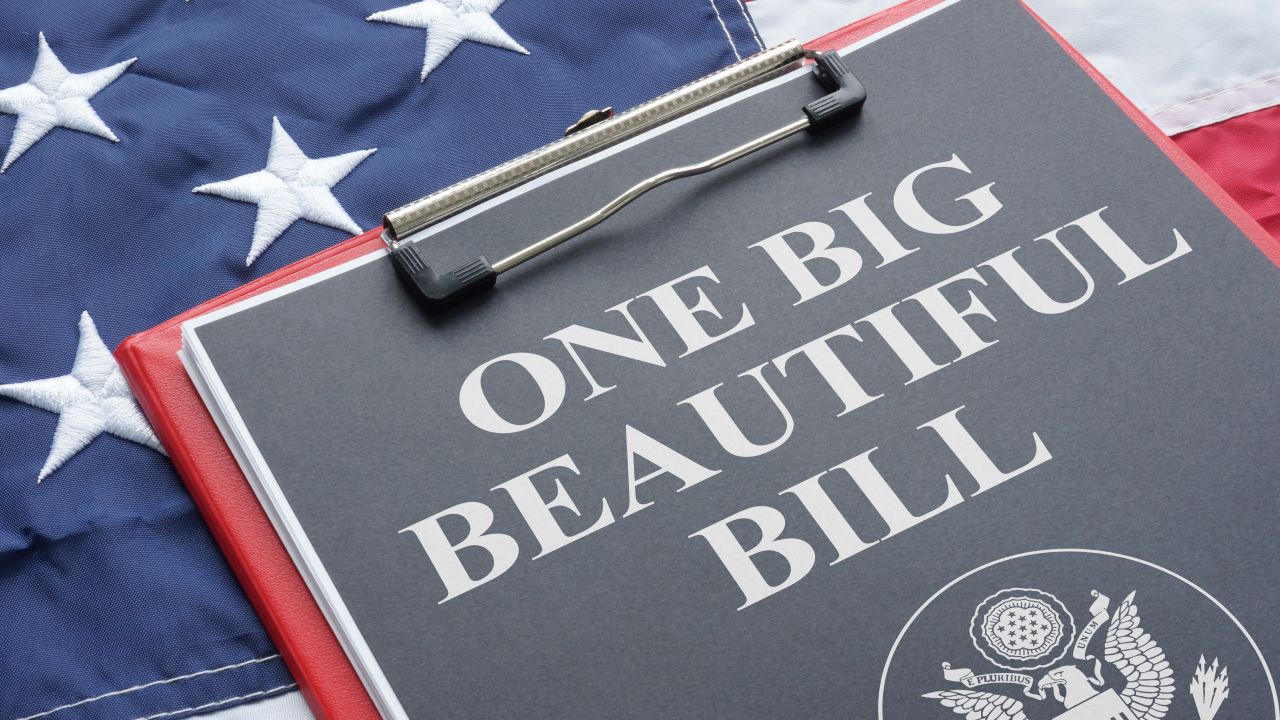
The One Big Beautiful Bill Act (OBBBA), also known as the Big Beautiful Bill, is a U.S. federal law enacted on July 4, 2025, signed by President Donald Trump during his second term. Passed by the 119th Congress, the Act is one of the most sweeping pieces of legislation in recent U.S. history, containing hundreds of provisions on taxes, spending, healthcare, energy, immigration, and defense.
Although originally titled the One Big Beautiful Bill Act, the official short title was removed during Senate amendments. Nonetheless, it is widely referred to by its acronym, OBBBA.
Background
Following the 2024 elections, Republicans gained control of both the House and Senate. President Trump called for a single comprehensive law to advance his agenda, instead of passing multiple smaller bills. The legislation was advanced using the budget reconciliation process, bypassing the Senate filibuster.
The Act narrowly passed both chambers of Congress after weeks of internal Republican debate and was signed into law on Independence Day 2025, symbolizing Trump’s push to frame it as his defining domestic achievement.
Major Provisions
The One Big Beautiful Bill Act covers a wide range of policies, including:
- Tax Policy:
- Permanently extends the 2017 Trump tax cuts for individuals.
- Creates deductions for tips, overtime pay, and auto loan interest.
- Raises the cap on the SALT deduction to $40,000 for five years.
- Establishes Trump Accounts, tax-deferred savings for children, with federal seed contributions.
- Adds a 1% remittance tax and raises taxes on large college endowments.
- Healthcare and Welfare:
- Cuts Medicaid spending by 12% over a decade.
- Expands work requirements for Medicaid and SNAP (food aid).
- Creates a Rural Hospital Fund but imposes cost-sharing for some enrollees.
- Energy and Industry:
- Rolls back clean energy incentives from the Inflation Reduction Act.
- Expands support for fossil fuels and mining leases.
- Increases semiconductor tax credits from 25% to 35%.
- Defense and Immigration:
- Adds $150 billion in new defense spending, including missile defense and AI weapons.
- Directs $170 billion to border enforcement, expanding ICE funding from $10 billion to over $100 billion by 2029.
- Funds 100,000 new detention beds and construction of a border wall.
- Other Policies:
- Raises the U.S. debt ceiling by $5 trillion.
- Expands tax credits for affordable housing.
- Provides $10 billion in new funding for NASA.
- Cuts funding for the Consumer Financial Protection Bureau.
Impact
According to the Congressional Budget Office (CBO):
- The Act will add $2.8 trillion to the deficit by 2034.
- Around 10.9 million Americans may lose health coverage.
- The top 10% of earners are projected to see incomes rise by 2.7%, while the lowest 10% face a 3.1% drop due to benefit cuts.
Environmental groups warned that the rollback of clean energy incentives could cost hundreds of thousands of jobs and slow U.S. progress in renewable energy, while immigration advocates raised alarms about the massive expansion of ICE.
Reception
The Act has been highly polarizing:
- Supporters (including major corporations like AT&T, Comcast, and the National Retail Federation) argue it strengthens the economy, incentivizes investment, and boosts national security.
- Opponents describe it as one of the most regressive bills in modern history, labeling it a “Reverse Robin Hood Bill” that shifts wealth upward while cutting programs for the poor.
- Public opinion polls in mid-2025 showed that a majority of Americans opposed the law, with opposition ranging from 49% to 64% across surveys.
Critics also argue the OBBBA represents a historic expansion of executive power and deepens inequality, while supporters tout it as a cornerstone of Trump’s second-term agenda.
Legacy
The One Big Beautiful Bill Act is expected to shape American politics, economics, and social policy throughout the late 2020s. While it delivered on Trump’s campaign promise for “one big, beautiful bill,” it remains one of the most divisive laws in recent U.S. history, balancing permanent tax cuts for individuals and corporations against cuts to welfare and clean energy programs.