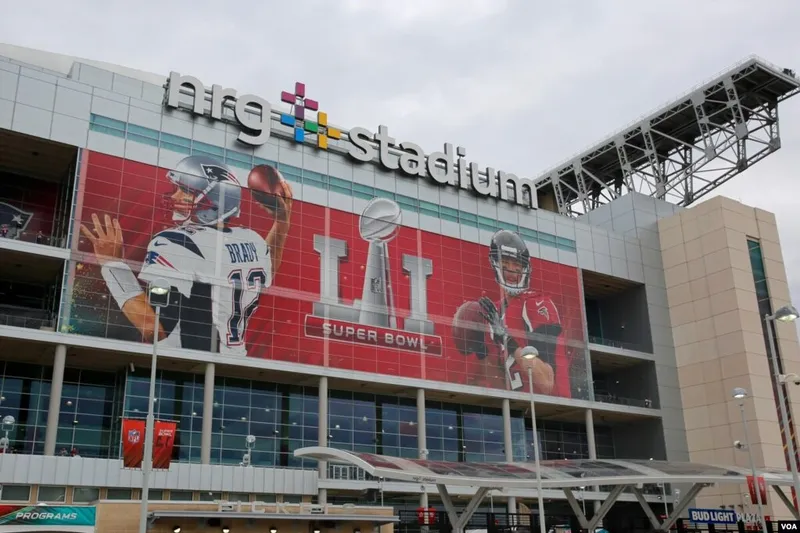
NRG Stadium will be one of the key U.S. venues at the FIFA World Cup 2026, hosting seven matches in Houston, Texas, including a Round of 16 knockout fixture.
During the tournament, the venue will be called Houston Stadium because FIFA uses neutral venue names and removes corporate branding from World Cup stadiums. For most sports fans, however, this is NRG Stadium: the home of the Houston Texans and one of the most important multi-event stadiums in Texas.
Opened in 2002 as Reliant Stadium, the venue made history as the first NFL stadium built with a retractable roof. That feature is not just architectural flair. In Houston’s summer heat and humidity, the roof and air-conditioning system are essential.
For World Cup 2026, NRG Stadium will switch from synthetic turf to natural grass to meet FIFA requirements. That pitch conversion will be one of the biggest operational changes at the venue.
Houston’s World Cup role will be shaped by football culture, climate control and the city’s huge Latin American community. Matches at Houston Stadium should bring a loud, colourful and passionate atmosphere.
Quick Facts About NRG Stadium
| Fact | Detail |
|---|---|
| Stadium name | NRG Stadium |
| FIFA World Cup name | Houston Stadium |
| Location | Houston, Texas, USA |
| Address | 1 NRG Parkway, Houston, TX 77054 |
| Capacity | 72,220 |
| Opened | 2002 |
| Roof | Retractable |
| Surface | Synthetic turf normally; natural grass for FIFA events |
| Main tenant | Houston Texans |
| Competition focus | FIFA World Cup 2026 |
| World Cup matches | 7 matches |
| Biggest match | Round of 16 |
| First World Cup match | June 14, 2026 |
| Known for | First NFL retractable-roof stadium, Houston Texans, RodeoHouston, Super Bowls and Astrodome neighbour |
Where Is NRG Stadium?
NRG Stadium is located inside NRG Park, about 9 miles south of downtown Houston. The wider complex includes NRG Center, NRG Arena and the historic Astrodome, one of the most famous stadiums in American sports history.
The venue sits near major Houston roads and has direct access to the METRORail Red Line, which makes it one of the more practical Texas stadiums for public transport.
For World Cup visitors, location matters. Houston is a large, spread-out city, and travel times can change quickly depending on traffic, weather and event crowds. Fans staying downtown can use light rail, while those staying near the Galleria, Medical Center, airport areas or suburbs may need to drive or use rideshare.
The stadium’s location also gives fans access to the Museum District, Houston Zoo, Hermann Park and other city attractions.
History of NRG Stadium
NRG Stadium opened in 2002 as Reliant Stadium. It was built as the home of the Houston Texans, the NFL expansion team created after the Houston Oilers left the city in the 1990s.
At the time, the stadium was groundbreaking because it became the first NFL venue built with a retractable roof. Houston had already changed stadium history with the Astrodome, the world’s first major fully enclosed air-conditioned stadium. NRG Stadium continued that legacy with a more flexible roof system.
The venue was designed to solve Houston’s climate problem. Outdoor sports in the city can be extremely difficult in summer because of heat and humidity. A retractable roof allows the stadium to open when conditions are pleasant and close when weather becomes uncomfortable.
Since opening, NRG Stadium has hosted NFL games, Super Bowls, college football, international soccer, concerts, basketball, monster trucks and the Houston Livestock Show and Rodeo.
Construction and Design
NRG Stadium was designed by HOK Sport, now known as Populous, with Houston Stadium Consultants also involved. Walter P. Moore handled structural engineering, and the Manhattan/Beers joint venture served as general contractor.
Construction began in March 2000, and the stadium opened in August 2002. The project cost about $352 million, a figure that looks modest compared with modern NFL stadiums that now cost billions.
The stadium’s most important design feature is the retractable roof. It has two large panels that can slide open or closed, allowing the venue to manage Houston’s weather.
The stadium also has a large seating bowl, wide event spaces and enough flexibility to host very different types of events. That flexibility is one reason it has remained relevant more than two decades after opening.
Next door, the Astrodome still stands as a reminder of Houston’s stadium heritage. Together, the two venues show how the city helped shape indoor and climate-controlled stadium design.
NRG Stadium and World Cup 2026
NRG Stadium will host seven matches at the FIFA World Cup 2026.
The schedule includes five group-stage matches, one Round of 32 fixture and one Round of 16 match. That gives Houston a strong tournament role, even though it will not host a quarterfinal, semi-final or final.
The first World Cup match at the venue is scheduled for June 14, 2026. The Round of 16 match will bring knockout football to Houston, giving the city one of the decisive matches of the tournament.
The stadium has hosted international football before, including Copa America, CONCACAF Gold Cup matches and major friendlies. That experience should help with World Cup operations, though FIFA’s standards will be stricter.
World Cup 2026 Matches at NRG Stadium
| Date | Match |
| June 14, 2026 | Group-stage match |
| June 17, 2026 | Group-stage match |
| June 20, 2026 | Group-stage match |
| June 23, 2026 | Group-stage match |
| June 26, 2026 | Group-stage match |
| June 29, 2026 | Round of 32 |
| July 4, 2026 | Round of 16 |
This match schedule makes Houston Stadium one of the important early and mid-tournament venues. Five group matches will shape qualification scenarios, while the Round of 16 fixture will send one country into the quarterfinals.
For fans in Kenya and across Africa, Houston will be worth watching because knockout matches often produce the most dramatic World Cup moments. If an African team reaches Houston in the Round of 16, the venue could become part of a major continental storyline.
Why NRG Stadium Was Chosen for a Round of 16 Match
NRG Stadium was chosen for a Round of 16 match because it offers capacity, climate control, strong event experience and a major football market.
The stadium has hosted two Super Bowls, NCAA Final Four events, major concerts, international soccer and the Houston Livestock Show and Rodeo. It is a proven large-event venue.
The retractable roof is also a major advantage. Houston in June and July can be brutally hot and humid. With the roof closed and air-conditioning active, organisers can create a more comfortable environment for players and fans.
A Round of 16 match requires reliable operations. It must handle global television, heavy security, international crowds, hospitality, team facilities and media demand. NRG Stadium has the infrastructure for that job.
Houston’s diverse population also matters. The city has deep Latin American, African, Asian and European communities, which can give World Cup matches a strong international feel.
Natural Grass for FIFA Events
NRG Stadium normally uses a synthetic surface, but FIFA World Cup 2026 matches will be played on natural grass.
That conversion is essential because World Cup football requires a high-quality natural pitch. The surface affects passing, dribbling, tackling, pressing and player safety.
The stadium has experience hosting soccer, so grass installation is not completely new territory. However, World Cup standards are higher than regular friendlies or regional tournaments.
The challenge will be maintaining the grass inside a retractable-roof stadium. Organisers may use modular trays, special lighting, airflow management and careful watering to keep the pitch in top condition.
For players, a good surface will be crucial. Houston’s hot weather and indoor climate-control needs make pitch management one of the venue’s most important World Cup tasks.
The Retractable Roof Advantage
NRG Stadium’s retractable roof may be its biggest World Cup advantage.
Houston summers can bring extreme heat, high humidity and sudden storms. An open-air venue would face major match-day challenges under those conditions. NRG Stadium can reduce that risk by closing the roof.
With the roof closed, the stadium can use air conditioning to cool the bowl. That can improve fan comfort and help players perform at a higher level.
This could affect the football itself. Cooler conditions may allow teams to press more aggressively, recover faster and maintain match tempo for longer.
For visitors from Africa, Europe, South America or Asia, the roof means they can experience Houston’s World Cup matches without being fully exposed to the city’s summer heat.
Houston Weather and Match Conditions
Houston in June and July is hot, humid and physically demanding.
Daytime temperatures can be high, and humidity often makes conditions feel heavier than the number on the thermometer. For outdoor sports, that can create challenges with fatigue, hydration and recovery.
NRG Stadium’s climate control changes the equation. If the roof is closed, the venue can create more stable conditions than an open-air stadium.
Fans should still prepare carefully. They will spend time outside before and after matches, walking from transit stops, parking lots or rideshare zones. Light clothing, water and patience will matter.
For teams, Houston’s climate could still influence training, travel and recovery plans even if match conditions are controlled.
Major Events Hosted at NRG Stadium
NRG Stadium has hosted some of the biggest events in American sport.
It staged Super Bowl XXXVIII in 2004 and Super Bowl LI in 2017. Super Bowl LI became one of the most famous games in NFL history when the New England Patriots came back from a 28-3 deficit to beat the Atlanta Falcons in overtime.
The stadium has also hosted NCAA Final Four basketball tournaments, international soccer, major concerts, monster truck events and college football.
Every spring, the Houston Livestock Show and Rodeo takes over NRG Park. RodeoHouston is one of the largest annual events of its kind in the world and brings millions of visitors to the complex.
This variety shows why NRG Stadium is more than an NFL venue. It is one of Houston’s main event engines.
The Astrodome Connection
One of the most interesting things about NRG Stadium is its neighbour: the Astrodome.
The Astrodome opened in 1965 and became famous as the “Eighth Wonder of the World.” It was the first major fully enclosed, air-conditioned sports stadium and helped change stadium design forever.
Although it no longer hosts major events, the Astrodome remains part of Houston’s sports identity. It sits beside NRG Stadium as a symbol of the city’s role in stadium innovation.
For World Cup visitors, seeing the Astrodome next to NRG Stadium adds historical context. Houston has been experimenting with climate-controlled sports venues for more than 60 years.
Transport and Fan Access
Transport to NRG Stadium is better than some other U.S. World Cup venues because the METRORail Red Line runs directly to the stadium area.
Fans coming from downtown Houston can take the Red Line to the NRG Park/Fannin South station. From there, the stadium is within walking distance.
This is a major advantage for visitors staying downtown, near the Medical Center or along the Red Line. It reduces the need to drive and can help avoid traffic.
However, trains will be crowded before and after World Cup matches. Fans should travel early, expect queues and follow local transit updates.
Bus routes and event-day services may also support the stadium during the tournament.
Driving and Parking
Houston is still a car city, and many fans will drive to NRG Stadium.
The venue is close to major roads, including the South Loop and nearby freeway connections. It has large parking areas across NRG Park, with more than 26,000 spaces listed across the complex.
For World Cup matches, parking should be pre-purchased where possible. Demand will be high, and match-day traffic will be heavy.
Tailgating is a major part of Texans and RodeoHouston culture, but FIFA rules may affect what fans can do in parking lots during the tournament. Supporters should check official policies before planning pre-match gatherings.
Rideshare and Airport Access
Uber, Lyft and other rideshare services will be widely used during World Cup matches in Houston.
Before matches, drop-off may be manageable if fans arrive early. After matches, wait times and surge pricing can rise quickly as tens of thousands of people leave at once.
Fans using rideshare may want to walk away from the busiest exits before requesting a car, where safe and permitted.
Houston has two major airports. William P. Hobby Airport is closer to the stadium and may be the better choice for domestic or regional travellers. George Bush Intercontinental Airport is farther north but handles more international flights.
Visitors should allow extra time from either airport, especially on match days.
Nearby Attractions
NRG Stadium’s location gives visitors access to several Houston attractions.
The Houston Zoo and Hermann Park are only a short distance away. The Museum District, with museums covering art, science, culture and children’s learning, is also nearby.
Space Center Houston is farther away but remains one of the city’s most famous attractions. It is the official visitor centre for NASA’s Johnson Space Center and is a major draw for international visitors.
Downtown Houston, the Galleria, Midtown and other neighbourhoods offer food, nightlife, shopping and cultural experiences.
For World Cup fans, Houston can work as both a match destination and a broader travel stop.
What Fans Should Know Before Visiting
Fans attending World Cup matches at NRG Stadium should prepare for heat, crowds and strict event security.
The roof may protect fans during the match, but the outside environment can still be hot and humid. Arriving early, wearing comfortable clothing and staying hydrated will be important.
Public transport is a strong option if staying near the METRORail Red Line. Driving is also practical, but parking and traffic should be planned in advance.
Security checks will follow FIFA standards. Fans should review official rules on tickets, bags, entry times and prohibited items before going to the stadium.
The safest strategy is simple: plan your route, arrive early and avoid tight schedules after full time.
Why NRG Stadium Matters to Football Fans
NRG Stadium matters because it brings the World Cup to one of the most diverse cities in the United States.
Houston has a huge Latin American population, strong immigrant communities and deep football interest. That should make World Cup matches at Houston Stadium feel passionate and international.
The venue’s Round of 16 match also gives it knockout-stage importance. By that stage, every mistake can end a country’s tournament.
For African fans and Kenyan readers, Houston could become important if an African team reaches the knockout rounds there. The combination of climate-controlled conditions and a large international crowd could create a memorable World Cup setting.
Why NRG Stadium Is Important
NRG Stadium is important because it combines Houston’s stadium history with modern World Cup needs.
It stands next to the Astrodome, the building that helped pioneer indoor sports venues. It also has a retractable roof, large capacity, major-event experience and public transit access.
The stadium is not the newest or most expensive venue in World Cup 2026, but it is practical, proven and well suited to Houston’s climate.
Its seven-match schedule ensures it will play a meaningful role in the tournament, especially when the Round of 16 brings knockout football to Texas.
Key Takeaways
- NRG Stadium is located in Houston, Texas.
- It will be called Houston Stadium during FIFA World Cup 2026.
- The stadium opened in 2002 as Reliant Stadium.
- It was the first NFL stadium built with a retractable roof.
- NRG Stadium has a listed capacity of 72,220.
- It is home to the Houston Texans.
- The venue normally uses synthetic turf but will use natural grass for FIFA events.
- It will host seven World Cup 2026 matches.
- The first match is scheduled for June 14, 2026.
- The stadium will host a Round of 16 match.
- METRORail’s Red Line gives fans direct public transport access.
- Houston heat makes the retractable roof a major advantage.
Frequently Asked Questions
Where is NRG Stadium located?
NRG Stadium is located at 1 NRG Parkway in Houston, Texas, inside the NRG Park complex about 9 miles south of downtown Houston.
What will NRG Stadium be called during World Cup 2026?
During the tournament, NRG Stadium will be called Houston Stadium because FIFA uses neutral venue names.
What is NRG Stadium’s capacity?
NRG Stadium has a listed capacity of 72,220 for standard NFL configuration.
When did NRG Stadium open?
NRG Stadium opened in 2002 as Reliant Stadium.
Which team plays at NRG Stadium?
NRG Stadium is home to the Houston Texans of the NFL.
Does NRG Stadium have a retractable roof?
Yes. NRG Stadium was the first NFL stadium built with a retractable roof.
Will NRG Stadium use natural grass for World Cup 2026?
Yes. NRG Stadium will use natural grass for FIFA World Cup 2026 matches.
How many World Cup 2026 matches will NRG Stadium host?
NRG Stadium will host seven matches during the FIFA World Cup 2026.
Will NRG Stadium host a World Cup knockout match?
Yes. NRG Stadium will host a Round of 32 match and a Round of 16 match during World Cup 2026.
Is NRG Stadium easy to reach by public transport?
Yes. Fans can use Houston’s METRORail Red Line to reach NRG Park/Fannin South station, which is within walking distance of the stadium.
Conclusion
NRG Stadium will give Houston a major role in the FIFA World Cup 2026. With seven matches, a Round of 16 fixture, a retractable roof and strong transport access, the venue is well positioned for a busy tournament.
Its climate-controlled design will matter in the Houston summer. Its natural-grass conversion will matter to players. Its diverse local fan base will matter to the atmosphere.
The stadium also carries history. Sitting next to the Astrodome, it represents Houston’s long connection to stadium innovation and large-scale sports events.
When the World Cup arrives, Houston Stadium will not be just another venue. NRG Stadium will be one of the places where the group stage takes shape and the knockout rounds begin to decide who can chase the trophy.
Read Also: Gillette Stadium World Cup 2026 Guide: Capacity, Location, Matches and Quarterfinal Venue