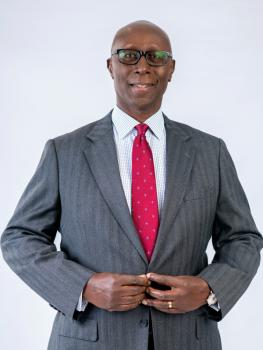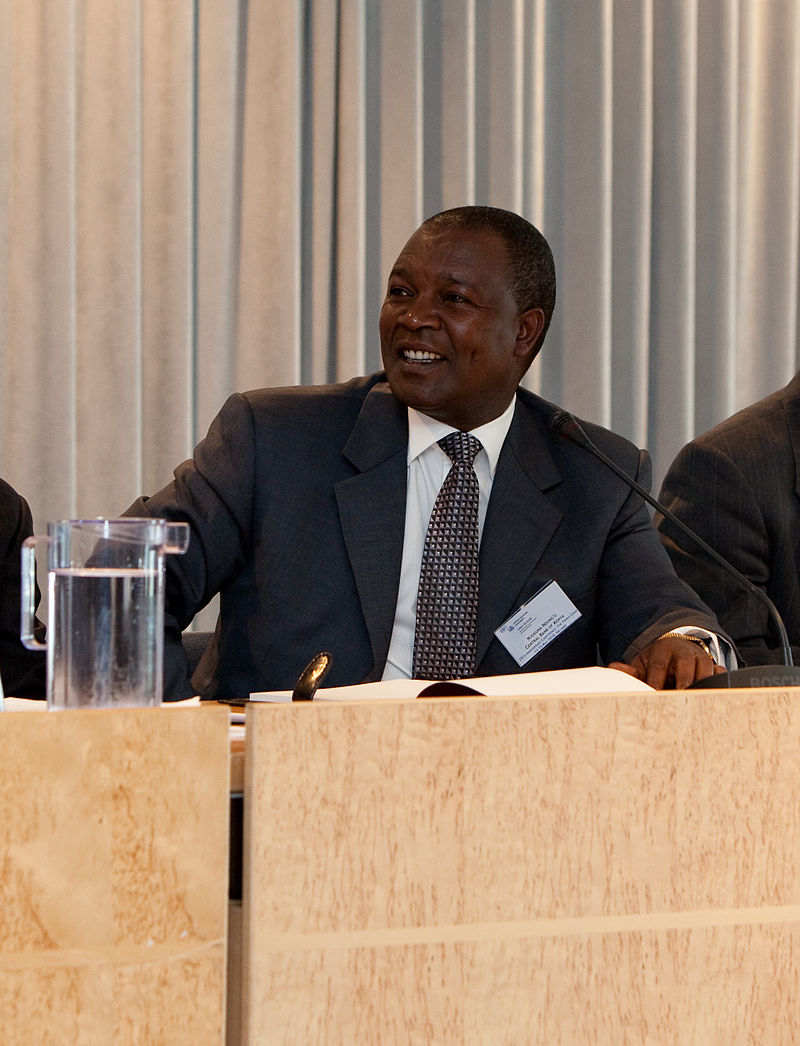
Njuguna S. Ndung’u is a distinguished Kenyan economist who has significantly contributed to both the academic and financial sectors in Kenya. Born in 1960 in Kandara, Murang’a County, Ndung’u pursued his higher education at the University of Nairobi, where he obtained both his Bachelor and Master of Arts in Economics. He further advanced his studies at the University of Gothenburg in Sweden, earning a Doctor of Philosophy in Economics.
Ndung’u‘s career is marked by a blend of academic and practical financial management experiences. Before his notable appointment as the Governor of the Central Bank of Kenya in March 2007, he held various influential positions including the Director of Training at the African Economic Research Consortium (AERC), and an Associate Professor of Economics at the University of Nairobi. He also served in capacities that linked economic policy with regional development, such as a regional programme specialist for the International Development Research Centre in Canada, and at the Kenya Institute for Public Policy Research and Analysis.
During his tenure as the eighth Governor of the Central Bank of Kenya from 2007 to 2015, Ndung’u was instrumental in steering the nation’s monetary policy and financial sector regulation. His leadership saw advancements in the management of inflation, interest rates, and exchange rates. His scholarly work, widely published in international journals, encompasses a range of economic policy issues including financial liberalization, structural adjustment, and labour market dynamics.
After concluding his term at the Central Bank, Ndung’u returned to academia in 2018 as the Executive Director of the AERC, continuing his passion for economic research and policy analysis. In addition, he took on roles such as serving on the advisory board of the United Nations Development Programme’s Human Development Report in 2019.
As of October 2022, Ndung’u has been serving as the Minister of Finance under President William Samoei Ruto’s administration. His portfolio also includes being an ex-officio member of several major international financial institutions like the African Development Bank, East African Development Bank, International Monetary Fund, and the World Bank, where he plays a crucial role in shaping financial policies that influence both regional and global economic landscapes.