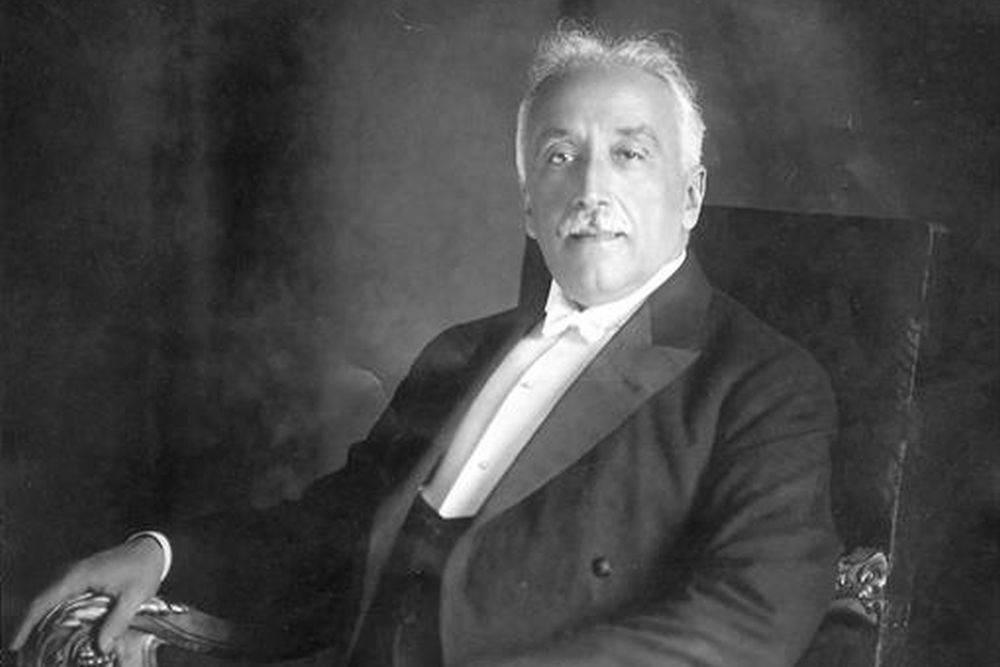
Niceto Alcalá Zamora (born July 6, 1877, Priego, Spain—died February 18, 1949, Buenos Aires, Argentina) was a Spanish lawyer, politician, and president of the Second Republic (1931–36). He played a decisive role in Spain’s transition from monarchy to republic, but his moderate politics and efforts to balance factions led to his deposition and eventual exile.
Early Life and Political Career
Alcalá Zamora studied law before entering politics. In 1905 he was elected to the Cortes (parliament), where he quickly built influence. By 1917, he had risen to become minister of public works, and in 1922, minister of war.
The disastrous Spanish defeat at Anual (1921) in Morocco destabilized the country and opened the way for Gen. Miguel Primo de Rivera’s coup in 1923. Alcalá Zamora, blaming King Alfonso XIII for enabling dictatorship, turned republican and broke ties with the monarchy.
Prime Minister and President of the Republic
In August 1930, he joined the Pact of San Sebastián, aligning with republicans, socialists, and Catalan nationalists to demand Alfonso XIII’s abdication. Following the municipal elections of April 1931, which discredited the monarchy, Alfonso fled Spain. Alcalá Zamora, briefly imprisoned during the upheaval, emerged as prime minister of the provisional government.
In October 1931, he resigned after the Cortes approved anticlerical constitutional clauses that conflicted with his Catholic beliefs. Still, in December 1931, he was elected the first president of the Second Spanish Republic.
As president, Niceto Alcalá Zamora used his limited powers to try to moderate Spain’s polarized politics. In 1934, he intervened against leftist uprisings, while later blocking attempts by right-wing revisionists to alter the constitution. His balanced approach, however, alienated both left and right.
Deposition and Exile
After the Popular Front’s electoral victory in February 1936, tensions reached a climax. On April 7, 1936, the Cortes voted 238 to 5 to depose him, citing technical grounds.
Alcalá Zamora fled first to France and then to Argentina, where he lived in exile until his death in Buenos Aires on February 18, 1949.
Legacy
Niceto Alcalá Zamora is remembered as:
- A moderate republican leader committed to balancing Spain’s deep ideological divides.
- The first president of the Second Republic, tasked with stabilizing democracy.
- A statesman whose fall symbolized the failure of centrism before the Spanish Civil War erupted in 1936.
Key Facts at a Glance
| Year | Event | Outcome |
|---|---|---|
| 1905 | Elected to Cortes | Entered Spanish parliament |
| 1917 | Minister of Works | Expanded political influence |
| 1922 | Minister of War | Oversaw defense reforms |
| 1931 | Prime Minister & President | Key figure in the Republic’s birth |
| 1936 | Deposed by Cortes | Forced into exile |
| 1949 | Died in Buenos Aires | Exiled statesman |
Conclusion:
Niceto Alcalá Zamora remains a symbol of Spain’s fragile republican experiment. His attempt to moderate between extremes reflected his statesmanship but left him isolated. Though deposed and exiled, he occupies a pivotal place in Spain’s turbulent history between monarchy, republic, and civil war.