


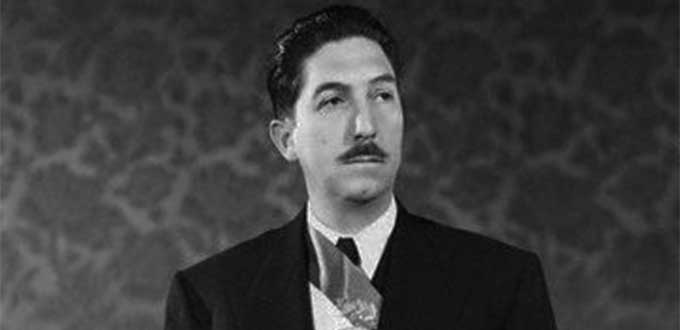
Miguel Alemán Valdés (born September 29, 1902, Sayula, Veracruz, Mexico—died May 14, 1983, Mexico City) was the president of Mexico from 1946 to 1952. A lawyer and politician from the Institutional Revolutionary Party (PRI), he presided over a period of rapid modernization, industrial expansion, and ambitious public works, though his administration was also marred by corruption and slowed agrarian reform.
Early Life and Education
Born into modest circumstances as the son of a village shopkeeper, Alemán pursued law at the National Autonomous University of Mexico (UNAM). He developed an early reputation as a skilled lawyer, specializing in labor law and union cases. His success in representing workers gave him visibility within the political networks of the ruling party.
Political Rise
In the mid-1930s, Alemán entered politics, becoming a senator from Veracruz and later governor of the state in 1936. His tenure as governor was marked by infrastructure expansion and administrative reforms.
In 1940 he resigned to run the presidential campaign of Manuel Ávila Camacho, whose victory secured Alemán a powerful position as minister of gobernación (interior). There, he consolidated political networks, oversaw domestic policy, and positioned himself as Ávila Camacho’s successor.
By 1946, Alemán had become the official PRI candidate. He easily won the election against Ezequiel Padilla, benefiting from the party’s dominance.
Presidency (1946–1952)
Miguel Alemán Valdés was the first civilian president of Mexico in the 20th century, breaking a long tradition of military leadership. His presidency marked a decisive shift toward modernization:
- Economic Policy: He focused on industrial development, urbanization, and foreign investment. His government promoted import-substitution industrialization, which expanded domestic manufacturing.
- Public Works: Alemán launched ambitious construction programs, the most famous being University City (Ciudad Universitaria), the central campus of UNAM, which became a global academic landmark.
- Social Programs: While promoting education and urban growth, his government slowed the pace of agrarian reform, frustrating peasant communities.
- Corruption Allegations: His administration became synonymous with graft, cronyism, and enrichment of elites, weakening his popularity among rural Mexicans even as the middle class benefited.
Later Life
After leaving office in 1952, Alemán remained active in business and politics. From the 1960s onward, he served as president of the National Tourism Council, where he promoted Mexico as a global tourist destination.
He died in Mexico City on May 14, 1983, leaving behind a controversial but significant legacy as the architect of Mexico’s postwar modernization.
Legacy
Miguel Alemán Valdés is remembered for:
- Being the first civilian president of modern Mexico.
- Driving industrial growth and urban modernization.
- Building University City, still a symbol of Mexico’s academic and cultural progress.
- Presiding over a boom in economic development, though at the cost of increased inequality and widespread corruption.
Key Facts at a Glance
| Year | Event | Outcome |
|---|---|---|
| 1902 | Born in Sayula, Veracruz | Humble family background |
| 1936 | Governor of Veracruz | Infrastructure reforms |
| 1940 | Campaign manager for Ávila Camacho | Secured cabinet post |
| 1946 | Elected President | First civilian president |
| 1949 | Completion of University City begins | Landmark of Mexican education |
| 1952 | End of presidency | Shift to business and tourism |
| 1983 | Died in Mexico City | Age 80 |
Conclusion
Miguel Alemán Valdés remains a pivotal figure in Mexican history. His administration embodied the optimism of postwar modernization, balancing rapid urban and industrial growth with political centralization. Though criticized for corruption and neglect of agrarian reform, his leadership redefined Mexico’s mid-20th-century identity and firmly linked the nation to global economic currents.




