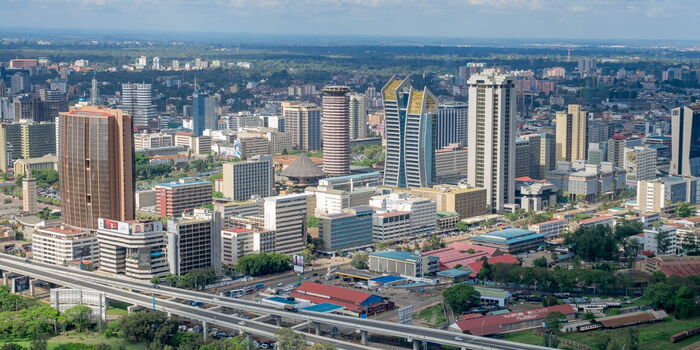
Nairobi is the capital and largest city of Kenya, and it stands as the undisputed economic engine of the country. Founded in 1899 as a railway depot, Nairobi has evolved into a modern global city and the financial heartbeat of East Africa. In 2024, the city recorded a population of approximately 4.83 million people, while the wider metropolitan region hosts about 5.7 million residents, placing Nairobi among the most populous urban centers on the African continent.
Nicknamed the “Green City in the Sun,” Nairobi is globally unique for hosting a fully protected national park within its city limits. Beyond its ecological distinction, Nairobi’s economic weight is immense. When measured in dollars, Nairobi’s GDP rivals that of entire countries in Africa, reflecting its role as Kenya’s center of finance, trade, technology, manufacturing, and regional diplomacy.
Nairobi GDP in Dollars: Latest Estimates
Nairobi contributes the single largest share of Kenya’s total economic output. Both nominal GDP and purchasing power parity (PPP) figures confirm the city’s dominance.
Nairobi GDP (Nominal, USD)
- City GDP: approximately $35 billion
- Metropolitan GDP: approximately $54 billion
- GDP per capita (city): about $7,291
These nominal figures highlight Nairobi as the wealthiest urban economy in Kenya and the leading city economy in East Africa.
Nairobi GDP (PPP, USD)
- City GDP (PPP): approximately $91 billion
- Metropolitan GDP (PPP): approximately $150 billion
- GDP per capita (PPP): about $18,958
When adjusted for purchasing power, Nairobi’s economy expands dramatically, reflecting strong domestic consumption, relatively lower costs, and a vibrant informal and formal business ecosystem.
Nairobi’s Share of Kenya’s Economy
Although Nairobi City County covers just 696.1 square kilometers, it accounts for an estimated 20–25 percent of Kenya’s national GDP. This concentration of wealth underscores Nairobi’s role as the primary engine driving Kenya’s economic growth, tax revenues, and foreign investment inflows.
Compared to other Kenyan counties, Nairobi’s GDP is several times larger than that of industrial regions such as Kiambu, Nakuru, or Mombasa. In dollar terms, Nairobi alone produces more economic output than several East African countries.
Key Economic Drivers Behind Nairobi’s GDP
Financial Services and Capital Markets
Nairobi is Kenya’s financial nucleus. The city hosts the Nairobi Securities Exchange, one of Africa’s most active capital markets. The exchange supports equity trading, government bonds, and derivatives, and it plays a crucial role in mobilizing capital for Kenyan corporations and infrastructure projects. Banking, insurance, fintech, and asset management firms form a large share of Nairobi’s GDP contribution.
Technology and the Digital Economy
Often referred to as the “Silicon Savannah,” Nairobi is Africa’s leading technology hub. The city hosts thousands of startups in fintech, e-commerce, logistics, health tech, and agritech. Mobile money innovations, software exports, and regional tech headquarters significantly boost Nairobi’s GDP in dollar terms.
Manufacturing and Industrial Output
Nairobi remains a major industrial center despite rising land costs. Food processing, pharmaceuticals, textiles, construction materials, and consumer goods manufacturing contribute substantially to city output. Industrial zones in Embakasi, Industrial Area, and parts of the metropolitan region support both domestic supply and regional exports.
Trade, Logistics, and Regional Headquarters
Nairobi’s strategic location makes it the preferred base for multinational firms operating in East and Central Africa. The city hosts regional headquarters for logistics companies, airlines, development banks, and professional services firms. This concentration of regional operations raises Nairobi’s GDP far beyond what population size alone would suggest.
International Organizations and Diplomacy
Nairobi is the only city in the Global South that hosts a full United Nations headquarters. Institutions such as United Nations Environment Programme and the United Nations Office at Nairobi inject billions of dollars into the local economy through employment, procurement, conferences, and diplomatic activity.
Nairobi’s Government and Economic Management
Nairobi operates as a devolved county under Kenya’s constitution, governed by the Nairobi City County administration. The county government is led by Governor Johnson Sakaja, with legislative oversight provided by the County Assembly. Infrastructure spending, urban planning, transport reforms, and digital revenue systems directly influence Nairobi’s economic performance and GDP growth.
Infrastructure and Productivity Impact
Infrastructure remains a critical pillar of Nairobi’s GDP expansion. Expressways, commuter rail, expanded highways, and upgraded utilities have improved productivity and reduced business costs. Jomo Kenyatta International Airport strengthens Nairobi’s role as a regional aviation hub, supporting tourism, cargo, and international trade flows that feed into GDP growth.
Human Development and Economic Output
Nairobi records a Human Development Index of 0.771, classified as high by African standards. The city benefits from a skilled workforce, leading universities, and access to professional services. High human capital levels directly translate into stronger productivity, innovation, and higher GDP per capita compared to most African cities.
Nairobi’s Global City Status
Nairobi is recognized as a global city and has been ranked as a Beta World City by the Globalization and World Cities Research Network. This status reflects Nairobi’s integration into global financial systems, diplomatic networks, and international business flows, reinforcing its ability to generate GDP in dollar terms at a scale unmatched in the region.
Comparison With Other African Cities
In nominal dollar terms, Nairobi’s city GDP places it among Africa’s leading urban economies, alongside cities such as Johannesburg, Lagos, and Cairo. While some of these cities exceed Nairobi in total output, Nairobi’s GDP per capita and PPP-adjusted output highlight a highly productive urban economy relative to population size.
Future Outlook for Nairobi’s GDP
Looking ahead, Nairobi’s GDP in dollars is expected to continue rising, driven by:
- Expansion of the digital and fintech sectors
- Continued infrastructure investment
- Growth of regional headquarters and professional services
- Rising consumer demand from a young, urban population
However, challenges such as congestion, housing affordability, inequality, and informal settlements remain constraints that could affect long-term productivity if not addressed.
Conclusion
Nairobi’s GDP in dollars confirms its position as Kenya’s economic powerhouse and East Africa’s leading city economy. With a nominal city GDP of about $35 billion and a PPP-adjusted GDP of approximately $91 billion, Nairobi’s economic footprint rivals that of entire nations. As infrastructure improves and the digital economy expands, Nairobi is set to strengthen its status as one of Africa’s most important global cities and a key driver of regional economic growth.