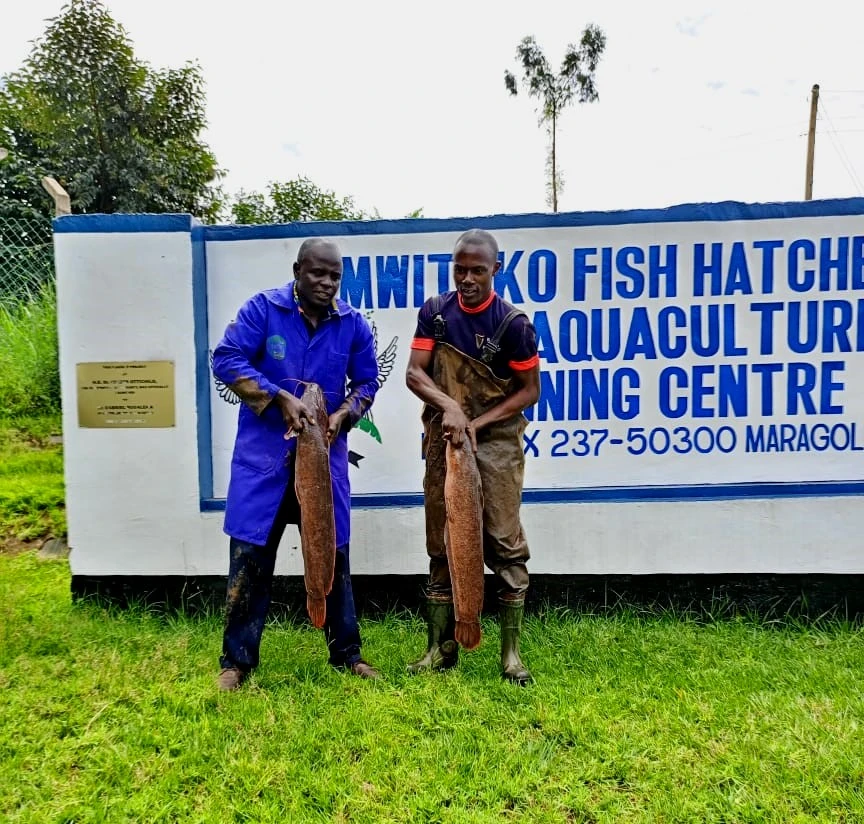
Tucked away in Luanda Sub-County in Vihiga County, the Mwitoko Fish Farm has emerged as one of Western Kenya’s most remarkable aquaculture success stories — and an unlikely tourist attraction. Often dubbed a “no-boat fishing mecca,” it offers visitors an inside look at how innovation and sustainability can work hand in hand to support local livelihoods. The farm is part of a larger network of over 1,600 fish farmers in Vihiga, most specializing in tilapia and catfish, two of the region’s most popular delicacies.
At first glance, the farm’s 40 fully stocked ponds, holding nearly 75,000 catfish, make an impressive sight. Yet, the real marvel lies in the precision and passion of the staff who manage the site. They monitor every pond meticulously, maintaining optimal conditions for breeding and growth. The farm not only supplies fresh fish to the local market but also serves as a training and research hub — connecting universities, researchers, and local innovators with small-scale farmers looking to refine their fish-farming techniques.
The Mwitoko Fish Farm is currently expanding its operations with a KES 10 million hatchery project, championed by Governor Wilbur Ottichilo, aimed at producing over 100,000 fingerlings of various species for regional distribution. This bold step underscores Vihiga County’s commitment to food security, sustainable aquaculture, and rural development. By linking research, production, and distribution, the farm is reshaping the local economy and demonstrating the potential of eco-friendly entrepreneurship in Kenya’s countryside.
For visitors, Mwitoko Fish Farm offers more than just an educational tour — it’s a glimpse into Kenya’s evolving agricultural ingenuity. Whether you’re a researcher, student, or curious traveler, walking through the serene fish ponds surrounded by lush greenery offers a rare combination of learning and leisure.