M-PESA Kenya remains the backbone of the country’s digital payments system. Since its launch in 2007, M-PESA Kenya has transformed how individuals and businesses move money, pay bills and access financial services. What began as a simple mobile transfer tool now anchors billions of shillings in daily transactions.
More than fifteen years later, the platform processes an estimated tens of billions of shillings daily through services like Lipa na M-PESA. That scale has turned a telecom product into national financial infrastructure. In fact, Kenya’s cashless transition owes much of its momentum to M-PESA Kenya’s expansion.
What Is M-PESA Kenya?
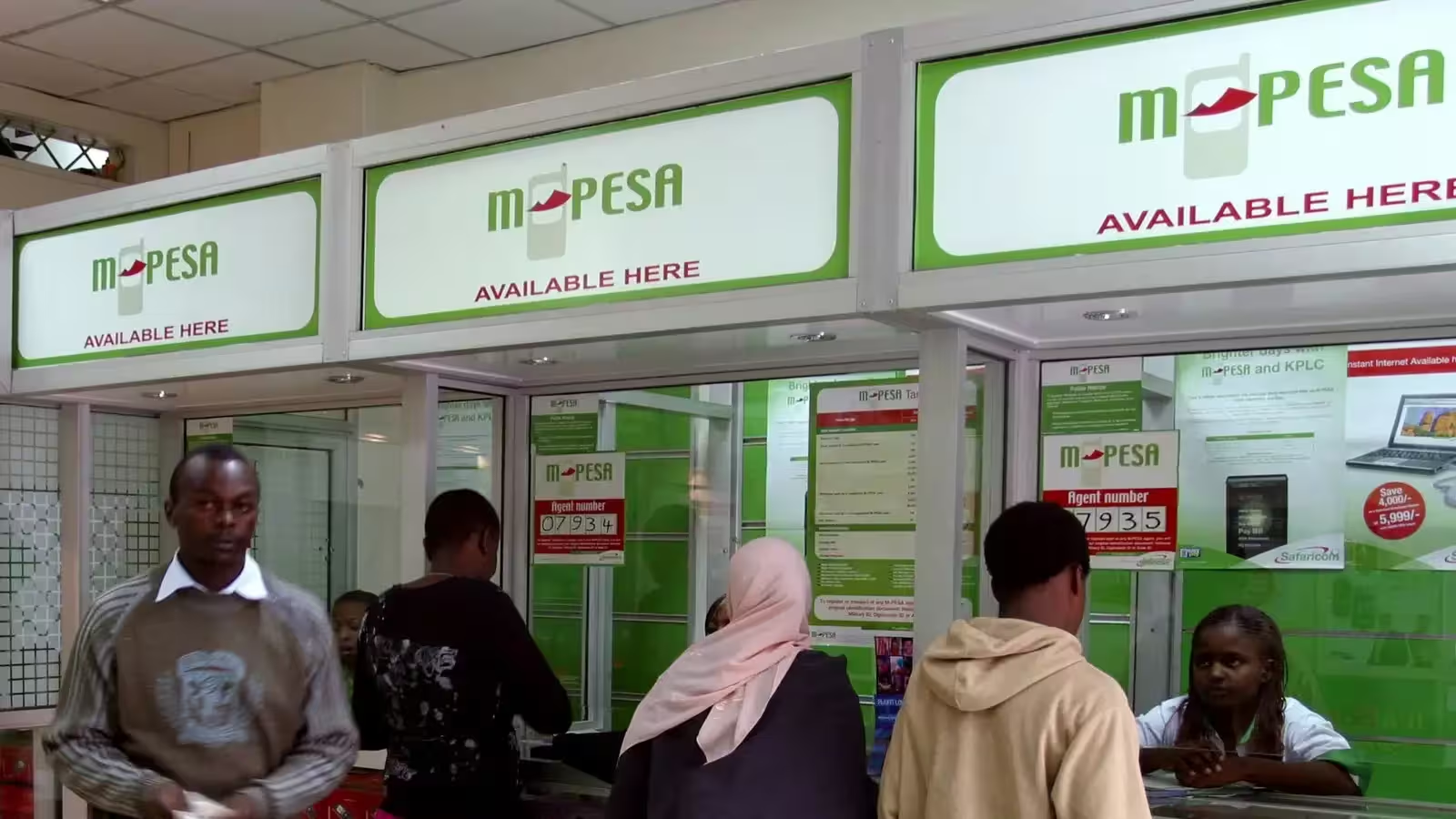
M-PESA Kenya is a mobile money service that allows users to send and receive funds without a traditional bank account. Through a Safaricom SIM card, customers can transfer money, buy airtime, pay bills and withdraw cash via agents nationwide.
The model solved a core African challenge: limited banking access. Instead of building physical bank branches, the system used mobile phones and agent networks. Consequently, millions joined formal financial channels without opening bank accounts.
Today, M-PESA Kenya operates not only in Kenya but also in other African markets. However, Kenya remains its most mature ecosystem.
Lipa na M-PESA Under M-PESA Kenya
Lipa na M-PESA is one of the most widely used services under M-PESA Kenya. It enables customers to pay businesses via Paybill or Buy Goods and Services (Till Number).
The maximum daily Lipa na M-PESA transaction limit stands at KSh 140,000. Meanwhile, the maximum per transaction is KSh 70,000. Charges vary depending on amount and transaction type.
Importantly, since directives by the Competition Authority of Kenya, users now see applicable charges before confirming payment. That transparency strengthened consumer trust in M-PESA Kenya.
Paybill vs Buy Goods and Services
Paybill requires both a business number and an account number. For example, utilities and school fees payments use Paybill.
Buy Goods and Services uses a Till Number only. Retail shops and supermarkets typically display these numbers at checkout.
Because of this structure, businesses can separate customer payments easily. As a result, Lipa na M-PESA now supports utilities, NHIF, NSSF, SACCO contributions and subscription services.
How to Check Lipa na M-PESA Charges
Before transacting, users can dial *234# to query tariffs.
First, select Tariff Query. Then choose Lipa na M-PESA. After entering the Paybill or Till number and transaction amount, an SMS confirms the charges.
This process reduces unexpected deductions and improves transaction planning.
Registering for M-PESA Kenya
Registration for M-PESA Kenya remains free at authorized agents. Customers must present an original identification document such as a Kenyan National ID or passport.
After registration, users activate the account using a four-digit Start Key sent via SMS. They then create a secure PIN.
Security remains central. Users must never share their PIN or Secret Word. If compromised, PIN changes are available through the M-PESA menu.
Deposits, Withdrawals and ATM Access
Depositing money requires visiting an authorized agent with cash and ID. The agent credits the account electronically.
Withdrawals follow a similar process. Registered customers select Withdraw Cash and confirm via PIN. Non-registered recipients receive a one-time voucher code for agent withdrawal.
Additionally, M-PESA Kenya integrates with ATM networks such as PesaPoint and major banks. Users generate a temporary code via phone and complete the transaction at the ATM.
Why M-PESA Kenya Matters for Business
For businesses, Lipa na M-PESA reduces cash handling risks. Theft exposure declines, and transaction records improve accountability.
Moreover, digital payments enhance sales tracking and customer convenience. In rural Kenya especially, merchants rely on M-PESA Kenya to operate without traditional POS terminals.
Across Africa, fintech startups often reference M-PESA Kenya as the blueprint for mobile financial inclusion. It influenced similar models in Tanzania, Ghana and beyond.
Why This Matters
Kenya’s economy increasingly depends on digital transactions. Government services, schools and utilities now integrate mobile payments.
Therefore, M-PESA Kenya functions as financial infrastructure rather than a telecom add-on. Its resilience affects small traders, salaried workers and rural households alike.
What Happens Next
As digital lending and cross-border payments expand, M-PESA Kenya may deepen integration with regional trade systems. However, competition from fintech platforms and banks continues to rise.
Regulatory scrutiny will also increase as transaction volumes grow. Still, given its network scale and agent footprint, M-PESA Kenya remains central to Kenya’s digital economy strategy.