


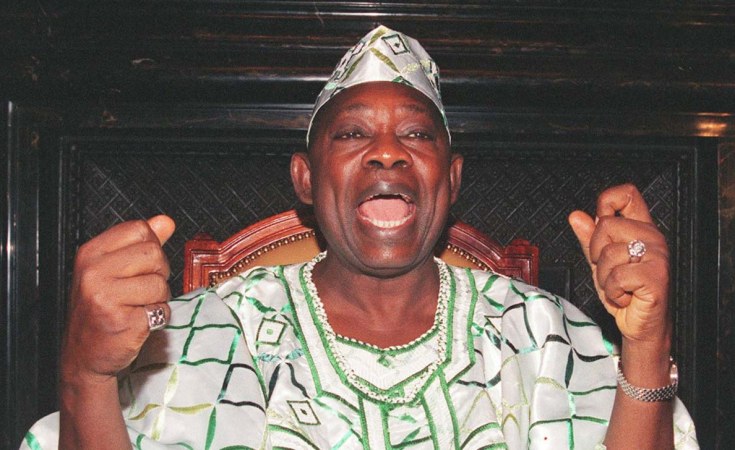
Moshood Kashimawo Olawale Abiola, born on August 24, 1937, in Abeokuta, in the former Colony and Protectorate of Nigeria, emerged from humble beginnings to become one of Nigeria’s most influential figures. The name Kashimawo, meaning “Let us wait and see,” reflected uncertainty about his survival in childhood, but Abiola defied the odds.
He displayed intelligence and determination early in life, excelling in academics while supporting his family financially. His academic brilliance earned him a scholarship to the University of Glasgow in Scotland, where he graduated in 1963 with a degree in accountancy. He later trained at the Institute of Chartered Accountants of Scotland, completing his studies in 1965.
Business Career and Wealth
Abiola began his corporate career at International Telephone and Telegraph (ITT) Nigeria in 1968, quickly rising through the ranks. By 1971, he was appointed chief executive and chairman, positions he held until 1988. Under his leadership, ITT Nigeria became a major player in telecommunications, and Abiola personally amassed significant wealth.
Beyond ITT, Abiola diversified his investments, owning a publishing house, newspaper syndicate, airline, farms, and real estate holdings. His success earned him global recognition, including the title of International Businessman of the Year in 1988.
Abiola also became a notable philanthropist, funding schools, mosques, churches, libraries, and infrastructure projects across Nigeria. His generosity extended beyond Nigeria; he supported liberation movements in Southern Africa and campaigned for reparations for slavery, enhancing his stature as a pan-African figure.
Political Career and the 1993 Election
By the early 1990s, Nigeria was under prolonged military rule, and the demand for democracy had reached its peak. In the landmark June 12, 1993 presidential election, Abiola ran as the candidate of the Social Democratic Party (SDP) in a historic two-party race.
The election was widely regarded by observers as the freest and fairest in Nigeria’s history. Abiola garnered broad-based support across ethnic and religious lines, symbolizing unity in a deeply divided nation. Preliminary results showed him as the likely winner.
However, before results were officially announced, General Ibrahim Babangida, the then-military ruler, annulled the election. The annulment sparked outrage and plunged Nigeria into political turmoil, with June 12 becoming a rallying point for democracy advocates.
Abiola declared himself the rightful president and mobilized domestic and international support. His defiance made him a central figure in Nigeria’s democratic struggle.
Imprisonment and Death
In 1994, Abiola was arrested by the military government led by General Sani Abacha on charges of treason for declaring himself president. He endured years of solitary confinement, denied access to reliable medical care, and subjected to psychological and physical strain.
His imprisonment became a global human rights issue, drawing condemnation from international organizations, governments, and activists.
Following Abacha’s sudden death in June 1998, hopes for Abiola’s release rose. However, on July 7, 1998, just days before his anticipated freedom, Abiola himself died under mysterious circumstances during a meeting with U.S. officials. Although the official cause was listed as a heart attack, suspicions of foul play lingered, fueling speculation and further cementing his martyrdom in Nigeria’s democratic history.
Legacy and National Recognition
Abiola’s death transformed him into a symbol of democracy and resistance. In Nigeria, especially in the southwest, June 12 became an unofficial day of remembrance, honoring both his struggle and the democratic ideals he represented.
In later years, Nigeria formally recognized his contributions. In 2018, the Nigerian government posthumously awarded him the Grand Commander of the Federal Republic (GCFR), the nation’s highest honor, typically reserved for presidents. Furthermore, June 12 was officially declared Democracy Day, replacing May 29 as the national holiday commemorating the return to civilian rule.
Abiola’s life embodies a unique blend of entrepreneurial success, philanthropy, and political sacrifice. To millions of Nigerians, he remains the “Elected President” who never governed, a leader whose vision was cut short but whose struggle reshaped Nigeria’s path toward democracy.


