


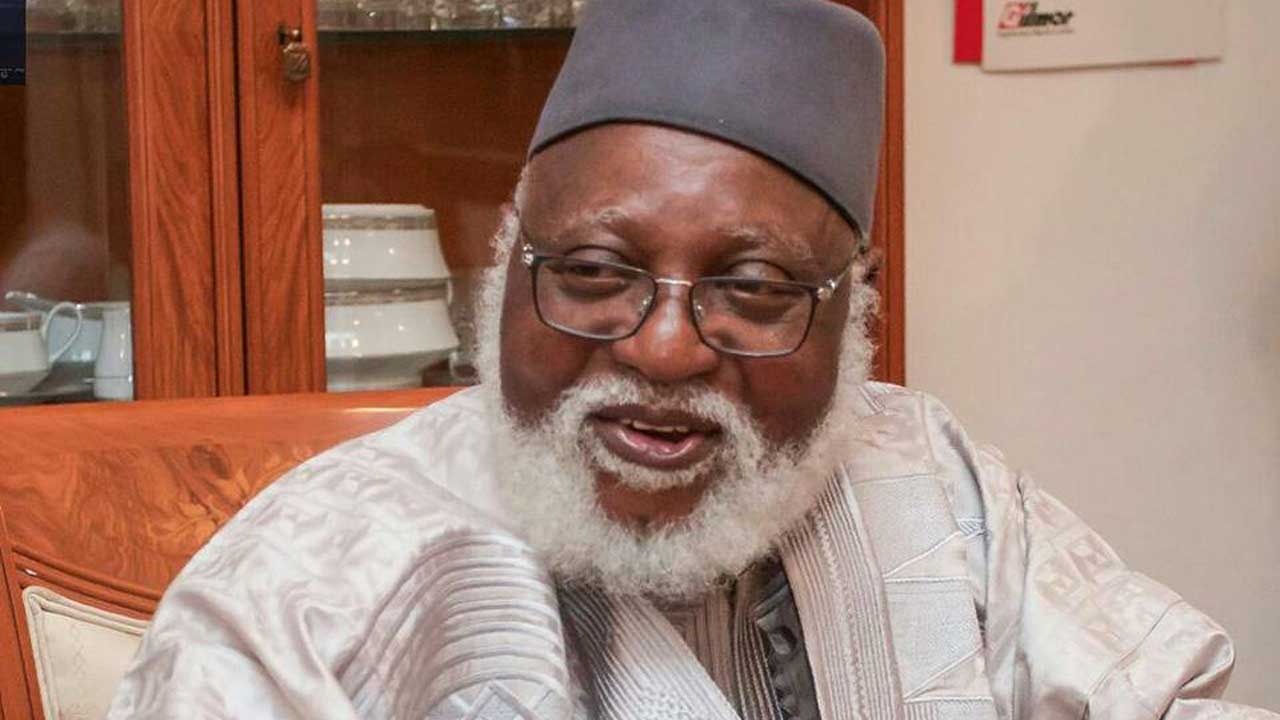
Abdusalam Abubakar, also spelled Abdulsalam or Abdusalami, was born on June 13, 1942, in Minna, Niger State, Nigeria. Originating from the Middle Belt region, Abubakar pursued a career in the Nigerian military during a period of political upheaval and coups.
He joined the army in the mid-1970s and distinguished himself as a disciplined officer. Abubakar’s professional development included formal military training in the United States, which broadened his expertise and prepared him for leadership roles in peacekeeping and defense.
Peacekeeping and Rise in the Military
Abubakar’s international recognition began in 1981, when he commanded Nigeria’s United Nations peacekeeping contingent in Lebanon. His effective leadership in the volatile Middle East boosted his reputation within both the Nigerian Army and international military circles.
By the late 1980s, Abubakar had risen to the rank of senior officer. In 1993, under the military regime of General Sani Abacha, he was appointed Chief of Defence Staff, placing him at the heart of Nigeria’s military command structure. This position kept him close to the center of power during one of the country’s most repressive periods.
Head of State of Nigeria (1998–1999)
The turning point in Abubakar’s career came in June 1998, when General Sani Abacha died suddenly. In the aftermath, Abubakar, as the highest-ranking military officer, was sworn in as Nigeria’s head of state.
Unlike many of his predecessors, Abubakar pursued a short-term agenda: restoring Nigeria to civilian democratic rule. He dissolved Abacha’s political parties, which had been designed to entrench military dominance, and introduced a multiparty framework. He set May 29, 1999 as the date for transferring power to an elected civilian president.
His credibility was reinforced when Wole Soyinka, Nobel laureate and fierce critic of military rule, returned to Nigeria from exile. This gesture symbolized growing confidence in Abubakar’s promises.
Presidential elections were held in January 1999, leading to the victory of Olusegun Obasanjo, who had himself been a former military ruler. On May 29, 1999, Abubakar peacefully handed over power, becoming one of the few Nigerian military leaders to keep such a pledge.
Retirement and Later Life
Following his short but pivotal rule, Abubakar retired from the military and returned to his hometown of Minna, Niger State. In retirement, he maintained a relatively low profile compared to other former heads of state, though he occasionally participated in regional and international mediation efforts, lending his experience to conflict resolution across Africa.
He has since been regarded as a respected elder statesman, admired for his commitment to democracy and his unique role in ensuring Nigeria’s political stability at a critical juncture.
Legacy
Abdusalam Abubakar’s legacy is defined by his role as the transition leader who honored his promise to restore democracy to Nigeria. While his presidency lasted less than a year, his actions helped stabilize the country after years of dictatorship and paved the way for the Fourth Republic, Nigeria’s current democratic system.
He is remembered as a moderate, pragmatic leader, whose brief tenure prevented prolonged instability and created the foundation for Nigeria’s return to civilian governance.


