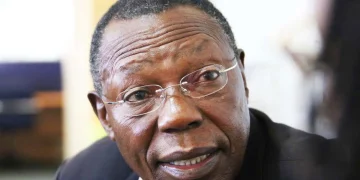
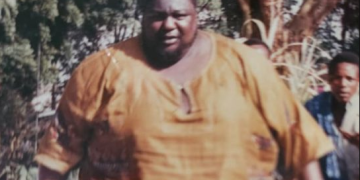
Ignatius Kutu Acheampong was born on September 23, 1931, in Kumasi, in the then Gold Coast (modern-day Ghana). His early education was modest, but he pursued a military career during an era when the newly independent Ghana was shaping its identity under shifting governments.
Acheampong enlisted in the Ghana Army, where he trained as a professional soldier. His rise was steady, and he gained recognition for his discipline and loyalty. By the late 1960s, he had become a lieutenant colonel, placing him among Ghana’s influential mid-level officers during a period of political instability.
1972 Coup and Rise to Power
In January 1972, Acheampong led a military coup that overthrew the civilian government of Prime Minister Kofi Abrefa Busia, whose administration had faced growing criticism over austerity measures and economic decline.
Following the coup, Acheampong established the National Redemption Council (NRC), assuming the role of head of state of Ghana. His rise marked yet another chapter in Ghana’s turbulent post-independence politics, dominated by alternating civilian and military rule.
Policies and Governance
Acheampong’s regime was characterized by both populist measures and authoritarian control. Some of his notable policies included:
- “Operation Feed Yourself” (OFY): A nationwide agricultural campaign encouraging Ghanaians to increase food production to achieve self-sufficiency. While it initially showed promise, it ultimately faltered due to mismanagement and corruption.
- Nationalization and Economic Reforms: Acheampong’s government attempted to restructure the economy, but mounting debt, inflation, and allegations of mismanagement weakened public confidence.
- Foreign Policy: His government maintained a non-aligned stance but struggled to attract sustained international investment.
Despite initial popularity for challenging Busia’s austerity, Acheampong’s rule became increasingly criticized for corruption, nepotism, and inefficiency.
Transition to the Supreme Military Council
In 1975, Acheampong reorganized the NRC into the Supreme Military Council (SMC), consolidating his power and surrounding himself with senior officers. However, discontent within the army and among civilians grew.
By July 1978, facing mounting pressure, Acheampong was forced to resign and was replaced by his deputy, Lieutenant General Frederick W.K. Akuffo. Acheampong was placed under house arrest, signaling the decline of his political influence.
Execution and Death
In June 1979, a coup led by young officers under Flight Lieutenant Jerry John Rawlings toppled Akuffo’s government. The new junta, known as the Armed Forces Revolutionary Council (AFRC), sought to purge corruption and punish former leaders.
On June 16, 1979, Acheampong, alongside Akuffo and other senior military officials, was executed by firing squad in Accra. The executions were highly controversial but symbolized the AFRC’s determination to break with Ghana’s cycle of corruption and failed governance.
Legacy
Ignatius Kutu Acheampong’s legacy remains contested. To some, he is remembered for Operation Feed Yourself, an ambitious effort at food self-reliance that reflected nationalist ideals. To others, his rule epitomized the inefficiency and corruption that plagued Ghana’s military governments in the 1970s.
His death, along with other executed leaders, marked a turning point in Ghana’s political history, paving the way for a brief return to civilian rule in September 1979. Today, Acheampong is remembered as a cautionary figure whose leadership underscored the challenges of governance, military intervention, and economic management in postcolonial Africa.