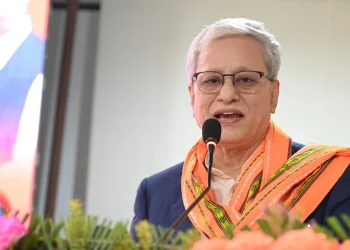
Martin Shikuku, one of Kenya’s most respected and outspoken politicians, was widely known as “The People’s Watchdog.” From colonial detention to fighting for multiparty democracy, Martin Shikuku’s political biography reveals the life of a man who remained deeply committed to accountability, justice, and public service throughout Kenya’s turbulent political journey.
Early Life and Entry into Politics
Born in 1932 in Butere, Western Kenya, Shikuku began his political journey early:
- Joined KADU (Kenya African Democratic Union) in the 1950s.
- Became the party’s youth representative during the Lancaster House Conferences in London.
- Was one of the youngest negotiators for Kenya’s independence.
By 1963, Shikuku had been elected the MP for Butere under KADU and quickly gained a reputation for blunt speech and principled stands.
Role in Post-Independence Parliament
After KADU merged with KANU in 1964, Shikuku joined government ranks but never lost his critical voice:
- He served as an Assistant Minister but often clashed with senior KANU officials.
- Famously dubbed “the People’s Watchdog” due to his commitment to parliamentary oversight.
- Constantly criticized government waste, corruption, and authoritarianism.
In 1975, he was detained without trial after declaring in Parliament that “KANU is dead,” a bold remark that underscored his fearless critique of one-party rule under President Jomo Kenyatta.
Detention and Political Resilience
Shikuku spent two years in detention between 1975 and 1978. Upon release, he:
- Was re-elected MP for Butere.
- Remained a fierce voice in Parliament, advocating for constitutionalism and democratic freedoms.
In an era when dissent often meant exile or worse, Shikuku’s ability to survive politically without compromising his values won him admiration across party lines.
Multiparty Era and the 1990s
During the agitation for multiparty democracy in the early 1990s, Shikuku joined other opposition figures like Kenneth Matiba and Jaramogi Oginga Odinga to form FORD (Forum for the Restoration of Democracy).
He later co-founded:
- FORD-Asili, where he served as Secretary-General.
- Continued to champion opposition unity, though often critical of elite power struggles.
In 1992, he was re-elected as Butere MP under FORD-Asili but lost the seat in the subsequent 1997 elections as the opposition splintered.
Legacy and Final Years
Though he never held a Cabinet post or rose to presidency, Shikuku’s moral authority and parliamentary record made him a towering figure in Kenya’s democratic history.
- He was respected for his unwavering honesty, deep knowledge of parliamentary procedures, and commitment to speaking truth to power.
- Nicknamed “The People’s Watchdog” not by media, but by his constituents and peers.
Shikuku passed away in 2012, leaving behind a legacy of accountability-driven leadership that continues to inspire civic-minded politicians in Kenya.
Conclusion
The Martin Shikuku political biography is not one of riches, titles, or unchecked power—but of courage, resilience, and patriotism. As Kenya continues to grapple with issues of corruption, leadership integrity, and constitutionalism, the example set by Shikuku the Watchdog remains as relevant as ever.
He may not have led a party to State House, but in the hearts of many Kenyans, Shikuku led a moral revolution from the backbench—and for that, history will remember him.