


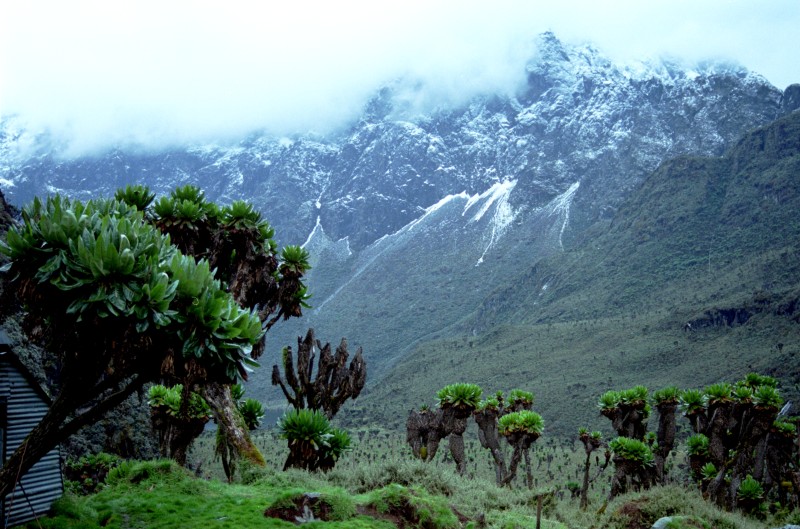
Uganda, often called the “Pearl of Africa”, is a country of diverse landscapes that include lakes, forests, savannas, and dramatic mountain ranges. Its mountains form part of the East African Rift system and the Albertine Rift highlands, playing crucial roles in biodiversity, climate regulation, water catchment, culture, and tourism. Uganda’s mountains range from extinct volcanoes to the glaciated summits of the Rwenzori Mountains, Africa’s legendary “Mountains of the Moon.”
Major Mountains in Uganda
1. Mount Stanley (5,109 m)
- Highest mountain in Uganda and third highest in Africa, after Kilimanjaro and Mount Kenya.
- Located in the Rwenzori Mountains National Park, a UNESCO World Heritage Site.
- Known for glaciers (rapidly receding due to climate change) and alpine vegetation.
- Includes Margherita Peak, the highest point in Uganda.
2. Mount Speke (4,890 m)
- Also part of the Rwenzori Range.
- Famous for rugged peaks and glacial valleys.
- Named after John Hanning Speke, the explorer who sought the source of the Nile.
3. Mount Elgon (4,321 m)
- An extinct stratovolcano on the Uganda–Kenya border.
- Once Africa’s highest mountain before erosion reduced its height.
- Features one of the world’s largest calderas (about 60 km²).
- Rich in biodiversity and home to Mount Elgon National Park.
4. Mount Muhavura (4,127 m)
- Part of the Virunga Mountains, on the Uganda–Rwanda border.
- Nicknamed “the guide” due to its sharp peak visible across the region.
- A dormant volcano popular for hiking and views of the Virunga chain.
5. Mount Sabyinyo (3,674 m)
- Known as the “Old Man’s Teeth” because of its jagged peaks.
- Lies at the junction of Uganda, Rwanda, and the Democratic Republic of the Congo.
- One of the prime locations for mountain gorilla trekking.
6. Mount Gahinga (3,474 m)
- A dormant volcanic cone in the Virunga Mountains.
- Name means “pile of stones” in local languages.
- Surrounded by bamboo forests that are habitats for golden monkeys.
7. Mount Moroto (3,083 m)
- Located in Karamoja, northeastern Uganda.
- An isolated volcanic massif that rises from semi-arid plains.
- Holds cultural significance for the Karamojong people.
8. Mount Kadam (3,063 m)
- Found in northeastern Uganda near Nakapiripirit.
- A rugged mountain range offering spectacular hiking.
9. Mount Morungole (2,750 m)
- Situated in Kidepo Valley National Park, near the borders with South Sudan and Kenya.
- Sacred to the Ik people, who inhabit its slopes.
10. Mount Zulia (2,149 m)
- A less prominent mountain in northern Uganda.
- Important for local ecosystems and communities.
Importance of Uganda’s Mountains
- Biodiversity – The Rwenzori, Virunga, and Elgon ranges are biodiversity hotspots, home to rare flora and fauna including gorillas, golden monkeys, and endemic alpine plants.
- Water Towers – Mountains act as key water catchment areas feeding the Nile and other major rivers.
- Tourism – Hiking, mountaineering, and gorilla trekking attract global tourists.
- Culture & Heritage – Mountains like Morungole and Moroto hold deep spiritual significance for local communities.
- Climate Regulation – High-altitude ecosystems store carbon and regulate rainfall patterns.
✅ In summary, Uganda’s mountains range from the snow-capped Rwenzoris to the volcanic Virunga peaks and the isolated highlands of Karamoja, making them essential to the country’s environment, economy, and culture.


