


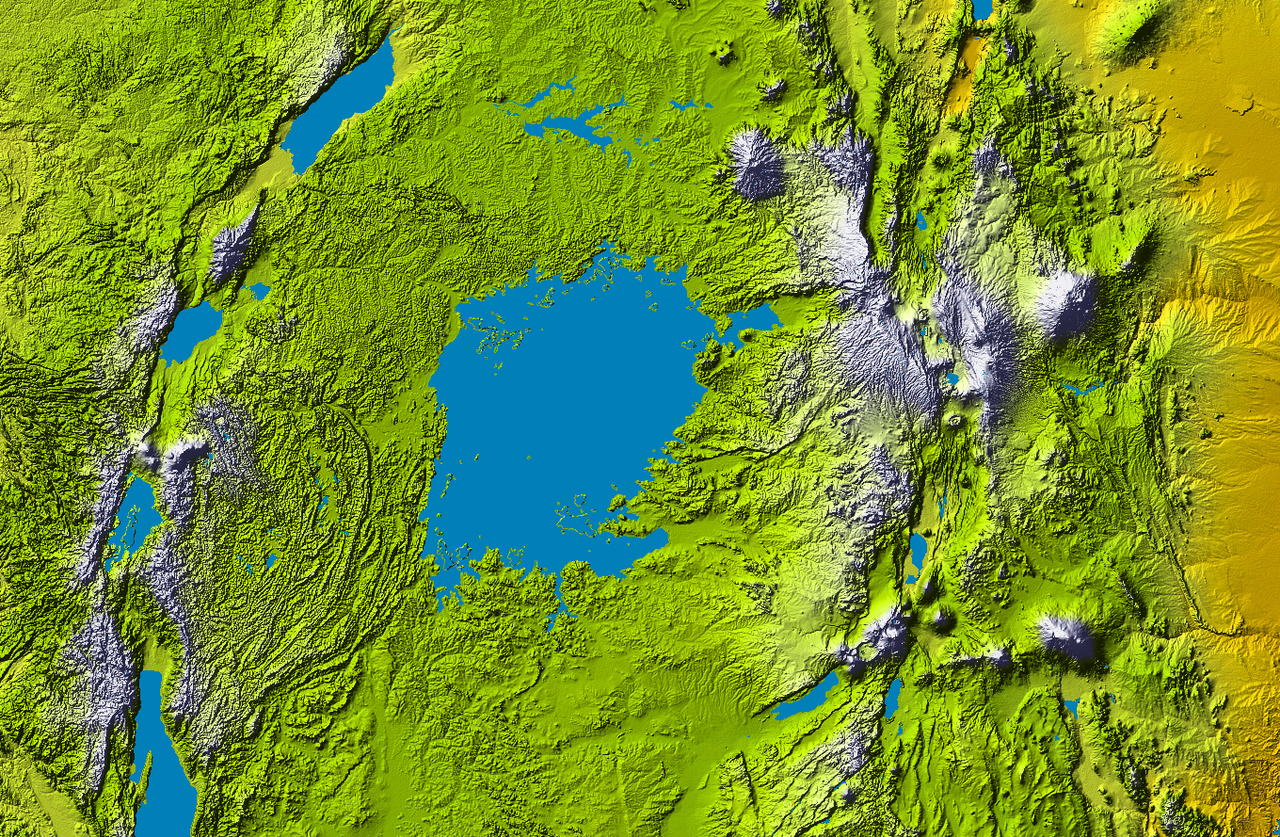
Uganda is famously known as the “Pearl of Africa” and holds a unique geographical position as a freshwater-rich country, with almost 20% of its surface area covered by lakes and wetlands. The country lies in the African Great Lakes Region, sharing some of the largest lakes on the continent, while also hosting dozens of smaller but ecologically and culturally important lakes. These lakes play vital roles in biodiversity, fishing, agriculture, hydroelectric power, transport, culture, and tourism.
Major Lakes of Uganda
1. Lake Victoria
- The largest lake in Africa and the world’s largest tropical lake, shared by Uganda, Kenya, and Tanzania.
- Supports fishing (notably Nile perch and tilapia), transport, and hydroelectric power (Nalubaale and Kiira dams).
- Kampala, Entebbe, and Jinja are key cities on its shores.
2. Lake Albert
- Located on the western border with the Democratic Republic of Congo.
- Part of the Albertine Rift Valley and receives water from the Victoria Nile and Semliki River.
- Known for oil exploration along its basin.
3. Lake Kyoga
- A large, shallow lake in central Uganda, fed primarily by the Victoria Nile.
- Surrounded by extensive wetlands, supporting fishing and agriculture.
4. Lake Edward
- Shared with the DRC, part of the Albertine Rift.
- Linked to Lake George via the Kazinga Channel within Queen Elizabeth National Park.
5. Lake George
- A smaller Rift Valley lake in western Uganda.
- Connected to Lake Edward through the Kazinga Channel, a prime site for wildlife tourism.
6. Lake Mburo
- Located in western Uganda within Lake Mburo National Park.
- Surrounded by savannah and wildlife habitats.
7. Lake Bunyonyi
- Known as “the place of little birds.”
- Located in southwestern Uganda, famous for its scenic beauty, depth, and terraced hills.
- A popular eco-tourism and cultural tourism destination.
8. Lake Wamala
- A small but culturally significant lake in central Uganda.
- Supports local fishing and wetlands conservation.
Other Significant Lakes
Uganda has many medium and small lakes that are crucial for local livelihoods and biodiversity. These include:
- Lake Bisina – Satellite lake of Lake Kyoga, important bird habitat.
- Lake Bugondo, Lake Buhera, Lake Bujuku – Small crater and glacial lakes, some located near the Rwenzori Mountains.
- Lake Katwe – Known for traditional salt mining in western Uganda.
- Lake Nabugabo – A Ramsar-listed wetland system separated from Lake Victoria.
- Lake Mutanda & Lake Mulehe – Scenic lakes in Kisoro District near Mgahinga Gorilla National Park.
- Kabaka’s Lake – A man-made cultural lake in Kampala, built by Kabaka Mwanga in the 1880s.
- Lake Nakivale, Lake Nkugute, Lake Nyungu, Lake Rutoto, Lake Nyabihoko, Lake Nyamusingire, Lake Saka, Lake Kachera, Lake Kayumbu, Lake Kitandra, Lake Kamunzuku, Lake Kwania, Lake Kyahafi, Lake Nakuwa, and Lake Opeta – each serving ecological, cultural, or local agricultural importance.
Importance of Uganda’s Lakes
- Economic Role – Fisheries employ millions, with tilapia and Nile perch as export species.
- Hydropower – Dams on Lake Victoria and its outlet rivers provide most of Uganda’s electricity.
- Transport – Lakes serve as transport routes, especially Victoria, Albert, and Kyoga.
- Tourism – Lakes like Bunyonyi, Mutanda, and Mburo attract domestic and international visitors.
- Cultural Significance – Sacred lakes such as Kabaka’s Lake and Nabugabo are tied to Buganda traditions.
- Biodiversity – Lakes and wetlands are habitats for endemic fish, birds (shoebill, African fish eagle), and other wildlife.
✅ Uganda’s lakes, ranging from the vast Lake Victoria to smaller crater and cultural lakes, form the backbone of the country’s environment, economy, and heritage, making Uganda one of Africa’s most water-endowed nations.


