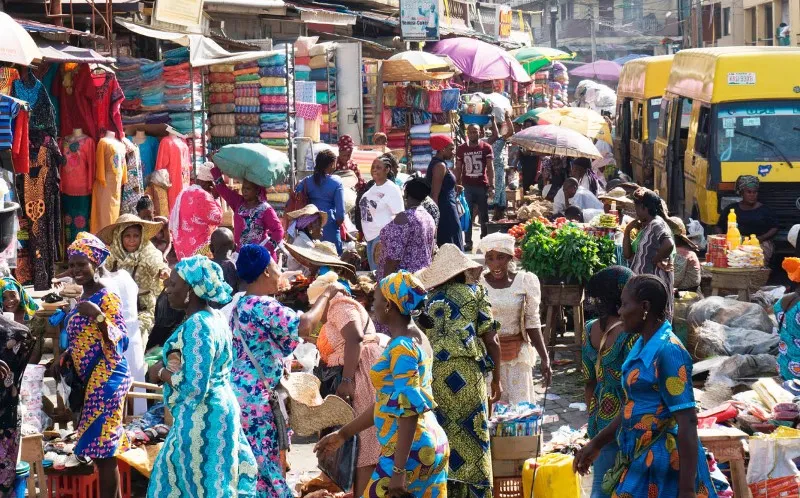
In the bustling streets of Lagos, millions of shoppers buy essentials like soft drinks, instant noodles, and toiletries from small neighbourhood shops. These stores dominate commerce in Nigeria, yet for big brands such as Coca-Cola, Unilever, and Dangote, they remain invisible. The lack of accurate data on informal retail has long created blind spots that weaken supply chains, drain marketing budgets, and discourage investment. Nigeria Informal Retail
Informal retailers account for between 40% and 90% of food sales in Sub-Saharan Africa. However, multinational consumer goods companies often have no reliable picture of how many outlets exist, what they stock, or how quickly products move. This is the challenge that Lengo, a Lagos-based startup founded in 2022, aims to solve. Backed by Ventures Platform, P1 Ventures, Launch Africa, and Acasia Ventures, and part of the Google for Startups Accelerator: AI First programme, Lengo uses artificial intelligence to bring visibility to Nigeria’s vast informal retail market.
Building smarter retail visibility
Lengo’s journey began in Senegal when a global FMCG client asked CEO Max Smith to help update its retailer database. The team discovered twice as many outlets as expected, highlighting the scale of hidden retail. Early efforts relied on field agents walking the streets to interview shopkeepers and count stores. But this method proved costly and outdated by the time results were in. To scale, Lengo turned to AI, leveraging Google Street View and in-house models to detect storefronts, map shop locations, and classify retail types digitally.
Expanding into Nigeria, Lengo estimates that close to a million informal shops power the country’s consumer goods market. The platform can identify food and beverage shops, pharmacies, telcos, salons, and more. After mapping, it reaches retailers through Instagram and Facebook ads and onboards them via WhatsApp, where shopkeepers verify their businesses by sharing geotagged storefront photos. Referrals have become a strong growth engine—30% of new sign-ups now come from retailers inviting their peers, incentivised by airtime credits and discounts.
Why brands need data
For global FMCG companies, the value is clear. Without visibility, they risk reaching only 20% of stores in a target area. Lengo provides real-time shop-by-shop insights into product presence, sales trends, and competitive dynamics. The platform also enables brands to push promotions directly to retailers on WhatsApp. By validating photos of storefronts and stock, Lengo ensures that its data reflects ground truth at scale, an essential safeguard in low-trust markets.
Lengo charges FMCG clients for access to its database and for targeted marketing campaigns. Its latest innovation, an “AI co-pilot for retail in emerging markets,” uses OpenAI technology combined with proprietary data to give managers instant insights on distribution gaps and market share. As Smith explains, it acts like “a trusted AI assistant in your pocket,” helping brands make better strategic decisions.
Competition and global ambition
The African retail intelligence market is heating up. Platforms like Omnibiz focus on digitising supply chains and credit access, while FMCG companies maintain their own fragmented lists of outlets. Lengo’s edge lies in its independent AI-driven mapping and its ability to combine multiple datasets into a comprehensive picture.
Already, the startup has mapped more than 200,000 Nigerian shops and is expanding in cities like Ibadan and Kano. It has also started pilots in India and Latin America, with ambitions to map informal retail globally. Beyond data, Lengo envisions tools for consumers to locate nearby shops stocking essential goods.
For Lengo, Africa’s fragmented retail sector is not a limitation but an opportunity. By bringing visibility to nearly one million hidden shops, the company hopes to transform Nigeria’s informal retail into a market that global brands can finally understand and serve.