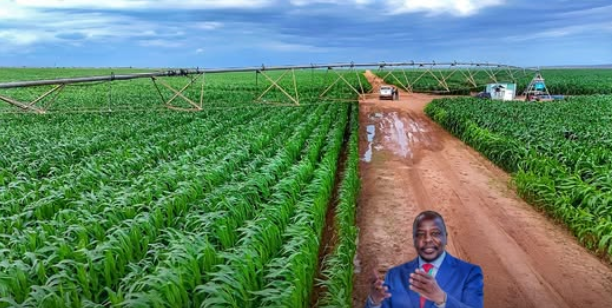
NAIROBI, Kenya, June 19 — Agriculture Cabinet Secretary Mutahi Kagwe has launched the Kenya AgriConnect Compact 2025-2030, a major agriculture investment plan aimed at boosting food security, creating jobs and expanding structured markets.
The compact targets KSh1.47 trillion in total investment over the period.
This includes KSh490.2 billion from public sources and KSh980.4 billion from private sector investment.
Plan Targets Food Security and Jobs
The Kenya AgriConnect Compact is designed to strengthen the link between farmers, markets and income.
The plan targets the creation of 2.4 million jobs across agriculture value chains.
It also aims to reduce staple food imports by 50% while increasing high-value exports by 60%.
Shift From Production to Market Systems
The compact seeks to move agriculture beyond basic production into technology-driven and market-linked farming.
This means improving access to inputs, storage, processing, logistics, finance and buyers.
The goal is to help farmers earn more by connecting production directly to structured markets.
Private Sector to Drive Major Investment
Private sector investment accounts for the largest share of the compact’s financing plan.
The KSh980.4 billion private investment target is expected to support processing, storage, export systems, mechanisation, digital platforms and commercial farming.
Public funding is expected to support infrastructure, policy coordination and farmer support systems.
Focus on High-Value Exports
The plan also seeks to increase exports of high-value agricultural products.
This could include horticulture, livestock products, processed foods and other competitive value chains.
Raising exports is expected to improve farmer incomes and strengthen Kenya’s position in regional and global food markets.
Conclusion
The Kenya AgriConnect Compact 2025-2030 marks a major step in reshaping Kenya’s agriculture sector.
With a KSh1.47 trillion investment target, the plan aims to create jobs, reduce food imports and expand high-value exports.
If implemented effectively, it could move Kenya’s agriculture from subsistence production to a stronger farm-to-market economy.