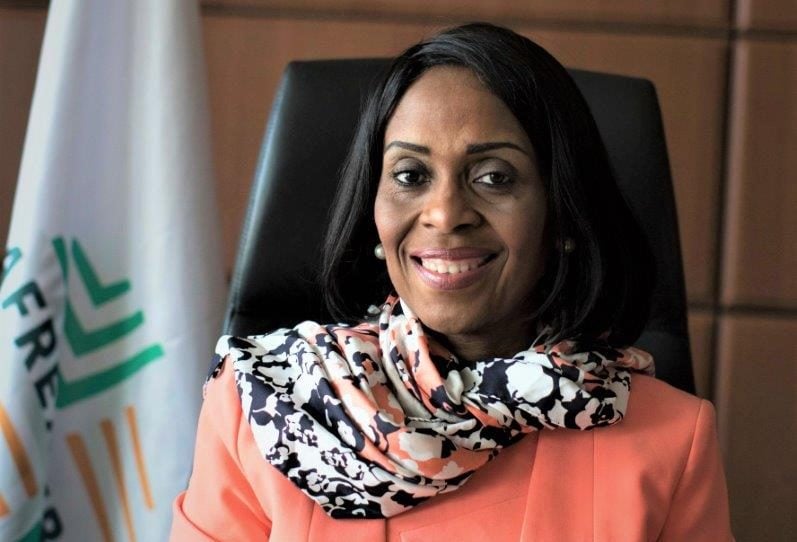
Kanayo Awani, Executive Vice President at Afreximbank’s Intra-African Trade Bank, is on a mission to transform intra-African trade. As part of the bank’s strategy, she’s focused on boosting manufacturing, services, and value addition to create stronger economic links across the continent.
A Shift in Focus at Afreximbank
Awani traces the beginning of this movement to 2015 when Benedict Oramah took over as Afreximbank’s president. His emphasis on intra-African trade from day one marked a pivotal shift in the bank’s priorities. At that time, intra-African trade was only a minor part of Afreximbank’s portfolio—around 3%. Today, it accounts for 35%, thanks to the vision and commitment of the leadership.
The turning point for Awani herself came when Oramah personally asked her to lead a new initiative to grow intra-Africa trade. Awani recalls the moment vividly, noting the challenge and responsibility that came with it, but also her acceptance to take on the task.
Crafting the Intra-African Trade Strategy
Awani’s leadership led to the creation of Afreximbank’s first dedicated intra-African trade strategy, developed with the help of Deloitte and the bank’s strategy team. This strategy centers on three core pillars: Create, Connect, and Deliver, with an additional focus on Measure.
- Create focuses on value addition and expanding Africa’s manufacturing capacity. This includes establishing industrial parks, particularly for light manufacturers.
- Connect aims to build stronger market linkages, addressing historical trade imbalances created by colonialism.
- Deliver focuses on ensuring efficient distribution channels and transport infrastructure improvements across the continent.
- Measure emphasizes tracking progress and effectiveness.
Awani also highlights the need for an interventionist approach, noting that financial access is not the sole issue; non-tariff barriers like lack of trade information also need to be addressed.
Embracing Value Addition
One of the key elements in Awani’s vision is promoting value addition within Africa. She points out that the continent is rich in raw materials, but its real growth will come from processing and manufacturing. The transformation of raw commodities into finished products is the key to driving intra-African trade.
“Selling raw cocoa beans from Ivory Coast to Ghana or Nigeria serves no purpose,” she explains. “The focus should be on manufacturing goods and adding value within Africa itself.”
A Banker’s Background and Vision
Before joining Afreximbank, Awani spent 17 years at Citibank, rising through the ranks to become vice president in charge of commercial and corporate industries. Her early career, including managing Nigeria’s textile industry during its decline, deeply influenced her views on supporting manufacturing.
Awani’s desire for new challenges led her to pursue a mid-career master’s degree at Harvard University, where she specialized in international trade and finance. After her time at Harvard, she joined Afreximbank and began working on the intra-African trade initiative.
The Intra-African Trade Fair (IATF)
One of Awani’s most significant achievements is the creation of the Intra-African Trade Fair (IATF). The fair has become a crucial platform for Africa’s trade initiatives, with its 4th edition in 2025 seeing attendance from 132 countries, generating $48.3 billion in trade deals. The fair is not just a trade event; it’s a platform for showcasing Africa’s potential and promoting its creative industries.
Awani’s inclusion of creative industries in the fair might seem unconventional for a financial institution, but she argues it’s crucial for promoting trade in services. The continent’s youth, she says, is a key advantage, and harnessing their talent in industries like fashion, music, and film is essential for Africa’s future.
Supporting Africa’s Creative Industries
Through Afreximbank’s Creative Africa Nexus (CANEX), Awani has supported over 100 fashion designers and invested in the creative industries with initiatives like a $1 billion film fund. She stresses the importance of not just financing but also building capacity for Africa’s creatives to become “bankable” and commercially viable.
“It’s not enough to be talented. We need to provide training on financial literacy and how to structure their businesses to make them attractive to banks and investors,” she says.
Empowering Women Entrepreneurs
Awani also believes that supporting women entrepreneurs is key to Africa’s economic future. “When you support a woman, you support a family, a community, and a country,” she says. The IATF has become an important platform for empowering women in business, reflecting the growing role of women in Africa’s economic landscape.
Awani’s advice to young women seeking guidance is simple: “Remain focused. Don’t be distracted by everything else. You must position yourself for opportunities.”
Looking Ahead: A Vision for Africa’s Trade Future
Looking back on her work, Awani sees the intra-African trade strategy as part of a larger continental vision. She is optimistic that with continued support for value addition, manufacturing, and creative industries, Africa can unlock its full economic potential and deepen intra-African trade.