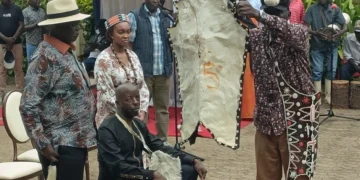
The Kalenjin people are a major ethnic community in East Africa, mostly concentrated in Kenya’s Rift Valley and parts of eastern Uganda. With a population exceeding 6.3 million in Kenya, they rank as the third-largest ethnic group in the country. The Kalenjin people are renowned for their long-distance running prowess, strong pastoralist traditions, and pivotal roles in Kenya’s political history.
Their identity encompasses several subgroups including the Nandi, Kipsigis, Tugen, Pokot, Marakwet, Keiyo, Terik, Ogiek, Sengwer, and others. These communities are bound by language, initiation rituals, and cultural heritage, forming one of the most influential Nilotic-speaking populations in East Africa.
Ancient Origins and Nilotic Roots
The ancestry of the Kalenjin people can be traced back to ancient Nilotic-speaking pastoralists who lived near the Nile Valley over 6,000 years ago. As the Sahara became arid, these communities migrated into southern Sudan and later into the Kenyan highlands. Archaeological and linguistic evidence ties them to the Early Pastoral Neolithic and Elmenteitan cultures, known for advanced beadwork, cattle domestication, and trade.
By the Iron Age, these communities evolved into the Sirikwa culture, a direct predecessor of modern Kalenjin societies. The Sirikwa left behind stone enclosures, trade networks, and rich oral traditions still echoed in modern Kalenjin folklore.
Colonial Era and Political Formation
The late 19th century brought European colonialism, triggering major transformations. The British encountered strong resistance from the Nandi under the leadership of Koitalel Arap Samoei. His assassination in 1905 ended the Nandi resistance and marked the start of the colonial reordering of Kalenjin territories.
The term “Kalenjin” was not widely used until the 1940s. WWII veterans and students adopted it as a unifying identity across the various Nandi-speaking groups. This identity was formalized in 1948 with the founding of the Kalenjin Union and later became politically significant through leaders like Daniel arap Moi, who served as Kenya’s president from 1978 to 2002.
Language and Social Structure
The Kalenjin people speak various Southern Nilotic languages, including Nandi, Kipsigis, Pokot, and Tugen. While each subgroup has linguistic nuances, they share mutual intelligibility. Swahili and English are also widely spoken as second and third languages.
Kalenjin society traditionally revolves around the kokwet (village unit), led by a council of elders. Cultural education is passed down through Kamuratanet, a system of mentorship and folklore. The age-set system governs social roles, leadership succession, and initiation ceremonies.
Rites of Passage and Customs
Initiation is a key component of Kalenjin identity. Boys undergo tumdo (circumcision and seclusion), which marks their transition to adulthood. The practice is deeply sacred and remains in practice, although urban families increasingly opt for hospital circumcisions.
For women, traditional rites including female circumcision have been outlawed and replaced by alternative rites of passage. Campaigners like Hon. Linah Jebii Kilimo have been instrumental in advocating against Female Genital Mutilation (FGM).
Marriage among the Kalenjin involves three main stages: the proposal (kaayaaet’ap koito), formal engagement (koito), and the wedding (tunisiet), with family, clan, and symbolic rituals playing crucial roles.
Religion and Belief Systems
Historically, the Kalenjin people worshiped Asis (a sun deity), and invoked Elat (god of thunder). Diviners or orkoik guided spiritual life, with rainmaking and sacrificial rites central to religious practice. Christianity was introduced during colonial rule and is now the dominant faith. The Africa Inland Church and Catholic Church are especially prominent.
Economic Activities and Urban Migration
Traditionally, Kalenjin communities practiced mixed agriculture and pastoralism. In the fertile highlands of Uasin Gishu and Kericho, they cultivate maize, wheat, tea, and rear dairy cattle. Urban migration has seen many Kalenjin excel in public service, finance, security, and business.
West Pokot and Baringo counties are known for high-quality beef, often used in the local delicacy nyama choma. In towns and cities, the Kalenjin engage in trade and civil service, with a growing presence in entrepreneurship.
Cultural Expressions and Folklore
Kalenjin folklore includes mythical characters like Chemosit and Cheptalel. Their stories warn, entertain, and educate younger generations. Beadwork, music, and oral narratives form key aspects of cultural identity. Ceremonial gourds (sotet) decorated with beads remain important cultural symbols.
Media, Literature, and Innovation
With media liberalization in the 1990s, Kalenjin-language stations like Chamgei FM and Kass TV flourished. Writers like B.E. Kipkorir and Ciarunji Chesaina have documented Kalenjin heritage, while the community’s first film Ngebe Gaa premiered in 2019.
Entrepreneurship in herbal remedies, such as Harriet’s Botanicals, showcases traditional Kalenjin medicinal knowledge applied in modern wellness markets.
Athletic Dominance on the World Stage
Perhaps the most famous attribute of the Kalenjin people is their athletic success. From Kipchoge Keino and Paul Tergat to Eliud Kipchoge and Pamela Jelimo, Kalenjin runners dominate global long-distance races. Thin body structure, high-altitude upbringing, and strong cultural support for endurance training have contributed to this unparalleled success.
Over 40% of international distance running honors since the 1980s have been won by Kalenjin athletes. Their performance in marathons, Olympics, and World Championships has earned them global respect and the moniker “the running tribe.”
Contemporary Influence and Legacy
Today, the Kalenjin people are at the heart of Kenyan identity—shaping politics, sports, and culture. President William Ruto, a Nandi Kalenjin, symbolizes the community’s enduring influence. Despite modern challenges, the Kalenjin retain a strong sense of heritage, adapting ancient traditions into Kenya’s diverse modern landscape.