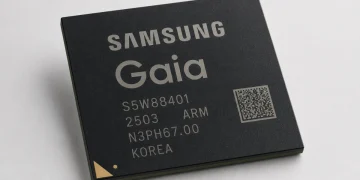
Huawei has unveiled its Ascend 310 AI processor for PCs, claiming double the AI performance of Qualcomm’s Snapdragon X2 Elite. Designed for mini PCs such as the Orange Pi AI Studio, this chip aims to accelerate AI applications and testing for developers.
Performance and Specifications
The Ascend 310 is an octa-core, 64-bit ARM-based AI chip capable of delivering up to 176 TOPS of AI performance—twice that of the Snapdragon X2 Elite, recently released for Windows on ARM laptops. This makes it a powerful option for tasks involving machine learning, neural networks, and AI computation.
The Orange Pi AI Studio mini PC combines the Ascend 310 with 48GB or 96GB of RAM and 32MB of SPI flash. Its Pro model can link two mini PCs, effectively creating a 16-core setup capable of up to 352 TOPS. This setup offers unprecedented AI performance for a compact PC form factor.
Limitations and Considerations
Despite its processing power, the AI Studio Pro has limited connectivity options, featuring only a power switch, LED indicator, DC power port, and a single USB 4.0 Type-C port. Tasks such as display output, storage expansion, and peripheral connectivity depend heavily on this single interface.
Currently, the mini PC supports Ubuntu 22.04.5, Linux kernel 5.15.0.126, and Huawei’s DeepSeek-R1 AI model. Support for Windows is expected in the future, expanding its appeal to a broader developer audience.
Implications for AI Development
The Huawei Ascend 310 positions itself as a high-performance, energy-efficient AI chip for PCs, particularly in compact systems like mini PCs. Its high TOPS rating makes it ideal for AI researchers, developers, and enthusiasts looking to build or test AI applications without investing in larger, more expensive hardware setups.
With this release, Huawei challenges Qualcomm’s dominance in ARM-based AI computing, offering a cost-effective alternative for mini PC AI workloads while supporting the growing demand for edge AI computing solutions.