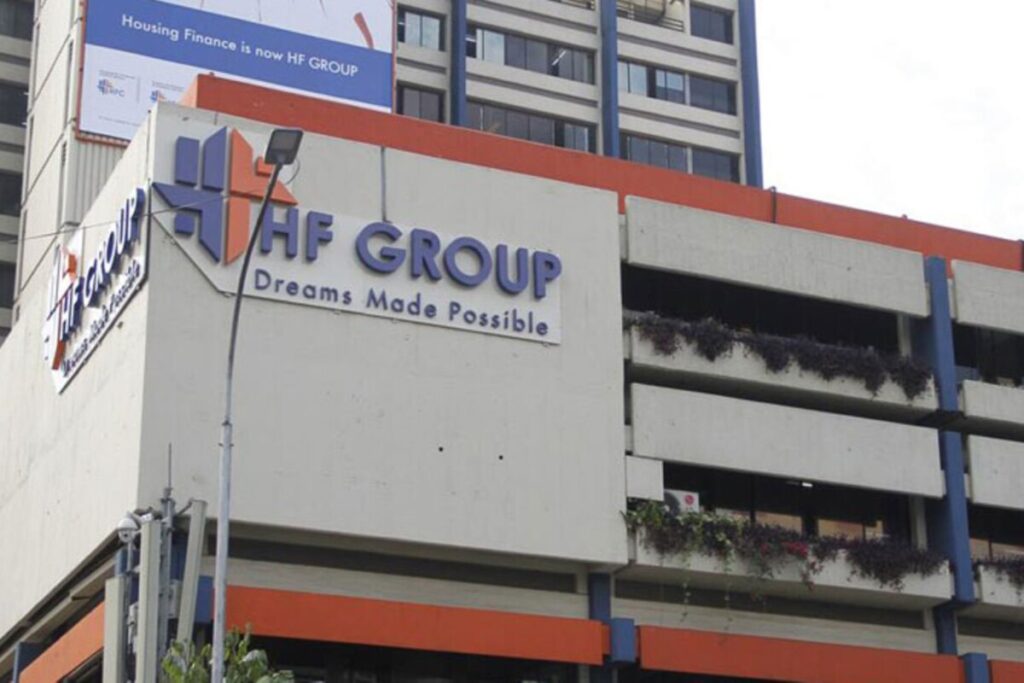
The HFC Affordable Housing Loan is positioning itself as a more accessible alternative within Kenya’s mortgage market as borrowers increasingly seek lower-cost home financing solutions. Offered by HF Group through its HFC brand, the mortgage benefits from Kenya Mortgage Refinance Company (KMRC) wholesale funding support, allowing the lender to provide fixed-rate housing finance at 9.5% per annum.
Compared to standard commercial mortgages in Kenya, the HFC Affordable Housing Loan delivers significantly lower financing costs while maintaining the structured lending environment of a regulated banking institution.
With repayment periods extending up to 20 years and deposit requirements starting at 10%, the product targets middle-income borrowers seeking predictable repayments and long-term housing affordability.
Read Also: Imarisha Sacco Contacts and Branches Guide
About the HFC Affordable Housing Loan
The HFC Affordable Housing Loan is structured as a KMRC-supported affordable mortgage product.
Key Features
| Feature | Details |
|---|---|
| Interest Rate | 9.5% p.a. |
| Rate Structure | Fixed (KMRC wholesale-funded product) |
| Maximum Tenure | 20 years |
| Minimum Deposit | 10% |
| Monthly Repayment | KES 9,321 per KES 1M |
| Insurance Requirement | Yes |
| Insurance Types | Mortgage protection and building insurance |
| KMRC Support | Yes |
| Provider | HFC (HF Group) |
| Regulatory Status | Regulated |
The mortgage combines lower-cost KMRC refinancing with commercial bank mortgage infrastructure.
Why the HFC Affordable Housing Loan Matters
Mortgage affordability remains one of the largest financial challenges facing Kenyan households.
Many borrowers continue struggling with:
- High commercial lending rates
- Rising urban property prices
- Expensive monthly repayments
- Strict mortgage qualification standards
KMRC-backed mortgage products are increasingly helping improve affordability by:
- Lowering financing costs
- Stabilizing repayment structures
- Expanding long-term financing access
- Supporting affordable housing initiatives
Compared to HFC’s standard mortgage product, the affordable housing loan offers dramatically lower borrowing costs.
Read Also: Imarika Sacco Contacts and Branches Guide
Understanding the Monthly Repayment Structure
The HFC Affordable Housing Loan estimates repayments at approximately KES 9,321 monthly per KES 1 million borrowed.
Example Monthly Repayment Estimates
| Loan Amount | Estimated Monthly Repayment |
|---|---|
| KES 1 million | KES 9,321 |
| KES 3 million | KES 27,963 |
| KES 5 million | KES 46,605 |
| KES 10 million | KES 93,210 |
Actual repayments may vary depending on:
- Insurance costs
- Loan tenure
- Processing charges
- Final approved structure
Still, the repayment profile remains considerably more affordable than many conventional commercial mortgages currently available in Kenya.
Fixed Mortgage Rates Explained
The HFC Affordable Housing Loan uses a fixed-rate structure supported by KMRC wholesale funding.
Benefits of Fixed Mortgage Rates
Fixed-rate mortgages provide:
- Stable monthly repayments
- Easier household budgeting
- Protection against rising interest rates
- Long-term repayment predictability
During periods of inflation and monetary tightening, repayment certainty becomes especially valuable.
Fixed vs Variable Mortgage Comparison
| Feature | Fixed Mortgage | Variable Mortgage |
|---|---|---|
| Repayment Stability | High | Moderate |
| Exposure to Market Changes | Low | High |
| Budget Predictability | Strong | Moderate |
| Risk During Rate Increases | Lower | Higher |
Borrowers prioritizing financial stability often prefer fixed-rate financing structures.
Deposit Requirements Explained
The mortgage requires a minimum deposit of 10%.
Example Financing Structure
| Property Value | Minimum Deposit | Estimated Financing |
|---|---|---|
| KES 5 million | KES 500,000 | KES 4.5 million |
| KES 8 million | KES 800,000 | KES 7.2 million |
| KES 10 million | KES 1 million | KES 9 million |
Lower deposit thresholds can improve access to home ownership, especially for first-time buyers.
However, borrowers should still prepare for additional acquisition-related costs.
Additional Costs Borrowers Should Expect
Mortgage financing involves several expenses beyond monthly loan repayments.
Common Additional Costs
| Expense | Purpose |
|---|---|
| Legal Fees | Property transfer processing |
| Stamp Duty | Government property tax |
| Valuation Fees | Property assessment |
| Insurance Premiums | Borrower and asset protection |
| Registration Costs | Ownership documentation |
These costs can materially affect overall affordability.
Insurance Requirements
The HFC Affordable Housing Loan requires:
- Mortgage protection insurance
- Building insurance
Why Mortgage Insurance Matters
Mortgage protection helps settle outstanding obligations if the borrower experiences:
- Death
- Permanent disability
- Covered financial hardship events
Building insurance protects the financed property against:
- Fire
- Structural damage
- Other covered risks
Insurance remains a standard requirement across Kenya’s housing finance sector.
Risks to Consider
Although the HFC Affordable Housing Loan offers lower-cost financing than many traditional commercial mortgages, borrowers should still evaluate risks carefully.
Key Risks
- Long-term debt obligations
- Income disruptions
- Inflation pressures
- Property market fluctuations
- Insurance cost increases
Borrowers should avoid committing to repayment obligations beyond sustainable income levels.
Financial experts often recommend maintaining mortgage repayments below one-third of monthly income.
HFC Affordable Housing Loan vs Standard HFC Mortgage
Comparison Table
| Feature | HFC Affordable Housing Loan | HFC Standard Mortgage |
|---|---|---|
| Interest Rate | 9.5% fixed | 18.92% variable |
| KMRC Support | Yes | No |
| Repayment Stability | High | Moderate |
| Monthly Affordability | Higher | Lower |
| Market Exposure | Lower | Higher |
The KMRC-backed structure significantly improves affordability and repayment predictability.
Inflation and Housing Finance in Kenya
Inflation continues increasing:
- Construction costs
- Urban property prices
- Rental expenses
- Household budgets
As housing affordability pressures intensify, lower-cost mortgage products may become increasingly important for Kenya’s expanding middle class.
Fixed-rate mortgages can also shield borrowers from future interest rate increases.
Who Should Consider the HFC Affordable Housing Loan?
The mortgage may suit:
- First-time homebuyers
- Salaried professionals
- Middle-income households
- Borrowers seeking repayment certainty
- Buyers prioritizing lower financing costs
Its lower repayment structure also makes it more accessible than many conventional commercial bank mortgages.
What Happens Next in Kenya’s Affordable Housing Market?
Kenya’s affordable housing finance market is expected to continue evolving through:
- Expanded KMRC refinancing
- Increased lender participation
- Digital mortgage onboarding
- Lower financing barriers
- Greater competition among banks and SACCOs
As competition increases, borrowers may benefit from:
- Improved pricing
- Faster approvals
- More flexible financing structures
Affordable housing finance is likely to remain a major strategic focus within Kenya’s banking sector.
Final Thoughts on the HFC Affordable Housing Loan
The HFC Affordable Housing Loan stands out as a significantly more affordable alternative to many traditional commercial mortgages currently available in Kenya. Its fixed 9.5% rate, KMRC wholesale funding support, and manageable repayment structure create meaningful affordability advantages for long-term borrowers.
For middle-income households seeking predictable repayments and lower financing costs, the mortgage offers a practical route into home ownership through a regulated banking institution.
Still, borrowers should carefully evaluate affordability, understand all associated acquisition costs, and confirm updated mortgage terms directly with the lender before proceeding.
Mortgage pricing, insurance requirements, and approval conditions may change depending on market conditions and KMRC financing policies.