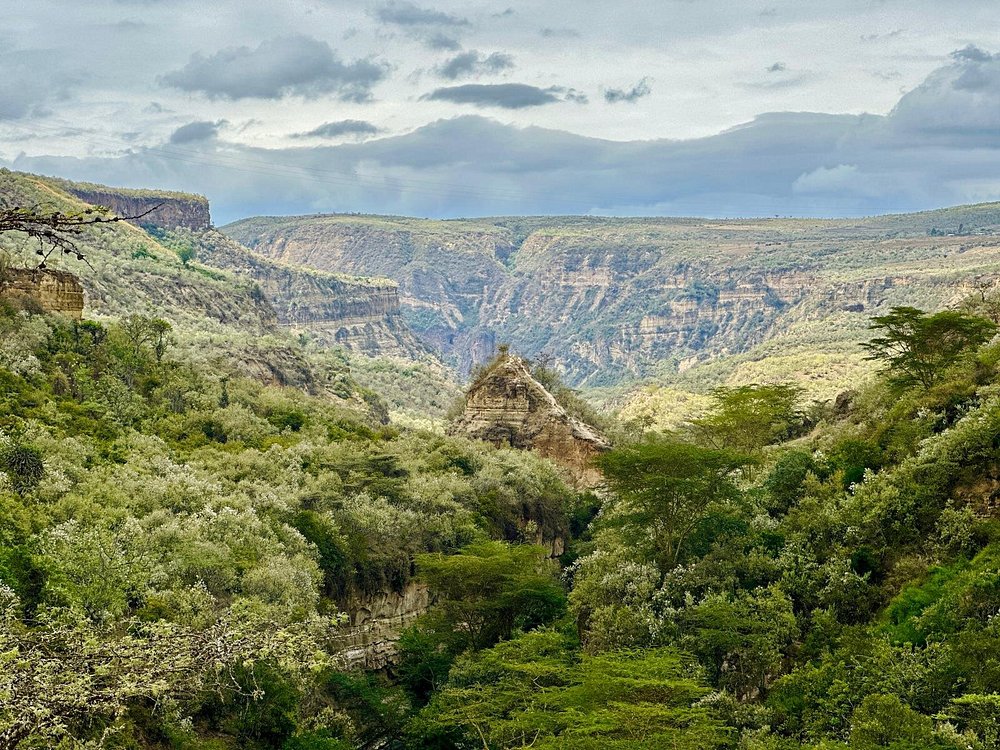
Hells Gate National Park stands out as one of Kenya’s most visually dramatic and experientially unique protected areas. Located near Lake Naivasha within the Great Rift Valley, the park offers visitors an environment shaped by volcanic forces, deep gorges, towering cliffs, and geothermal activity. Unlike many wildlife destinations that emphasize vehicle-based safaris, Hells Gate National Park invites visitors to experience nature more directly through walking, cycling, hiking, and climbing. This openness creates a sense of immersion that feels both adventurous and intimate.
The park’s name originates from a narrow break in towering cliffs that once served as a water channel for a prehistoric lake. Over time, erosion and volcanic activity carved out the dramatic rock formations that define the area today. These natural features have made Hells Gate National Park a place of geological significance as well as scenic beauty. Steam vents, hot springs, and obsidian formations reflect the ongoing geothermal energy beneath the surface, reminding visitors that the land remains active and evolving.
Hells Gate National Park also holds a special place in Kenya’s tourism landscape because of its accessibility. Situated a manageable distance from Nairobi, it offers a convenient escape into nature without requiring long travel times. This proximity has made it popular among day visitors, outdoor enthusiasts, students, and travelers seeking a different kind of safari experience. The park’s relatively lower entry fees compared to larger reserves further broaden its appeal.
Beyond recreation, the park plays an important role in education, conservation, and renewable energy development. It hosts cultural interpretation centers, supports bird conservation, and accommodates geothermal power infrastructure that contributes to Kenya’s energy supply. This combination of nature, culture, adventure, and sustainability makes Hells Gate National Park a multifaceted destination that reflects both Kenya’s natural heritage and its future priorities.
Historical Background of Hells Gate National Park
The story of Hells Gate National Park is closely tied to early exploration of the Rift Valley. In the late nineteenth century, European explorers traversing the region encountered the dramatic gorge that later gave the park its name. The narrow rock passage, flanked by sheer cliffs, left a lasting impression and became known as “Hell’s Gate” due to its imposing appearance and intense heat rising from below.
Volcanic activity has shaped the park’s history long before modern exploration. Eruptions from nearby volcanic systems deposited ash and lava across the landscape, creating the rugged terrain seen today. Evidence of these eruptions remains visible in obsidian fields, volcanic plugs, and layered rock formations scattered throughout the park.
Formal protection of the area came later, as conservation awareness grew and the value of the landscape became more widely recognized. Hells Gate National Park was officially established to preserve its geological features, wildlife, and scenic qualities. Over time, it evolved into a destination known not only for wildlife viewing but also for outdoor adventure and environmental education.
Geography and Physical Features of Hells Gate National Park
Hells Gate National Park lies within Kenya’s Rift Valley region and sits at a relatively high elevation. This positioning contributes to its dry climate and distinctive vegetation patterns. The park’s terrain is defined by steep cliffs, narrow gorges, open plains, and volcanic remnants that create a visually striking environment.
One of the most recognizable features is the deep gorge that cuts through the park. The gorge walls display layers of volcanic rock shaped by water and erosion over thousands of years. In certain sections, geothermal vents release steam, and mineral-rich water flows through narrow channels, adding to the park’s otherworldly atmosphere.
Volcanic plugs such as Fischer’s Tower and Central Tower rise sharply from the valley floor. These formations attract climbers and photographers while also serving as landmarks that illustrate the park’s volcanic origins. Obsidian deposits formed from rapidly cooled lava appear along trails and cycling routes, offering a tangible connection to the park’s geological past.
Wildlife Found in Hells Gate National Park
While Hells Gate National Park is not known for dense populations of large predators, it supports a diverse range of wildlife adapted to open and semi-arid environments. Herbivores such as zebras, buffalo, elands, hartebeests, and gazelles are commonly seen grazing across the plains. Their presence supports a functioning ecosystem and provides rewarding viewing opportunities for visitors exploring the park on foot or by bicycle.
Predators are present but less frequently encountered. Leopards and cheetahs inhabit the area, although sightings are relatively rare. This lower predator density contributes to the park’s reputation as one of the few national parks in Kenya where walking and cycling are permitted under regulated conditions.
Birdlife is a major highlight of Hells Gate National Park. The cliffs and open skies provide ideal habitats for raptors and scavenging birds. The park has long been recognized as an important site for birds of prey, including vultures and eagles. This avian diversity adds another dimension to the visitor experience and supports conservation efforts focused on declining raptor populations.
Adventure and Outdoor Activities at Hells Gate National Park
Hells Gate National Park is widely regarded as one of Kenya’s premier adventure destinations. Its terrain and wildlife composition allow for activities that are restricted or prohibited in many other parks. Visitors can explore designated areas on foot, offering a sense of closeness to the landscape that vehicle-based safaris cannot provide.
Cycling is one of the park’s most popular activities. Visitors can rent bicycles at the main gate or bring their own, following established routes through plains, rock formations, and geothermal features. Cycling allows for flexible exploration and offers unique photographic opportunities.
Hiking within the gorge is another major attraction. Guided walks lead visitors through narrow passages, past hot springs, and alongside sculpted rock walls. Local guides are required for safety, as water levels and geothermal activity can change quickly. These hikes provide insight into the park’s geology and natural processes.
Rock climbing has also become a defining feature of Hells Gate National Park. Volcanic towers such as Fischer’s Tower and Central Tower attract climbers of varying skill levels. Guided climbing sessions are available, making the activity accessible to beginners while still challenging for experienced climbers.
Cultural and Educational Experiences at Hells Gate National Park
In addition to outdoor adventure, Hells Gate National Park offers cultural and educational opportunities. A Maasai cultural center within the park provides insight into traditional practices, beliefs, and ways of life. These programs help contextualize the relationship between people and the landscape, emphasizing coexistence rather than separation.
Educational visits are common, particularly for schools and universities. The park’s geological features, wildlife, and renewable energy infrastructure make it a valuable learning environment. Interpretive signage and guided tours support environmental education and awareness.
Olkaria Geothermal Development and Its Impact
Hells Gate National Park is unique among national parks due to the presence of geothermal power stations within its boundaries. The Olkaria geothermal field harnesses underground heat to generate renewable electricity, contributing significantly to Kenya’s energy supply.
Geothermal development began decades ago and has expanded over time. Power stations and pipelines now occupy sections of the park, creating an unusual juxtaposition of industrial infrastructure and protected landscape. While this development supports national energy goals, it has also transformed parts of the park’s character.
Efforts continue to balance energy production with conservation. Environmental monitoring and land-use planning aim to minimize ecological disruption while allowing renewable energy generation to coexist with tourism and wildlife protection.
Tourism Facilities and Visitor Experience
Hells Gate National Park offers basic but functional visitor facilities designed to support outdoor exploration. Several public campsites are available for those wishing to stay overnight. These campsites provide a close-to-nature experience and are considered safe due to the park’s low density of dangerous predators.
Accommodation options are also available outside the park, particularly around Lake Naivasha. Lodges and camps in the surrounding area complement visits to Hells Gate National Park and offer additional activities such as birdwatching and lake excursions.
The park’s layout and accessibility make it suitable for both short visits and full-day exploration. Clear signage, maintained trails, and guided services help visitors navigate the landscape safely and responsibly.
Entry Fees and Charges at Hells Gate National Park
Entry to Hells Gate National Park is charged per person per day, with rates varying by visitor category. Fees differ for citizens, residents, and non-residents, as well as for adults and children. All payments are processed electronically through approved platforms, as cash is not accepted.
Additional charges apply for specific activities such as cycling, guided gorge hikes, rock climbing, and camping. Bicycle rentals are available at the main gate, while guided services are arranged through registered operators. Camping fees are charged per night and vary depending on visitor category.
Separate fees apply for access to nearby geothermal spa facilities, which are not included in standard park entry. These charges support maintenance, conservation efforts, and visitor services within the park.
Access and Getting to Hells Gate National Park
Hells Gate National Park is accessible via road from Nairobi and nearby towns. The park is located off the main route to Naivasha, with clear signage directing visitors to the entrance. Its location makes it suitable for day trips as well as extended stays in the Rift Valley region.
Public transport options reach Naivasha, from where visitors can connect to the park by taxi or organized tour. Private vehicles are also commonly used, and parking facilities are available at the main gate.
The combination of accessibility, scenic value, and diverse activities has established Hells Gate National Park as a key destination within Kenya’s tourism network.
Entry Fees (2026 Rates):
| Category | Adult (Per Day) | Child (3–17 yrs) |
|---|---|---|
| Non-Resident (International) | US$ 50 | US$ 25 |
| African Passport Holder (Non-EAC) | US$ 20 | US$ 10 |
| Kenya Resident / EA Resident | KSh 675 | KSh 350 |
| Kenya / EA Citizen | KSh 500 | KSh 250 |
| Sources: |
Key Activities & Costs
- Cycling: Bicycles can be rented at the Elsa Gate (main gate) for approximately KSh 800–1,000 per day. If you bring your own bike, an entry fee of US$ 10 (non-residents) or KSh 300 (residents) applies.
- Gorge Hiking: Exploring the Ol Njorowa Gorge features hot springs and unique rock formations. A local guide is mandatory for safety and typically costs KSh 1,500–3,000 per group.
- Rock Climbing: Fischer’s Tower (25m) and Central Tower are popular volcanic plugs for climbing. Guided climbing sessions generally range from US20toUS20 t o cap U cap S20𝑡𝑜𝑈𝑆 50.
- Olkaria Geothermal Spa: Located at the northern end of the park, this spa features naturally heated mineral pools. Access requires a separate fee of approx. US$ 20 for non-residents or KSh 400 for citizens.
- Camping: Three basic public campsites (Naiburta, Oldubai, and Endachata) are available. Camping fees for non-resident adults are approx. US$ 20–35 per night.
Wildlife & Landmarks
- Animals: Though large predators are rare (occasional leopards), the park is home to buffalo, zebras, giraffes, elands, and warthogs.
- Birdlife: A haven for raptors, including the rare Lammergeyer (Bearded Vulture), Verreaux’s Eagles, and Ruppell’s Vultures.
- Obsidian Caves: Located along the cycling circuit, these caves showcase cool, black volcanic glass formed from molten lava.