


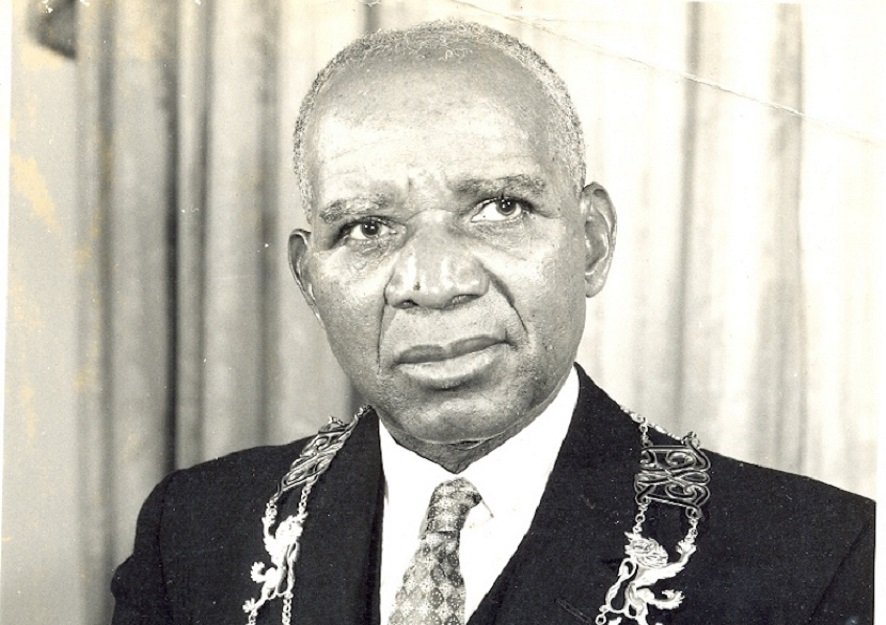
Hastings Kamuzu Banda (born c. 1898, near Kasungu, British Central Africa Protectorate [now Malawi]—died Nov. 25, 1997, Johannesburg, South Africa) was the first president of Malawi and the key nationalist leader in the country’s path to independence.
Although his official birthday was long given as May 14, 1906, evidence suggests he was born several years earlier, likely before 1900. The son of subsistence farmers, Banda received his earliest education in mission schools. He later traveled through Southern Rhodesia (now Zimbabwe) and South Africa before leaving for the United States in 1925.
In America, Banda studied at Lincoln University, the University of Chicago, and Meharry Medical College in Tennessee, earning both a B.A. (1931) and a medical degree (1937). To qualify for practice in the British Empire, he continued his studies at the University of Edinburgh in 1941 and later practiced medicine in northern England and London from 1945 to 1953.
Rise in Nationalist Politics
Banda’s involvement in politics began in the late 1940s, when Britain advanced the Federation of Rhodesia and Nyasaland. Many Africans opposed the federation, seeing it as an extension of white settler dominance. By 1953, despite objections, the federation was established.
From 1953 to 1958 Banda practiced medicine in Ghana, but Nyasaland nationalists repeatedly pressed him to return home. He finally did so in 1958 and assumed leadership of the Nyasaland African Congress. Touring the country, Banda gave fiery speeches against the federation, and in 1959 the colonial government declared a state of emergency, arresting him.
Released in 1960, Banda engaged with Britain on constitutional reforms that allowed greater African representation. In the 1961 elections, his party secured victory, and Banda became minister of natural resources and local government before rising to prime minister in 1963. That same year, the federation dissolved, paving the way for Nyasaland’s independence as Malawi in 1964.
Presidency and Rule
Malawi became a republic in 1966, and Banda assumed the presidency. By 1971, he had declared himself president for life. His administration combined totalitarian political controls with conservative economic policies. Opponents were jailed, exiled, or executed, while Banda consolidated power through the Malawi Congress Party (MCP).
Despite authoritarianism, Banda invested in agriculture, transport infrastructure, and education. He cultivated relations with South Africa under apartheid, Portugal’s African colonies, and pro-Western governments, prioritizing trade over pan-African solidarity. This pragmatic but controversial foreign policy distinguished Malawi from many other African states of the time.
By the early 1990s, rising domestic discontent and the withdrawal of Western financial aid forced Banda to concede to multiparty reforms. In 1993, other political parties were legalized. The following year, Malawi held its first multiparty elections, and Banda was defeated. He relinquished leadership of the MCP in 1996, ending his formal political career.
Legacy
Banda remains one of Africa’s most complex postcolonial leaders. Revered as the “Father of the Nation” for leading Malawi to independence, he is equally remembered for decades of repression and single-party dominance. His presidency demonstrated the contradictions of African nationalism—balancing liberation, authoritarianism, and economic pragmatism.
Quick Facts
| Attribute | Details |
|---|---|
| Born | c. 1898, near Kasungu, British Central Africa Protectorate (now Malawi) |
| Died | Nov. 25, 1997, Johannesburg, South Africa (aged ~99) |
| Title / Office | Prime Minister (1964–66), President (1966–94) |
| Political Affiliation | Malawi Congress Party |
| Notable For | Leading Malawi to independence; authoritarian one-party rule |
| Declared | President for life in 1971 |
| Legacy | Nationalist hero and authoritarian ruler |


