


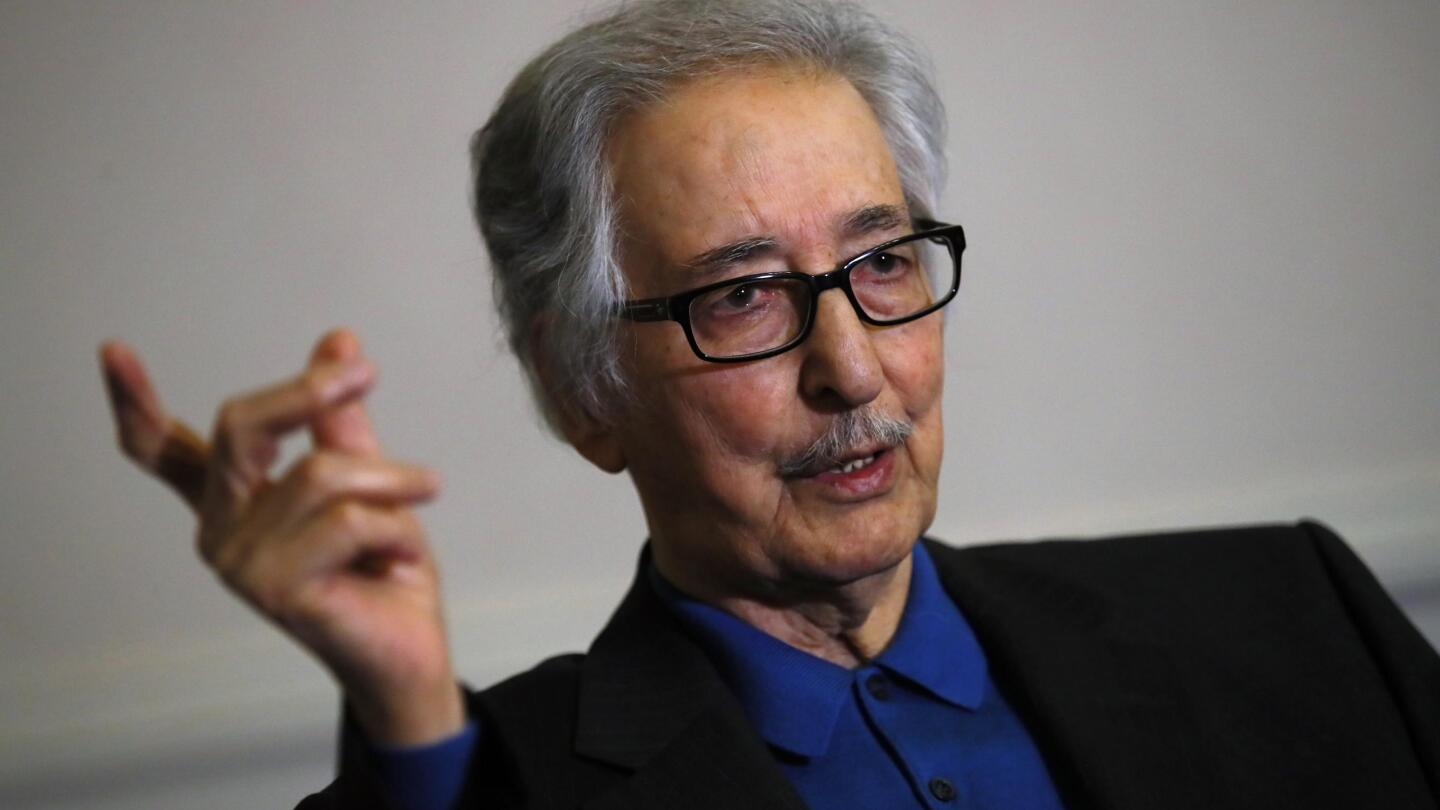
Abolhasan Bani-Sadr (born March 22, 1933, Hamadan, Iran—died October 9, 2021, Paris, France) was an Iranian economist and politician who became the first president of the Islamic Republic of Iran (1980–81).
He studied religion and economics at the University of Tehrān, later spending four years at the Institute of Social Research. As a student, he was active in the anti-shah movement during the early 1960s and was twice imprisoned. He was wounded in the failed uprising of June 1963, after which he traveled to France, continuing his studies at the Sorbonne, where he earned a doctorate and later taught economics. During the 1970s, he gained recognition as a revolutionary economist and published influential works on Islamic economics.
Role in the Iranian Revolution
While in France, Bani-Sadr became close to Ayatollah Ruhollah Khomeini, joining his circle during Khomeini’s exile. When the shah fled Iran in January 1979, Bani-Sadr returned alongside Khomeini on February 1, 1979, as the Islamic Revolution swept the country.
Khomeini quickly integrated him into the new government, naming him deputy minister of economy and finance in July 1979 and then full minister of economy and finance in November. Bani-Sadr emerged as one of the most prominent lay intellectuals in the revolutionary movement, advocating for a nationalist and economically independent Iran.
On January 25, 1980, he was elected the first president of the Islamic Republic, securing broad support from revolutionary groups who saw him as a counterbalance to the clerical establishment. In February, Khomeini also appointed him chairman of the Revolutionary Council, Iran’s top policy-making body.
Presidency and Impeachment
Bani-Sadr’s presidency was marked by tension with the ruling clerics, particularly Ali Akbar Hashemi Rafsanjani and Ali Khamenei, who sought to curtail his influence. Although constitutionally powerful, Bani-Sadr lacked a loyal political base within the clerical hierarchy.
In August 1980, he was forced to accept Mohammad Ali Rajaʾi as prime minister despite their political differences. Their disagreements quickly deepened, especially regarding cabinet appointments.
Bani-Sadr also faced the Iran-Iraq War, which began in September 1980 after Iraq invaded Iran. He criticized the government for failing to reform the armed forces and warned that poor leadership posed a greater danger than Iraqi aggression. In October 1980, he sent Khomeini a letter outlining these concerns, which further isolated him.
His opposition to Iran’s policy of holding American hostages from the U.S. embassy crisis also alienated hardliners. On June 21, 1981, the Majles (parliament) impeached him for incompetence. The next day, Khomeini dismissed him as president, accusing him of conspiring with the Mojāhedīn-e Khalq (MEK).
Exile and Later Career
Bani-Sadr fled Iran in July 1981, escaping arrest and seeking asylum in France. From Paris, he and Massoud Rajavi, leader of the MEK, founded the National Council of Resistance, aimed at overthrowing Khomeini’s government. By 1984, however, he left the coalition due to disagreements with Rajavi.
He lived the rest of his life in France, writing extensively about Iranian politics, democracy, and economics, while remaining a critic of the Islamic Republic. Bani-Sadr died in Paris in 2021 at the age of 88.
Quick Facts
| Attribute | Details |
|---|---|
| Also known as | Abū al-Ḥasan Banī-Ṣadr |
| Born | March 22, 1933, Hamadan, Iran |
| Died | October 9, 2021, Paris, France (aged 88) |
| Title / Office | President of Iran (1980–81) |
| Political Affiliation | Independent (allied with Khomeini before split) |
| Legacy | First president of the Islamic Republic of Iran; impeached and dismissed after conflict with clerics |


