Learn how to calculate the gear ratio in mechanical systems with our step-by-step guide. Understand the principles behind gear ratio calculations to optimize performance and efficiency in machinery.
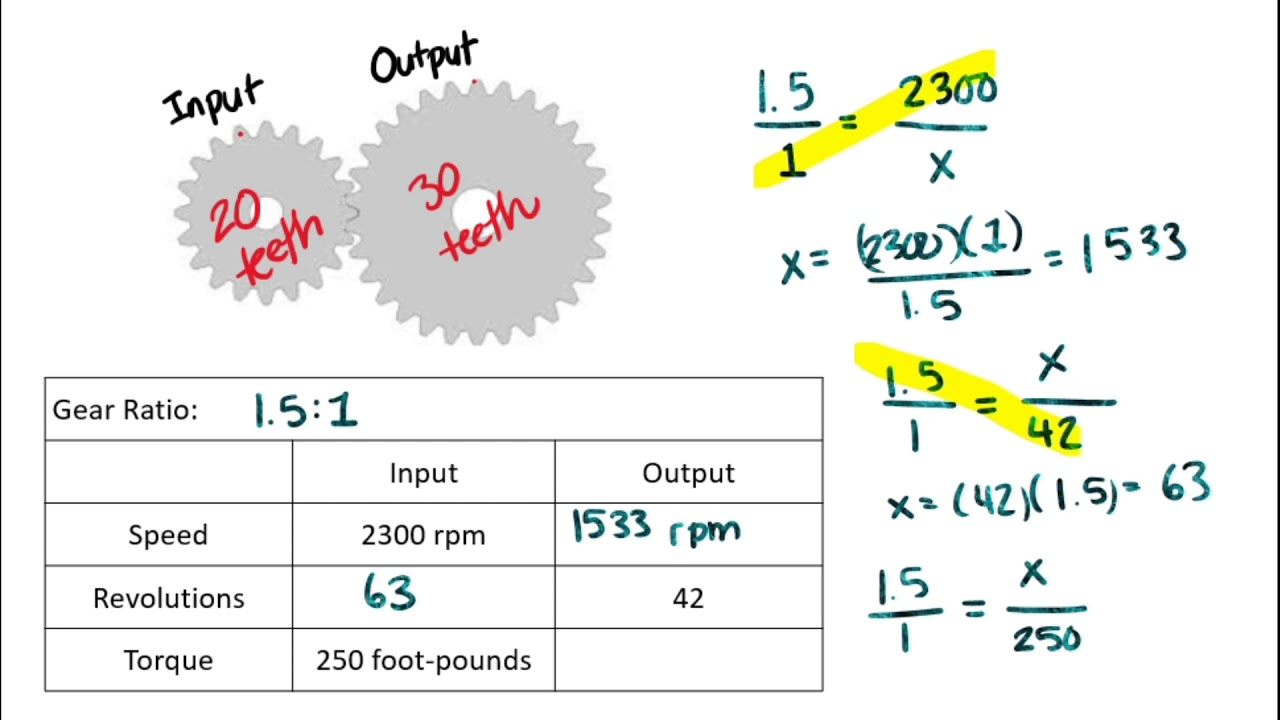
The calculation uses the number of teeth in the ring gear and divides it by the number of teeth in the pinion gear to provide you with a “[result] to 1” ratio. For example, if the pinion gear has 41 teeth, and the ring gear has 11 teeth, the ratio would be calculated as 41/11, which is equal to 3.73 = 3.73:1.
- Identify the gears: Determine which gears you are comparing in the system.
- Count the teeth: Note the number of teeth on both the driving gear (input) and the driven gear (output).
- Calculate the ratio: Divide the number of teeth on the driven gear by the number of teeth on the driving gear.
- Analyze the result: A higher ratio means more torque but less speed, while a lower ratio indicates more speed but less torque.
- Adjust as needed: Depending on the desired outcome (more speed or more torque), you may need to change the gears accordingly.
Understanding gear ratios is crucial for optimizing machinery performance and achieving the desired mechanical advantage.