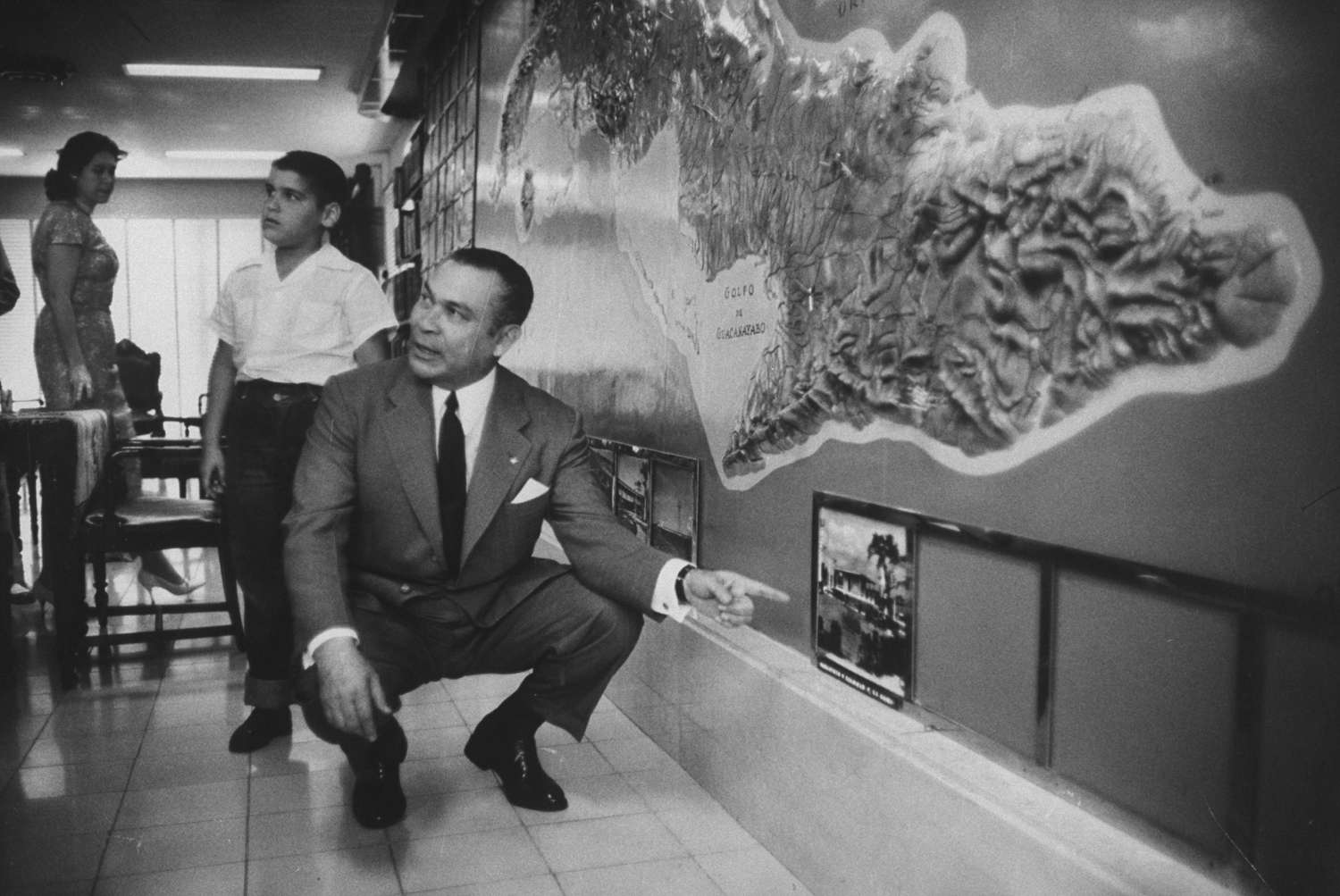
Fulgencio Batista y Zaldívar was born on January 16, 1901, in Banes, Cuba, to impoverished farmers. He worked a series of jobs before enlisting in the Cuban army in 1921, beginning as a stenographer. Ambitious and charismatic, he rose through the ranks and became a sergeant. In September 1933, he orchestrated the “sergeants’ revolt”, which overthrew the provisional government of Carlos Manuel de Céspedes, ending the remnants of Gerardo Machado’s dictatorship.
Batista quickly emerged as the most powerful figure in Cuba. Although not yet president, he became the island’s de facto leader, wielding control over the army, civil service, and organized labor. His political acumen and ability to balance different factions allowed him to consolidate his power.
First Presidency (1940–1944)
In 1940, Batista was elected president of Cuba. His administration was considered relatively efficient, marked by economic growth, educational expansion, and ambitious public works programs. Batista fostered stability and strengthened ties with the United States, while also greatly enriching himself and his allies.
Despite the corruption, many Cubans benefited from his social and economic reforms, making his first term remembered more favorably than his later dictatorship. After leaving office in 1944, Batista moved abroad, spending time in Florida and investing the fortunes he had accumulated during his presidency.
Dictatorship and the Cuban Revolution
Batista returned to Cuba and staged a bloodless coup on March 10, 1952, overthrowing President Carlos Prío Socarrás. This time, his rule was openly authoritarian. He suppressed the press, universities, and opposition parties, enriching himself while corruption and inequality worsened.
Although he held elections in 1954 and 1958, they were widely considered fraudulent, with Batista ensuring he was the only viable candidate. His regime became notorious for political repression, censorship, and embezzlement.
Opposition grew, particularly from a young lawyer named Fidel Castro, who led the revolutionary 26th of July Movement. By late 1958, Castro’s guerrilla forces advanced rapidly, undermining Batista’s military and political support. On January 1, 1959, Batista fled Cuba with his family, ending his second rule.
Exile and Death
After fleeing Cuba, Batista briefly took refuge in the Dominican Republic, then relocated to Madeira, Portugal, and later settled in Estoril, near Lisbon. Eventually, he lived in Marbella, Spain, where he wrote memoirs defending his legacy.
Batista died on August 6, 1973, in Marbella, at the age of 72, leaving behind a controversial reputation. For some, he represented modernization and order; for most Cubans, he embodied corruption and dictatorship, serving as the foil against which Fidel Castro built the Cuban Revolution.
Quick Facts
| Attribute | Details |
|---|---|
| Full Name | Fulgencio Batista y Zaldívar |
| Born | January 16, 1901, Banes, Cuba |
| Died | August 6, 1973, Marbella, Spain (aged 72) |
| Title / Office | President of Cuba (1933–1944, 1952–1959) |
| Also Known As | Fulgencio Batista |
| Role In | Cuban Revolution |
| Known For | Twice ruling Cuba, first as reformer, later as dictator, toppled by Fidel Castro in 1959 |