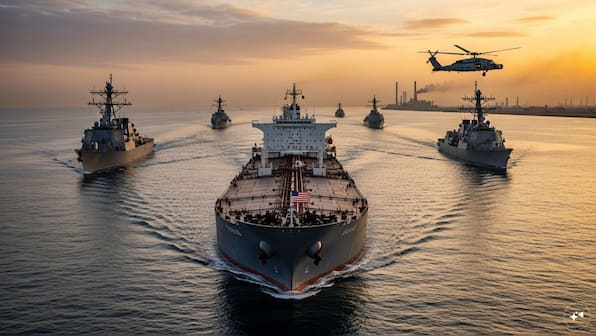
France Warship Deployment reports were swiftly dismissed by Paris after claims circulated that the French Navy was preparing to send 10 warships to the Middle East.
In a post on X, the French Ministry of Foreign Affairs said the country’s aircraft carrier strike group remains in the Eastern Mediterranean. It added that France’s posture is “unchanged: Defensive, Protective.”
The clarification came amid heightened tensions around the Strait of Hormuz, after US President Donald Trump urged allies to help secure the critical shipping corridor.
France Warship Deployment Rumors Surface
Speculation about a possible French naval buildup followed calls from Washington for allied support in safeguarding maritime transit routes.
However, French officials moved quickly to deny any shift in operational stance. The ministry’s statement emphasized continuity rather than escalation.
By underscoring that the carrier group remains in its current position, Paris signaled that it is not expanding its military footprint in response to recent events.
Strait of Hormuz in Strategic Focus
The Strait of Hormuz carries roughly 20 percent of global oil supply. Any perception of threat to the corridor quickly reverberates across energy markets.
The United States has encouraged allied naval coordination to maintain freedom of navigation. Yet France appears cautious about being drawn into direct military posturing.
Historically, European powers have supported maritime security in the Gulf while avoiding overt alignment in regional escalations.
Defensive Posture Reaffirmed
France’s statement stressed that its stance remains defensive and protective. That language suggests a focus on safeguarding existing deployments rather than launching new operations.
The aircraft carrier strike group stationed in the Eastern Mediterranean provides strategic flexibility without signaling immediate expansion.
Balancing Alliance and Autonomy
France is a NATO member and maintains close security ties with Washington. However, Paris often pursues an independent diplomatic track in Middle Eastern affairs.
By denying reports of a large-scale naval deployment, France reinforces its preference for measured engagement.
At the same time, it leaves open the possibility of maritime coordination if shipping lanes face credible threat.
Market and Regional Implications
Any confirmed France Warship Deployment would likely be interpreted as escalation. Even unverified reports can influence investor sentiment.
Energy markets remain sensitive to developments in the Gulf. African economies dependent on imported fuel track Hormuz-related tensions closely.
Moreover, insurance premiums for vessels transiting the region often rise when military rhetoric intensifies.
Why This Matters
France Warship Deployment speculation highlights how quickly military rumors can shape geopolitical narratives.
In a tense environment, official denials become critical tools to prevent misinterpretation and unnecessary escalation.
What Happens Next
France’s current naval posture remains unchanged. However, attention will remain on allied coordination efforts around the Strait of Hormuz.
If tensions escalate further, diplomatic consultations among NATO and Gulf partners are likely to intensify.
For now, Paris signals restraint rather than expansion.