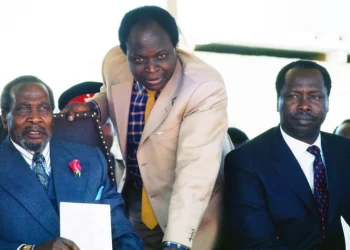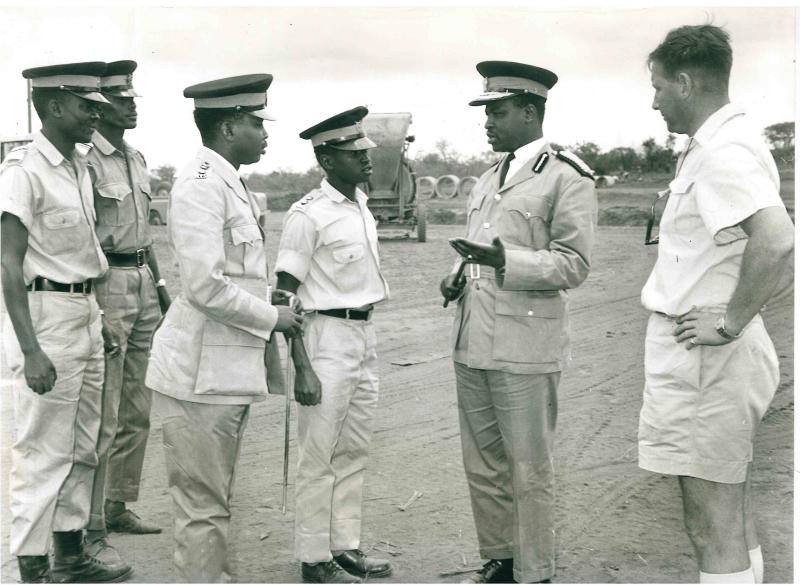
The National Youth Service (NYS) is one of Kenya’s most notable institutions, playing a key role in national development and fostering patriotism and civic responsibility among Kenyan youth. The NYS, established to instill discipline, skills, and national pride, owes its creation to some of Kenya’s most influential leaders. The foundation of this vital institution can be traced back to the efforts of visionary leaders like Geoffrey Griffin, Waruhiu Itote (also known as General China), and JM Kariuki, with key support from Tom Mboya.
Geoffrey Griffin: The First Director of NYS
Geoffrey Griffin, known for his pioneering role in the establishment of Starehe Boys Centre, became the first director of the National Youth Service. As a passionate educator and administrator, Griffin’s experience in shaping young minds at Starehe Boys Centre made him an ideal candidate to lead the NYS. His vision for the NYS was to create an institution that would mold disciplined and skilled young men and women who could contribute meaningfully to the country’s development.
Griffin’s Background and Impact
Before his involvement with the NYS, Griffin was already a well-established figure in education, having founded Starehe Boys Centre in 1959. His work at Starehe was revolutionary, providing an opportunity for many bright but underprivileged boys to receive quality education and transform their lives. His experience in education and youth leadership laid the foundation for his subsequent role at the NYS, where he continued to impact Kenyan youth positively.
Waruhiu Itote: General China’s Role in NYS
Waruhiu Itote, popularly known as General China, was one of the most prominent leaders of the Mau Mau movement during the struggle for Kenya’s independence. After the country gained independence, Itote transitioned into leadership roles that reflected his dedication to Kenya’s future. He was appointed as a senior officer in the National Youth Service, assisting Geoffrey Griffin in the early years of the institution’s formation.
Itote’s Revolutionary Legacy
General China’s experience as a military leader during Kenya’s liberation struggle gave him the necessary leadership skills to support the development of NYS. His influence and legacy as a liberation hero helped inspire the youth under his guidance. As one of the highest-ranking Kenyan leaders appointed to the NYS, his presence symbolized the importance of integrating both military discipline and civic education in the development of young Kenyans.
JM Kariuki and Tom Mboya: The Visionaries Behind the NYS
Two of Kenya’s most influential political leaders, JM Kariuki and Tom Mboya, played critical roles in the establishment of the National Youth Service. Both men were passionate about the role of the youth in nation-building, and they recognized the importance of a structured institution that would help channel the energy and potential of Kenya’s young population.
JM Kariuki’s Vision for Youth Empowerment
As a progressive politician and champion of social justice, JM Kariuki believed in the empowerment of Kenya’s youth. His work in the political arena often focused on issues such as land reform, education, and youth employment. Kariuki was instrumental in the formation of the NYS, seeing it as a way to not only provide young people with skills but also teach them the value of nationhood and self-reliance.
Tom Mboya and His Influence on Youth Leadership
Tom Mboya, the prominent trade unionist, and politician, was another visionary behind the NYS. Mboya, known for his efforts to promote education and labor rights, saw the NYS as a way to mold the youth into responsible citizens who could contribute to the economic and social fabric of the newly independent Kenya. His political clout and vision for Kenya’s future ensured the NYS was supported by the government and remained a central institution for youth training.
The National Youth Service Today
Since its establishment, the National Youth Service has evolved into one of Kenya’s most vital institutions, providing youth with skills in various sectors, including agriculture, construction, and public service. The NYS continues to serve as a key player in nation-building by offering young people opportunities for personal development, skills acquisition, and national service.
Conclusion
The founding of the National Youth Service was a collective effort by some of Kenya’s most influential leaders, including Geoffrey Griffin, Waruhiu Itote, JM Kariuki, and Tom Mboya. Their shared vision of empowering the youth and equipping them with the skills necessary for national development laid the groundwork for what has become one of Kenya’s most important institutions. Today, the legacy of these pioneers continues to shape the future of young Kenyans, driving them to play an active role in the country’s growth and progress.