


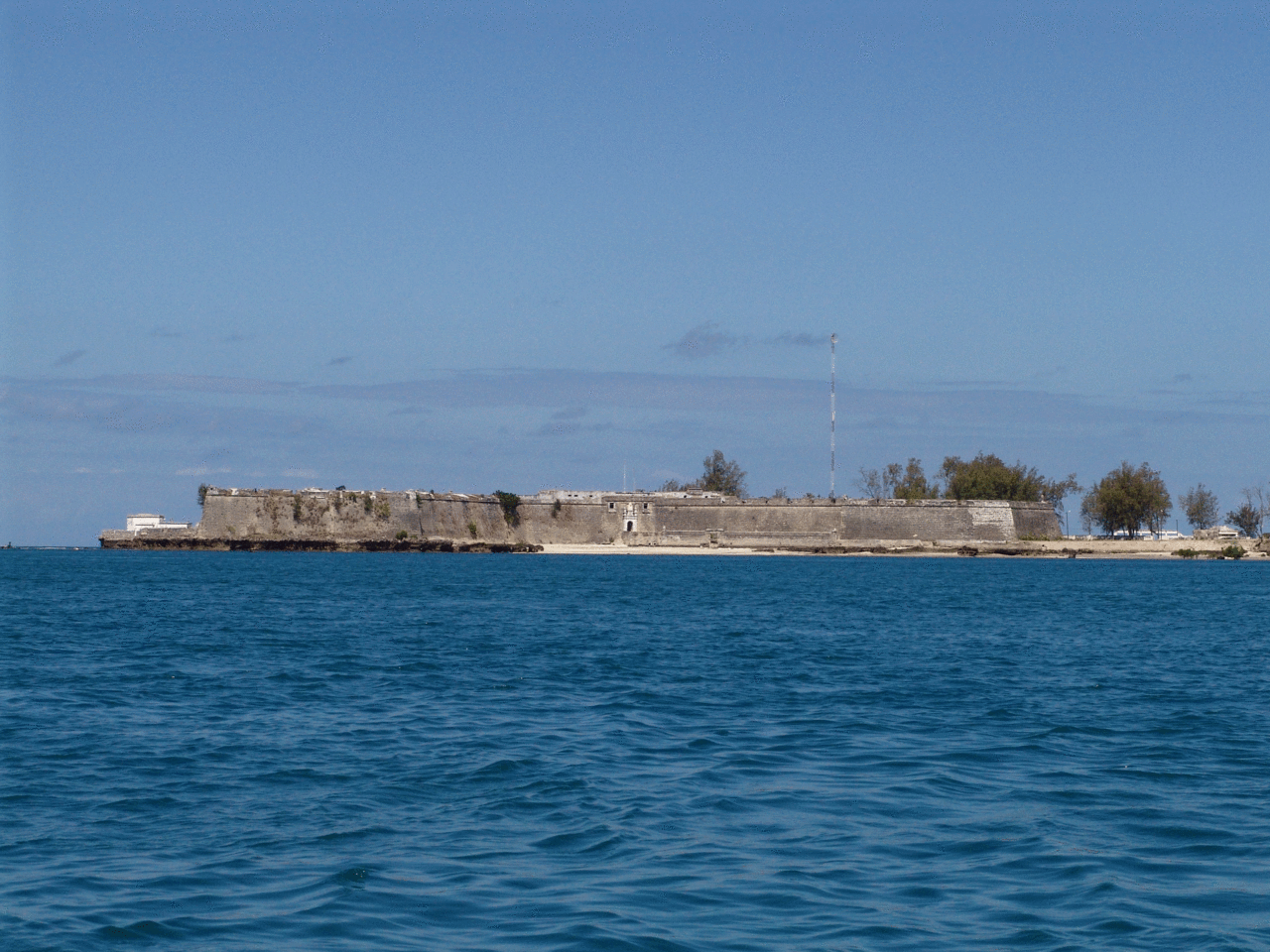
At the northern tip of Stone Town on the Island of Mozambique, the Fort of São Sebastião stands as an enduring symbol of Portuguese imperial architecture and maritime dominance in the Indian Ocean. Construction began in 1558, and the fort took nearly fifty years to complete, becoming the oldest complete fort still standing in sub-Saharan Africa. Built as a strategic outpost in the growing Portuguese trade and military network, the fort continues to bear testimony to Africa’s early encounters with European colonization.
A Monument of Portuguese Power
As part of its effort to control the Indian Ocean trade routes, Portugal fortified key coastal locations along East Africa. The Island of Mozambique, positioned between trading ports and shipping lanes, offered an ideal location for military defense and commercial oversight. The Fort of São Sebastião was designed not only as a garrison but also as a visible statement of Portuguese authority on the African coast.
The construction process, which spanned five decades, featured:
- Thick limestone walls capable of withstanding cannon fire
- Corner bastions for defense
- Vaulted chambers and storehouses
- Residential quarters and lookout towers
It became the primary Portuguese stronghold in East Africa and was used to fend off both local and foreign adversaries.
Chapel of Nossa Senhora de Baluarte
Immediately adjacent to the fort lies the Chapel of Nossa Senhora de Baluarte, built in 1522, decades before the fort itself. This chapel is recognized as the oldest European building in the southern hemisphere. Constructed in the Manueline style—a unique form of Portuguese late Gothic architecture—the chapel features:
- Intricate stone vaulting
- Elaborate ribbed ceilings
- Maritime motifs reflecting Portugal’s Age of Discovery
Its architectural and historical significance makes it a rare and invaluable cultural site, offering a window into the religious and artistic expression of early European settlers in Africa.
Cultural Impact and Pop Culture
The Fort of São Sebastião has not only been a subject of historical study but also featured in popular media. It appears in the controversial 1964 Italian documentary “Africa Addio” (Africa: Blood and Guts), which chronicled the end of colonialism on the African continent. The fort served as a visual backdrop representing the colonial legacy of Portugal and the transition from empire to independence.
3D Documentation by the Zamani Project
In 2013, the Zamani Project, a non-profit research group from the University of Cape Town, conducted 3D terrestrial laser scanning of the Fort of São Sebastião. This initiative aimed to:
- Preserve a digital record of the site
- Support restoration and conservation efforts
- Enable virtual tours, educational outreach, and historical research
The documentation includes:
- A high-resolution 3D model
- Panoramic visual tours
- Architectural plans and cross-sections
These resources are accessible via the project’s website, ensuring the fort remains part of global cultural heritage archives.
🔗 Explore the 3D documentation
Preservation and Heritage Status
While the fort has withstood centuries of tropical weather and conflict, preservation efforts remain critical. The Island of Mozambique, including Fort São Sebastião and the chapel, was declared a UNESCO World Heritage Site in 1991, due to its unique blend of African, Arab, and European influences and its pivotal role in the history of global maritime trade.
The fort is now a major tourist destination and a focal point for cultural education and historical reflection in Mozambique.
Legacy
The Fort of São Sebastião stands as a monument to an era of global exploration, conquest, and trade. It reflects Portugal’s maritime ambitions, the collision of cultures on the Swahili coast, and the architectural legacy left in Africa. Together with the Chapel of Nossa Senhora de Baluarte, it forms one of the most historically and architecturally significant colonial complexes on the continent.


