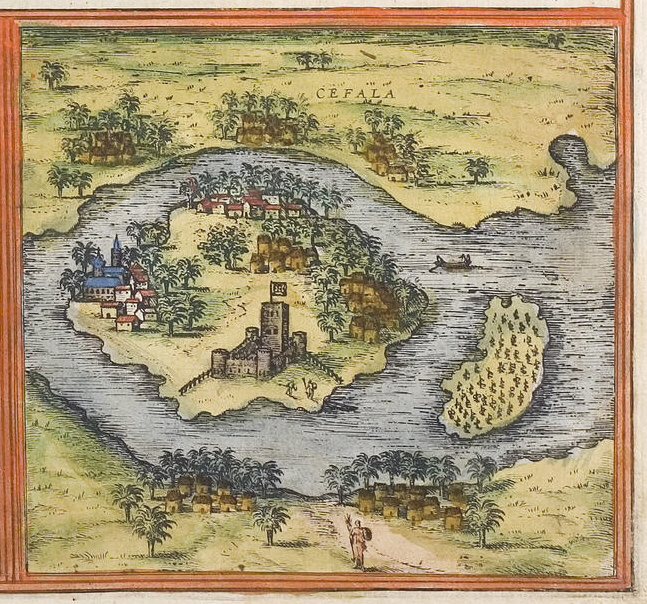
Fort São Caetano, located in Sofala, Mozambique, stands as one of the earliest examples of Portuguese colonial architecture in sub-Saharan Africa. Constructed in 1505 under the command of Pêro de Anaia, the fort marked the establishment of Portugal’s first official colony in the East African region and played a critical role in early Indian Ocean trade routes. Built using imported European stone, the fort symbolized not only European expansionism but also Portugal’s ambition to dominate the gold trade flowing out of the African interior.
Establishment and Strategic Importance
In the early 1500s, as part of Portugal’s efforts to secure monopolies over Indian Ocean commerce, Sofala—then an important Swahili trading city—was identified as a valuable port. Rich in gold from the Monomatapa Kingdom (located inland in what is now Zimbabwe), Sofala had been a commercial hub for Arab and Swahili traders for centuries.
Recognizing its strategic value, Pêro de Anaia, a Portuguese noble and military commander, arrived in 1505 with a fleet to secure the area. Upon his arrival, Anaia declared Sofala a Portuguese colony and was named Captain-General of Sofala. As part of his mission, Anaia established both a trading post (factory) and Fort São Caetano, ensuring military and commercial control over the region.
The fort was named after Saint Cajetan (São Caetano), a Catholic saint, reflecting the religious motivations intertwined with Portugal’s imperial missions. Remarkably, the structure was built from stone shipped from Europe, a rare and expensive undertaking that emphasized the fort’s intended permanence and significance.
Role in Portuguese Colonial Expansion
Fort São Caetano served several key purposes:
- Military Defense: It was constructed to protect Portuguese traders and ships from hostile local rulers and rival Arab merchants.
- Trade Control: The fort allowed the Portuguese to monopolize gold and ivory exports from the interior.
- Political Influence: Through strategic alliances and intimidation, the Portuguese used the fort to assert authority over local chiefs and Swahili merchants.
- Gateway to the Interior: It became a launch point for expeditions inland, especially toward the goldfields of the Monomatapa Empire.
The construction of the fort marked the first permanent European settlement on the southeastern African coast and laid the foundation for future Portuguese colonial expansion into Mozambique and beyond.
Architectural Features
Although detailed architectural records of the original Fort São Caetano are limited, early Portuguese forts typically followed standard military designs of the time:
- Rectangular or square layouts with bastions at the corners
- Thick stone walls capable of withstanding cannon fire
- Small barracks, storehouses, and chapels within the enclosure
- Lookout towers or elevated positions to monitor naval traffic
Because of Sofala’s swampy coastal environment and tropical climate, preservation of early structures was a challenge, and little remains of the original fort today. The use of European stone—rather than local materials—reflects the Portuguese commitment to establishing a fortified, European-style presence.
Decline and Legacy
Despite its early significance, Fort São Caetano and the Portuguese presence in Sofala began to decline in the later 16th century. Several factors contributed:
- Environmental challenges: The swampy, disease-prone terrain around Sofala made it difficult for Europeans to survive.
- Shifting trade routes: The Portuguese increasingly shifted their focus northward to more accessible and economically viable ports like Mozambique Island.
- Conflict and resistance: Ongoing tensions with local rulers and rival traders created instability.
By the 17th century, Sofala had diminished in prominence, and Fort São Caetano fell into obscurity. However, its historical importance as the first Portuguese fort in East Africa remains uncontested.
Modern Recognition
Today, the remnants of Fort São Caetano are of archaeological and historical interest, though little of the original structure survives above ground. The site is considered an important part of Mozambique’s colonial heritage and reflects the early phase of European efforts to control East African commerce.
Scholars and historians continue to examine records of the fort as part of broader studies into:
- The Portuguese empire’s expansion
- The gold trade between southern Africa and the Indian Ocean
- The cultural and military encounters between Europeans and coastal African societies
Conclusion
Fort São Caetano was not just a military installation—it was a symbol of Portugal’s ambitions in East Africa. Established at the dawn of the 16th century, it represents the beginning of a long and complex history of European involvement in Mozambique and the wider Indian Ocean world. Though it no longer stands as it once did, the fort’s legacy endures as a milestone in the age of exploration, colonialism, and the intercontinental struggles for wealth and power.