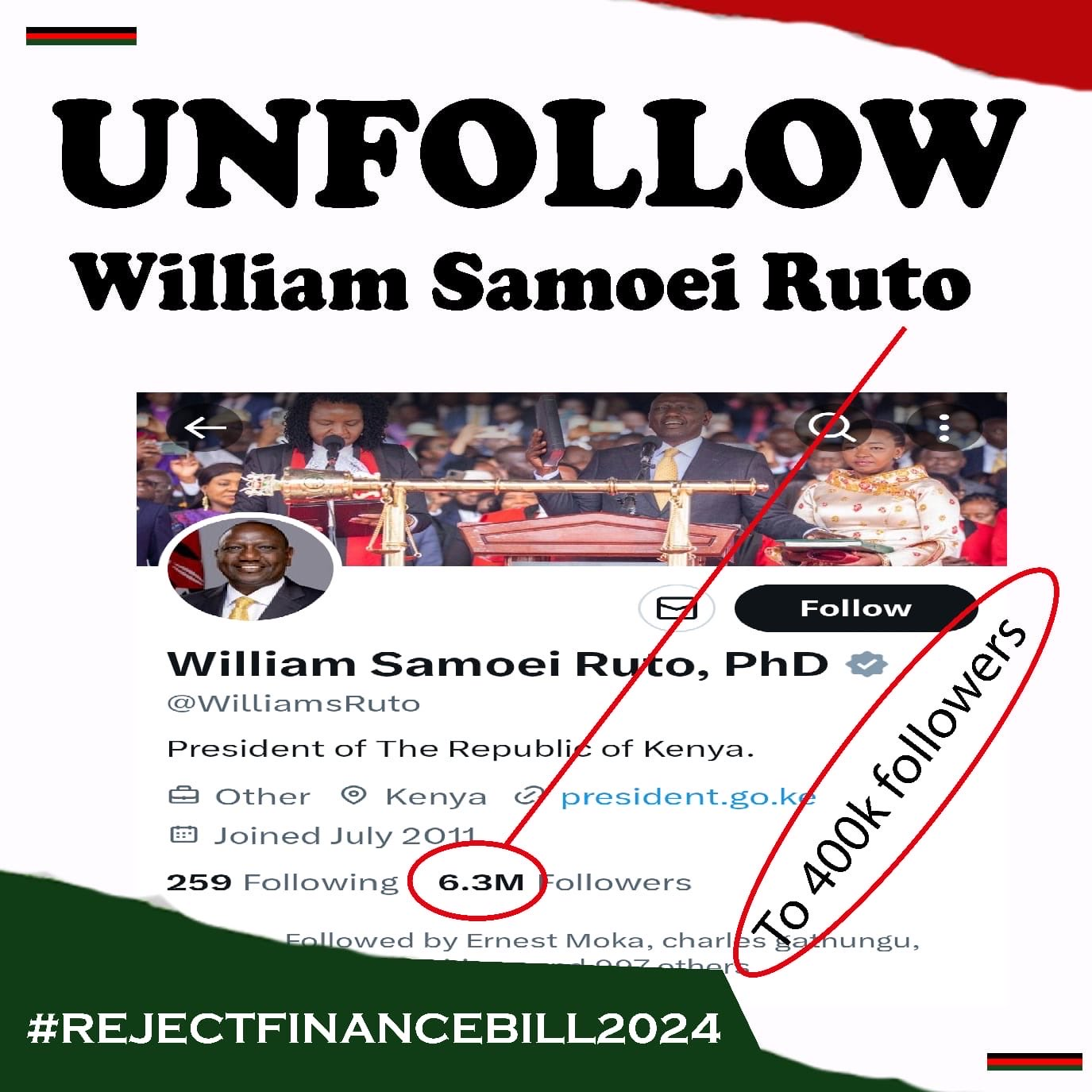
Nairobi, Kenya – Political discourse in Kenya is reaching new digital frontiers as citizens increasingly use social media platforms to express dissent against the current administration. A recent tweet storm, led by a digital campaign titled “UNFOLLOW William Samoei Ruto,” captures the rising discontent among Kenyan citizens, showcasing a unique blend of digital activism and political expression.
This digital protest is encapsulated in a shared image circulating widely on social media platforms, particularly Twitter. The image, which is a modified screenshot of a tweet with several hashtags like #RutoMustResignNow and #RejectFinanceBill2024, calls for the resignation of President William Ruto, highlighting issues of dissatisfaction with his governance. It is accompanied by a message urging users to retweet and spread the word, intensifying the campaign’s reach and impact.
The “#RejectFinanceBill2024” hashtag refers to a controversial finance bill introduced by the Ruto administration, which has been criticized widely for provisions perceived to exacerbate economic hardships for ordinary Kenyans. The hashtag has become a rallying cry for those opposing the bill, and by extension, Ruto’s economic policies.
This online movement is a reflection of broader frustrations with what many see as rampant corruption, inadequate governance, and policies that favor a small elite at the expense of the majority. Digital platforms have become arenas where grievances are aired, and collective action is mobilized, as seen with the rapid sharing and support of the campaign to unfollow and impeach the president.
The use of digital media for political engagement is not new in Kenya, a country recognized for its robust internet penetration and active online community. However, the intensity and scale of the current campaigns signify a shift towards more direct and widespread forms of digital dissent. The ability of these campaigns to translate online discontent into real-world action remains a key question, as does the government’s response to such digital expressions of dissent.
Analysts point to the significant role that social media played in the Arab Spring and other global movements, suggesting that the Kenyan digital dissent could potentially lead to more organized forms of protest. However, they also caution about the potential for misinformation and the polarization of public opinion through such platforms, which can complicate efforts to achieve coherent and constructive political dialogue.
The government’s response to this digital activism has been muted so far, but there is growing pressure to address the underlying issues fueling the unrest. The effectiveness of these digital protests in bringing about political change remains to be seen, but they undoubtedly underscore the evolving landscape of political engagement in Kenya, where digital tools are empowering citizens to voice their discontent in new and powerful ways.
As Kenya heads towards more complex political waters, the intersection of technology, politics, and citizen engagement will likely play a pivotal role in shaping the future of governance in the country. The unfolding digital protests offer a glimpse into the power of social media as a tool for political change and the potential challenges and opportunities it presents for both the government and the governed.