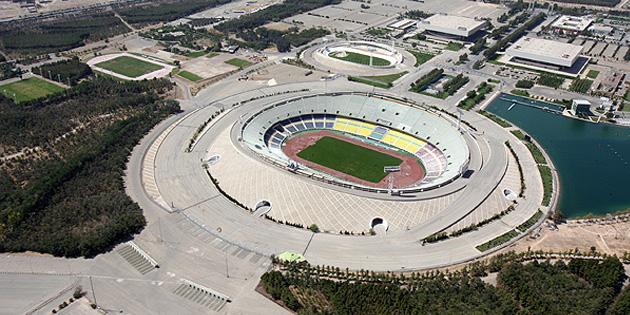
Azadi Stadium remains one of the most significant sporting venues in the Middle East. The stadium blends cultural symbolism, massive scale, and intense football energy, creating a unique identity in Iranian sport. Azadi Stadium attracts fans from across Tehran and beyond because it hosts the country’s most important matches.
Stadium Details
| Feature | Information |
|---|---|
| Name | Azadi Stadium |
| Capacity | 74,379 |
| Country | Iran |
| City | Tehran |
| Home Clubs | Persepolis Tehran FC, Esteghlal Tehran FC |
| Inaugurated | 1971 |
| Renovations | 2002–2003, 2004, 2016 |
| Architect | Abdolaziz Farmanfarmaian |
Origin and Architectural Vision of Azadi Stadium
Azadi Stadium opened in 1971 during a period of national ambition, when Iran aimed to expand its sports infrastructure. The design by Abdolaziz Farmanfarmaian focused on space, acoustics, and traditional aesthetics. The stadium was built on artificial hills shaped into a wide, textured shell. These contours give the venue a distinctive appearance while supporting access routes for spectators. The flowing exterior reflects Iranian architectural identity while also serving a functional purpose, as fans reach upper seats by walking on the shell surface.
Cultural and Social Significance
The name translates to “Stadium of Freedom,” a title that carries symbolic weight. It has also sparked debate because women have historically faced restrictions when entering the stadium. Despite these barriers, many women have attempted entry through disguise or protest, an act that drew international attention. These moments highlight the tension between the stadium’s name and the lived reality for many fans.
The stadium also shapes the social identity of Tehran’s football culture. Supporters of Persepolis and Esteghlal consider Azadi Stadium their battleground. The derby between these two clubs is one of the world’s most passionately followed fixtures. The noise, colours, and chants turn the stands into a living spectacle that reflects the rivalry between the clubs and the pride of Tehran.
Atmosphere and International Reputation
Azadi Stadium earned a reputation as one of the most intimidating grounds in global football. Visiting teams, especially during World Cup qualifiers, often comment on the overwhelming sound produced by tens of thousands of supporters. The steep stands and enclosed design amplify the collective voice of the crowd, creating an electric environment that influences the flow of the game.
Although the listed capacity is 74,379, past events demonstrate that many more spectators have sometimes forced their way inside. These instances resulted in overcrowding issues and, tragically, even deaths. Such moments led to safety improvements and renovation projects to modernise facilities and enhance crowd control.
Structure, Features, and Renovation Works
Azadi Stadium’s structure rests on layers of concrete shaped over artificial hills. This approach creates a natural feel despite its massive size. Large tunnels guide supporters to the lower seating areas, while wide pathways across the shell lead fans to the upper levels. Renovations carried out in 2002–2003, 2004, and 2016 focused on upgrading seating, improving pitch conditions, and modernising access routes. These changes preserved the stadium’s heritage while preparing it for modern events.
Even after decades of use, Azadi Stadium continues to stand out. Its scale, echoing chants, and symbolic meaning keep it at the centre of Iran’s sporting life. The combination of engineering, culture, and intense football energy makes it a landmark both nationally and internationally.