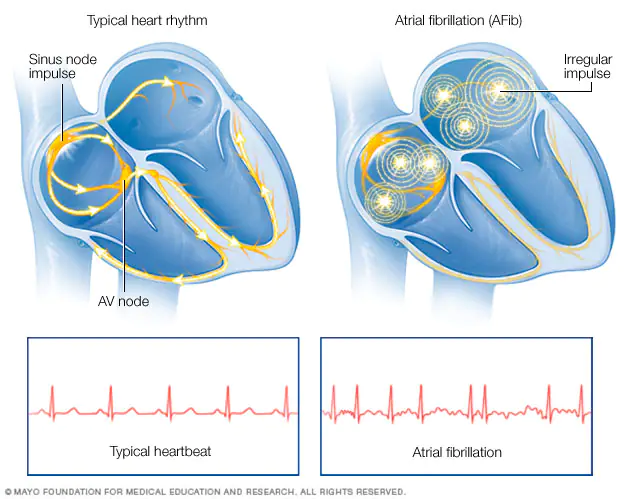
Atrial fibrillation (AFib) is a common heart condition characterized by an irregular and often rapid heart rhythm. It disrupts the normal electrical signals in the heart, leading to chaotic beating of the upper chambers (atria). AFib is a significant health concern due to its association with increased risks of stroke, heart failure, and other cardiovascular complications.
Symptoms of Atrial Fibrillation
AFib symptoms can vary in intensity and duration. Common symptoms include:
- Palpitations: Fast, fluttering, or pounding heartbeat.
- Chest pain.
- Shortness of breath.
- Dizziness or lightheadedness.
- Fatigue and general weakness.
- Reduced exercise capacity.
Some individuals may not notice any symptoms, with AFib being detected only during routine examinations.
Types of Atrial Fibrillation
- Occasional (Paroxysmal): Symptoms come and go, lasting minutes to hours or even a week, and may resolve without treatment.
- Persistent: The irregular rhythm does not resolve on its own and requires medical intervention.
- Long-standing Persistent: Lasts longer than 12 months, necessitating ongoing treatment.
- Permanent: The heart rhythm cannot be restored to normal, and medications are used to manage the condition.
When to Seek Medical Attention
- Emergency: Seek immediate care for chest pain, which could indicate a heart attack.
- Routine Checkup: If you experience symptoms like palpitations, dizziness, or shortness of breath, schedule an appointment with a healthcare provider.
Causes of Atrial Fibrillation
AFib often arises from structural or electrical abnormalities in the heart. Common causes include:
- Heart diseases: Coronary artery disease, valve disorders, congenital defects, or heart attack.
- Thyroid disorders: Overactive thyroid (hyperthyroidism).
- Lung diseases: Pneumonia or other respiratory issues.
- Lifestyle triggers: Excessive alcohol, caffeine, smoking, or drug use.
In some cases, no clear cause is identified.
Risk Factors
Factors that increase the likelihood of AFib include:
- Age: Risk increases with age.
- Obesity and lack of physical activity.
- Chronic conditions: Diabetes, sleep apnea, or high blood pressure.
- Family history.
- Lifestyle habits: Smoking, excessive alcohol, and poor diet.
Complications
AFib can lead to severe complications, including:
- Stroke: Blood pooling in the atria increases clot formation, which can travel to the brain.
- Heart failure: The irregular rhythm may weaken the heart over time.
- Other heart conditions: Increased risk of additional arrhythmias and cardiac events.
Diagnosis
AFib is diagnosed using:
- Electrocardiogram (ECG): Detects irregular heart rhythms.
- Holter monitoring: Continuous ECG recording over 24-48 hours.
- Echocardiogram: Uses ultrasound to visualize heart structure and function.
- Blood tests: Evaluate thyroid function and detect other potential triggers.
Treatment Options
Treatment aims to restore a normal heart rhythm, manage symptoms, and prevent complications:
- Medications:
- Anti-arrhythmic drugs: Restore or maintain normal rhythm.
- Blood thinners: Reduce the risk of stroke.
- Rate control medications: Slow down the heart rate.
- Cardioversion:
- Electrical cardioversion: A shock is delivered to reset the heart rhythm.
- Chemical cardioversion: Medications are used to restore rhythm.
- Ablation therapy:
- Destroys small areas of heart tissue that are causing abnormal signals.
- Lifestyle modifications:
- Healthy diet, regular exercise, stress management, and avoiding triggers.
- Surgery:
- Procedures like the Maze procedure or left atrial appendage closure may be considered in severe cases.
Prevention
Adopting a heart-healthy lifestyle can significantly reduce the risk of developing AFib:
- Maintain a healthy weight.
- Control chronic conditions like hypertension and diabetes.
- Avoid tobacco, excessive alcohol, and stimulant use.
- Exercise regularly.
- Manage stress and ensure adequate sleep.
Conclusion
While atrial fibrillation is not always life-threatening, it requires careful management to prevent serious complications like stroke or heart failure. Early diagnosis, treatment, and lifestyle changes are key to improving outcomes and maintaining heart health.