
Nyongesa Sande
No Result
View All Result
  • News
    • World
    • Africa
  • Politics
  • Business
  • Tech
  • AI
  • Telecom
  • Sports
  • Opinion
  • Lifestyle
  • Live
  • World Cup 2026
    • World Cup 2026 Standings
    • World Cup 2026
Nyongesa Sande
  • About Us
    • Nyosake Designers
      • Nyosake Webmasters
      • Nyosake Investment
  • Contact Us
    • Newsroom Contact
  • Ownership Disclosure
  • Advertise
No Result
View All Result
Nyongesa Sande
No Result
View All Result
  • News
  • Politics
  • Business
  • Tech
  • AI
  • Telecom
  • Sports
  • Opinion
  • Lifestyle
  • Live
  • World Cup 2026
ADVERTISEMENT

Home » Athlete’s Foot (Tinea Pedis)

Athlete’s Foot (Tinea Pedis)

Overview and Key Information

NyongesaSande News Desk by NyongesaSande News Desk
2 years ago
in Health
Reading Time: 6 mins read
A A
Athlete’s Foot (Tinea Pedis)

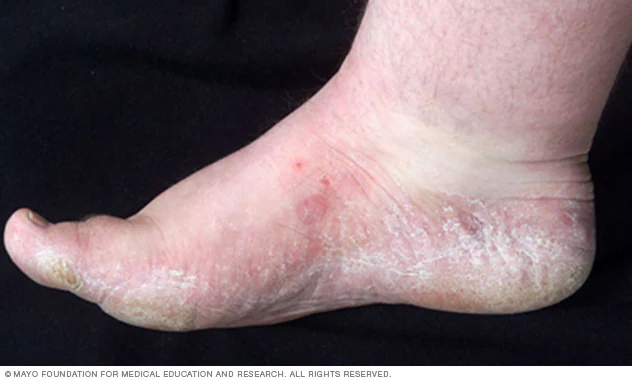
Athlete's foot on side of foot Athlete's foot can cause dry, scaly skin on the bottom and sides of the foot.

Athlete’s foot is a common fungal infection of the skin, primarily affecting the areas between the toes. It thrives in warm, moist environments, such as sweaty feet enclosed in tight-fitting shoes. Although treatable, the infection is highly contagious and often recurs without proper care and prevention.

  • Symptoms of Athlete’s Foot
  • When to Seek Medical Attention
  • Causes of Athlete’s Foot
  • Risk Factors
  • Complications
  • Prevention
  • Treatment
  • Conclusion

Symptoms of Athlete’s Foot

Athlete’s foot can appear in different forms, with symptoms that may include:

  • Skin changes:
    • Scaly, peeling, or cracked skin, especially between the toes.
    • Dry, scaly skin on the bottom of the foot extending up the sides.
  • Itchiness and irritation:
    • Intense itching, particularly after removing shoes and socks.
  • Inflammation:
    • Red, purple, or gray skin depending on skin tone.
  • Burning or stinging sensations.
  • Blisters:
    • Fluid-filled bumps that can open and become sore.

When to Seek Medical Attention

See a doctor if:

ADVERTISEMENT
  • Symptoms persist beyond two weeks of self-treatment with over-the-counter antifungal products.
  • There are signs of infection, such as swelling, pus, or fever.
  • You have diabetes and suspect athlete’s foot, as complications can develop quickly.

Causes of Athlete’s Foot

Athlete’s foot is caused by fungi called dermatophytes, which also cause ringworm and jock itch. These fungi thrive in warm, damp environments and are easily spread through:

  • Direct contact with an infected person.
  • Contact with contaminated surfaces such as towels, floors, and shoes.
  • Self-contamination, such as spreading the infection from the feet to other parts of the body through scratching.

Risk Factors

You’re more likely to develop athlete’s foot if you:

ADVERTISEMENT
  • Frequently wear tight or enclosed footwear.
  • Sweat heavily.
  • Share personal items like towels, shoes, or bed linens with an infected person.
  • Walk barefoot in public areas like locker rooms, saunas, swimming pools, or communal showers.

Complications

If untreated, athlete’s foot can lead to:

  • Spreading to other body areas:
    • Commonly spreads to the groin (jock itch) via hands or towels.
  • Secondary bacterial infections:
    • The damaged skin may allow bacteria to enter, causing additional infections.

Prevention

Preventing athlete’s foot involves maintaining proper hygiene and minimizing exposure to fungi:

  1. Air out your feet:
    • Opt for open-toed shoes or sandals when possible.
  2. Daily foot hygiene:
    • Wash feet with warm, soapy water and thoroughly dry them, especially between the toes.
    • Apply antifungal powders or creams if you’re prone to athlete’s foot.
  3. Change socks frequently:
    • Switch socks at least once a day or whenever they become sweaty.
    • Use moisture-wicking socks made from cotton or similar materials.
  4. Rotate footwear:
    • Alternate shoes to allow each pair to dry out between uses.
  5. Protect your feet in communal areas:
    • Wear waterproof sandals in shared showers, locker rooms, or around pools.
  6. Avoid sharing personal items:
    • Don’t share shoes, towels, or unwashed linens with others.

Treatment

Treatment often involves over-the-counter antifungal products such as:

ADVERTISEMENT
  • Creams: Lotrimin AF, Tinactin, or Lamisil.
  • Powders: Gold Bond, Zeasorb.

For persistent or severe cases, prescription medications or stronger topical treatments may be necessary.


Conclusion

Athlete’s foot is a treatable but recurring fungal infection. Proper hygiene, prompt treatment, and preventive measures can help manage and reduce the risk of reinfection. If symptoms worsen or persist, consult a healthcare provider for personalized treatment options.


Share1Tweet1SendShareScanSharePinShareShare
Google Add as a Preferred Source on Google
Previous Post

Atelectasis

Next Post

Atopic Dermatitis (Eczema)

NyongesaSande News Desk

NyongesaSande News Desk

Nyongesa Sande offers diverse content across news, technology, entertainment, and more, aiming to provide readers with a wide range of informative and engaging articles. NYONGESA SANDE's dedicated team provides our audience not only with the highly relevant news but also with outstanding interactive experience.

Related Posts

Kakamega Teaching and Referral Level 6 Hospital
Hospitals

Kakamega Level 6 Hospital Set for Completion by December 2026

9 hours ago
Sarah Ng’ang’a’s Journey Building Juja Modern Hospital
Hospitals

Sarah Ng’ang’a’s Journey Building Juja Modern Hospital

4 weeks ago
Accredited Rehabilitation Centres in Kenya: Full List, Contacts and Locations
Health

Accredited Rehabilitation Centres in Kenya: Full List, Contacts and Locations

4 weeks ago
Luhya Traditional Herbs and Indigenous Healing Practices in Western Kenya
Health

Luhya Traditional Herbs and Indigenous Healing Practices in Western Kenya

1 month ago
Enfield Royal Clinic Dubai Company Profile
Hospitals

Enfield Royal Clinic Dubai Company Profile

1 month ago
Hantavirus
Health

Hantavirus

2 months ago
Load More
Next Post
Atopic dermatitis behind the knees Atopic dermatitis can cause a very itchy rash. Atopic dermatitis most often occurs where the skin flexes — inside the elbows, behind the knees and in front of the neck.

Atopic Dermatitis (Eczema)

Atrial fibrillation

Atrial Fibrillation (AFib)

ADVERTISEMENT

Who We Are

Nyongesa Sande

NyongesaSande.com is a digital news and media platform covering breaking news, business, technology, AI, politics, sports, world affairs and African innovation.

News Sections

  • News
    • World
    • Africa
  • Politics
  • Business
  • Tech
  • AI
  • Telecom
  • Sports
  • Opinion
  • Lifestyle
  • Live
  • World Cup 2026
    • World Cup 2026 Standings
    • World Cup 2026

Editorial Standards

  • Editorial Policy
  • Fact Checking Policy
  • Corrections Policy
  • Ethics Policy
  • AI Usage Policy
  • News Tips
  • Submit Press Release

Legal

  • Privacy Policy
  • Terms of Use
  • Cookie Policy
  • Disclaimer
  • Risk Disclaimer
  • DMCA
  • Ad Choices

Our Company

  • About Us
    • Nyosake Designers
      • Nyosake Webmasters
      • Nyosake Investment
  • Contact Us
    • Newsroom Contact
  • Ownership Disclosure
  • Advertise
  • Privacy Policy
  • Terms of Use
  • Cookie Policy
  • Disclaimer
  • Risk Disclaimer
  • DMCA
  • Ad Choices

NyongesaSande.com is an independent digital news and media platform covering Africa, business, technology, AI, politics and global developments.

© 2026 NyongesaSande.com. All rights reserved.

No Result
View All Result
  • News
    • World
    • Africa
  • Politics
  • Business
  • Tech
  • AI
  • Telecom
  • Sports
  • Opinion
  • Lifestyle
  • Live
  • World Cup 2026
    • World Cup 2026 Standings
    • World Cup 2026

NyongesaSande.com is an independent digital news and media platform covering Africa, business, technology, AI, politics and global developments.

© 2026 NyongesaSande.com. All rights reserved.