AI Tools for Academic Research are rapidly transforming how students, researchers, lecturers and professionals conduct scientific studies, literature reviews and academic writing.
Tasks that previously required weeks of manual searching, reading and organization can now be completed significantly faster using AI-powered academic platforms.
Modern research tools can assist with:
- Literature discovery
- Citation mapping
- Academic summarization
- Source comparison
- Data analysis
- Draft writing
- Research organization
- Citation validation
However, experts increasingly emphasize that the best research outcomes usually come from combining multiple AI systems rather than relying on a single platform.
Typically, researchers benefit most by combining:
- A source-grounded AI assistant for synthesis
- A dedicated academic search engine for literature discovery
- A specialized tool for citations or statistical analysis
Below is a detailed guide to some of the best AI Tools for Academic Research in 2026.
Why AI Tools for Academic Research Are Growing Rapidly
Academic publishing is expanding at extraordinary speed.
Millions of new research papers are published annually across medicine, engineering, economics, computer science, social sciences and other disciplines.
Researchers now face major challenges including:
- Information overload
- Time-consuming literature reviews
- Citation verification
- Research organization
- Data interpretation
- Writing efficiency
AI Tools for Academic Research help solve these problems by automating parts of the research workflow.
Instead of manually screening hundreds of papers, AI systems can summarize findings, identify patterns and organize relevant literature within minutes.
📚 AI Tools for Research and Thesis Writing in 2026
Academic writing doesn’t have to be overwhelming. Whether you’re a student, graduate researcher, or independent scholar, the right AI tools for research and thesis writing can simplify your workflow—helping you generate ideas, organize references, and write faster with fewer errors.
🧠 Why Use AI for Research and Thesis Writing?
AI enhances academic writing by:
- 🧾 Generating outlines and structure based on your topic
- 📚 Finding and summarizing scholarly sources
- ✍️ Assisting with paraphrasing, grammar, and style
- 📎 Auto-generating citations and bibliographies
- 🧠 Offering instant feedback on clarity and coherence
These tools save time, reduce stress, and help you stay focused on what matters—your ideas.
🛠️ Best AI Tools for Research and Thesis Writing in 2026
1. Elicit
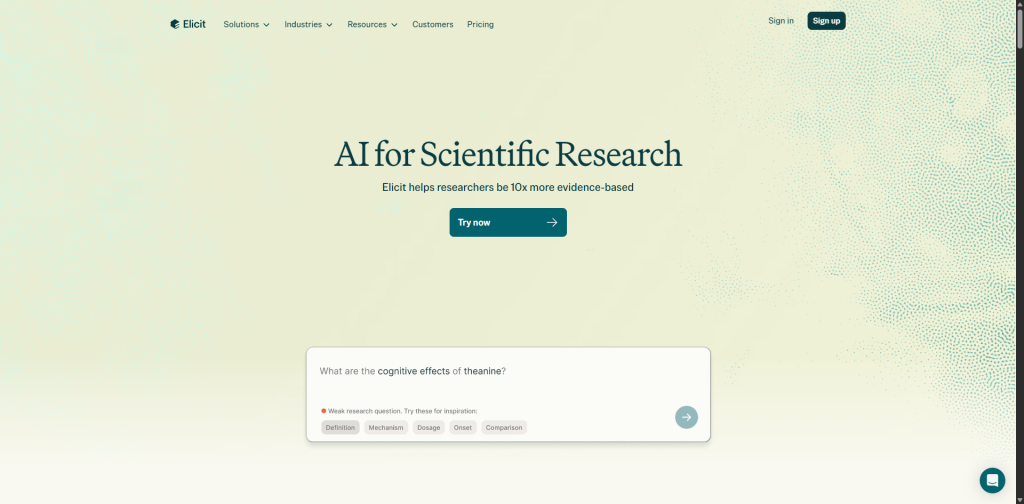
Elicit has become one of the most popular AI Tools for Academic Research, particularly for literature reviews.
The platform specializes in extracting structured information from research papers and presenting findings in organized formats.
Key Features
- AI-powered literature reviews
- Structured paper summaries
- Side-by-side study comparisons
- Evidence extraction
- Research question generation
Elicit is especially useful for researchers conducting systematic reviews or meta-analyses because it can process hundreds of papers efficiently.
Best Use Cases
- Literature reviews
- Medical research
- Social science studies
- Evidence synthesis
- Academic comparison work
Researchers often use Elicit to identify patterns across multiple studies quickly.
2. Research Rabbit

Research Rabbit is one of the most visually intuitive AI Tools for Academic Research.
The platform acts like an academic “mind map,” helping users explore connections between papers, authors and research topics.
Key Features
- Citation network mapping
- Visual research exploration
- Author tracking
- Related paper recommendations
- Research timeline analysis
Researchers begin by uploading “seed papers,” after which Research Rabbit builds an interconnected network of related studies.
Best Use Cases
- Discovering related literature
- Citation mapping
- Tracking influential authors
- Topic exploration
- Research trend analysis
It is especially valuable for early-stage research planning.
3. Semantic Scholar
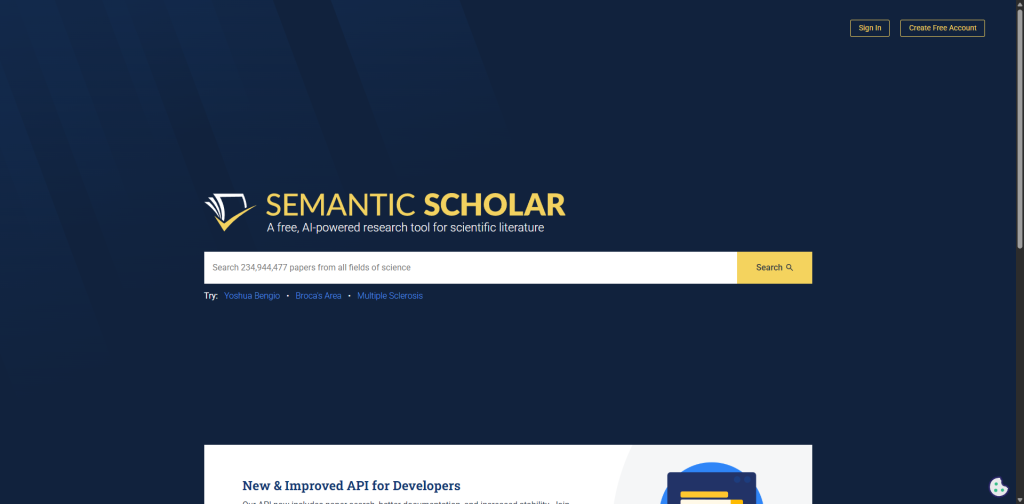
Semantic Scholar remains one of the strongest free AI-powered academic search engines.
Developed using artificial intelligence and citation analysis systems, the platform helps researchers identify influential papers rapidly.
Key Features
- Citation-based ranking
- AI-generated paper summaries
- Author influence tracking
- Study filtering
- Research topic discovery
Best Use Cases
- Finding highly cited papers
- Identifying major researchers
- Literature screening
- Academic trend analysis
Semantic Scholar is widely used across:
- Computer science
- Medicine
- Engineering
- Economics
- Social sciences
The platform is especially useful for discovering foundational studies within a field.
4. NotebookLM
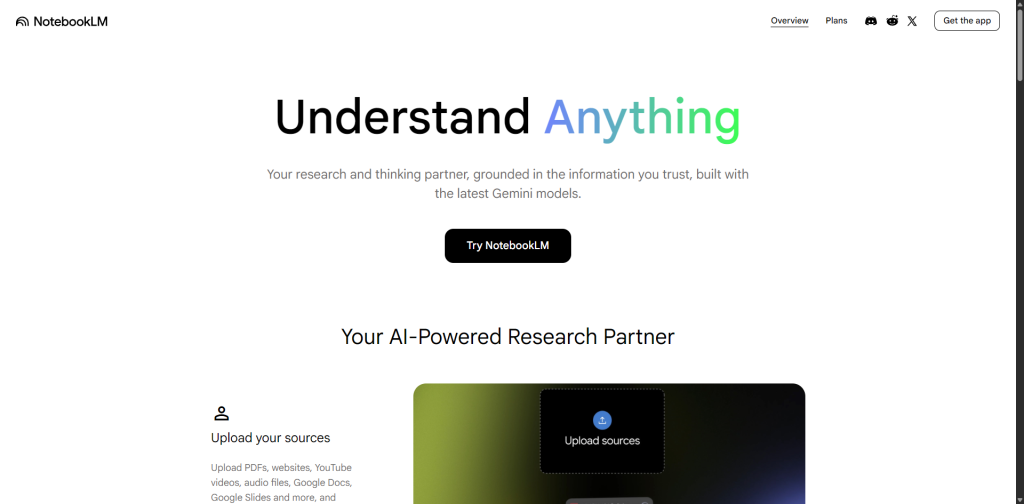
NotebookLM has become one of the most powerful source-grounded AI research assistants.
Unlike open-ended chatbots, NotebookLM limits its answers strictly to uploaded source materials.
Key Features
- Source-grounded responses
- PDF analysis
- Research synthesis
- Question answering
- Source citation tracking
Researchers upload PDFs, reports, notes or datasets, and the AI generates summaries or answers based only on those documents.
Best Use Cases
- Thesis research
- Source-grounded synthesis
- Research organization
- Document comparison
- Evidence-based analysis
NotebookLM greatly reduces hallucination risk because it avoids inventing unsupported information.
5. Julius AI
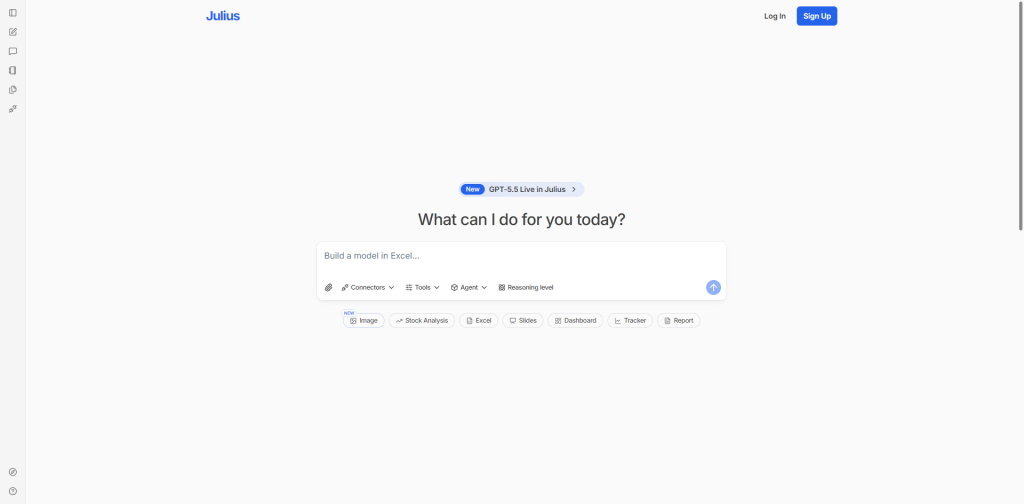
Julius AI focuses mainly on statistical analysis and dataset interpretation.
The platform allows users to upload spreadsheets or CSV files and ask analytical questions using natural language.
Key Features
- Statistical analysis
- Automated graph generation
- Trend analysis
- Data visualization
- Spreadsheet interpretation
Best Use Cases
- Quantitative research
- Survey analysis
- Business analytics
- Research statistics
- Data science projects
Julius AI is particularly useful for researchers without advanced programming or statistical coding experience.
6. Jenni AI
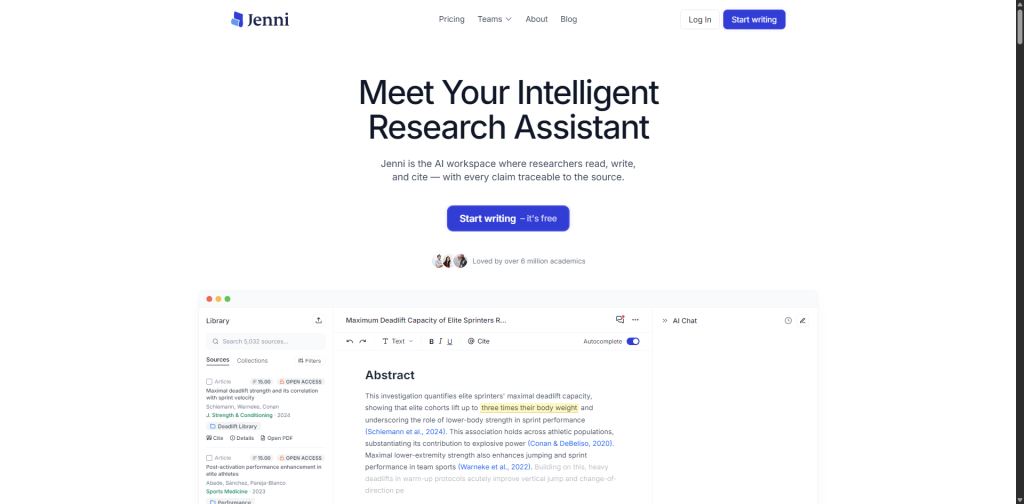
Jenni AI is designed specifically for academic drafting and structured research writing.
The platform helps researchers write while keeping citations linked to actual academic sources.
Key Features
- AI-assisted drafting
- Research outlining
- Citation-linked writing
- Academic paraphrasing
- Source integration
Best Use Cases
- Essays
- Research papers
- Thesis writing
- Academic drafting
- Citation-supported writing
Jenni AI is widely used by students and graduate researchers seeking faster academic writing workflows.
7. Scite
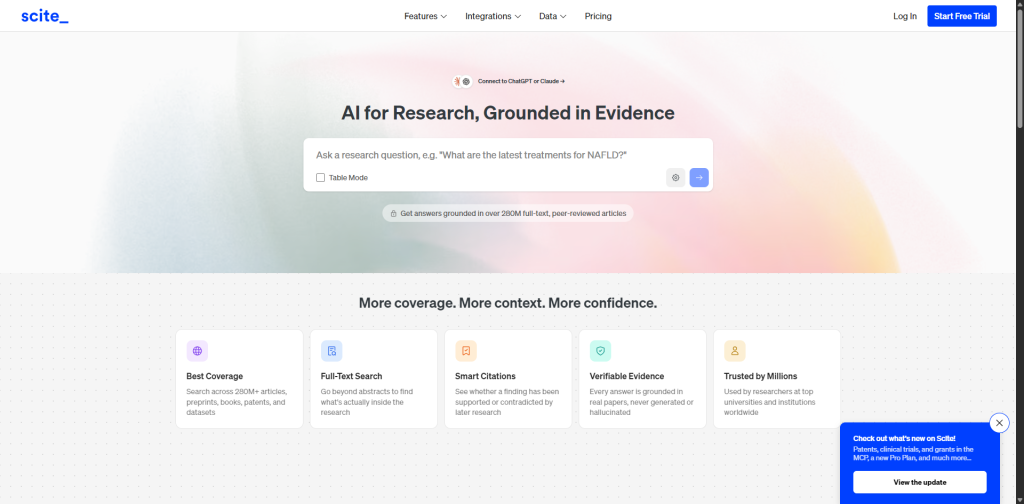
Scite specializes in citation intelligence.
Instead of simply counting citations, Scite analyzes how later papers interact with earlier research.
Key Features
- Citation sentiment analysis
- Supporting vs contrasting citations
- Research validation
- Smart citation tracking
Best Use Cases
- Fact-checking
- Evaluating scientific claims
- Literature credibility assessment
- Citation quality analysis
Scite helps researchers determine whether a claim has been:
- Supported
- Contradicted
- Mentioned neutrally
by later studies.
This makes it one of the most valuable AI Tools for Academic Research focused on evidence reliability.
Best Combination Strategy for Researchers
Experts increasingly recommend combining several AI Tools for Academic Research instead of relying on a single platform.
Example Workflow
| Research Stage | Recommended Tool |
|---|---|
| Discovering papers | Semantic Scholar |
| Mapping literature | Research Rabbit |
| Reviewing studies | Elicit |
| Organizing sources | NotebookLM |
| Statistical analysis | Julius AI |
| Draft writing | Jenni AI |
| Citation validation | Scite |
This layered approach creates stronger research quality and reduces errors.
Benefits of AI Tools for Academic Research
Faster Literature Reviews
Researchers can process hundreds of studies more efficiently.
Better Organization
AI helps structure notes, themes and references.
Improved Research Discovery
Citation mapping tools reveal hidden connections between studies.
Easier Data Analysis
Natural-language analytics reduce technical barriers.
Writing Support
Academic drafting becomes faster and more structured.
Limitations of AI Research Tools
Despite their advantages, AI Tools for Academic Research still have important limitations.
Hallucinations
Some AI systems may generate incorrect or fabricated information.
Citation Errors
Not all tools reliably verify references.
Over-Reliance Risk
Researchers must still critically evaluate sources independently.
Ethical Concerns
Universities increasingly monitor AI-assisted academic writing practices.
Human verification remains essential.
Ethical Use of AI in Academic Research
Researchers should use AI responsibly.
Recommended practices include:
- Verifying all citations
- Reading original studies
- Avoiding plagiarism
- Disclosing AI assistance where required
- Using AI for support, not replacement
Academic integrity policies continue evolving globally.
Future of AI Tools for Academic Research
The future of AI Tools for Academic Research will likely involve:
- Real-time literature synthesis
- AI-generated research assistants
- Automated meta-analysis
- Advanced citation reasoning
- Multimodal research analysis
- Personalized research copilots
AI is expected to become increasingly integrated into universities, laboratories and scientific publishing systems.
Why AI Tools for Academic Research Matter
AI Tools for Academic Research matter because modern academic publishing has become too large for purely manual workflows.
Researchers now need intelligent systems capable of:
- Filtering information
- Organizing evidence
- Accelerating analysis
- Improving productivity
These tools help scientists and students spend less time on repetitive tasks and more time on interpretation, creativity and critical thinking.
📦 How These AI Tools Support the Writing Process
| Writing Stage | Recommended Tools | What They Help With |
|---|---|---|
| Topic brainstorming | ChatGPT, Jasper | Generate ideas, titles, and research angles |
| Literature review | Elicit, Research Rabbit | Summarize sources and compare viewpoints |
| Structuring & outlining | ChatGPT, Notion AI | Create organized writing plans |
| Drafting & revising | GrammarlyGO, QuillBot | Rewrite, polish, and refine writing |
| Referencing & citation | Zotero, Semantic Scholar | Manage sources and format citations |
✅ How to Use AI Tools for Research and Thesis Writing (Step-by-Step)
Step 1: Define Your Research Question
Use ChatGPT to brainstorm research questions or refine a broad topic.
Read Also: Adobe Firefly AI Tools for Creators
Step 2: Conduct a Smart Literature Review
Use Elicit to find summaries of relevant studies and download PDFs. Use Research Rabbit to visualize related work.
Step 3: Organize and Annotate Sources
Store papers in Zotero, add notes, and tag key points. Use Notion AI to summarize them for quick reference.
Step 4: Create an Outline with AI Assistance
Prompt ChatGPT:
“Make a 5-chapter thesis outline on the economic impact of AI in education.”
Step 5: Draft, Review, and Revise
- Use GrammarlyGO to polish your text
- Use QuillBot to paraphrase complex sections
- Let ChatGPT help transition between sections or simplify paragraphs
Step 6: Format and Cite Your Work Automatically
Use Zotero to insert and format references directly into your document in your required citation style.
💡 Pro Tips for Academic Writing with AI
- Combine tools: use ChatGPT + Elicit + Zotero for full-cycle support
- Always fact-check and critically assess AI-generated content
- Use AI for structure and style—but keep the ideas and arguments original
- Back up your work in multiple formats for version tracking
- Review institutional rules on AI usage for academic integrity
🔍 Best Use Cases for AI in Academia
| Academic Level | Ideal Tools | Why They Work |
|---|---|---|
| Undergraduates | ChatGPT, GrammarlyGO, Zotero | Simple guidance and writing structure |
| Master’s students | Elicit, QuillBot, Research Rabbit | Deep research and review tools |
| PhD candidates | Semantic Scholar, Notion AI, Zotero | Citation tracking and academic planning |
| Educators & Researchers | ChatGPT, Jasper, Elicit | Writing support, proposals, and summaries |
🎯 Final Thoughts on AI Tools for Research and Thesis Writing
Writing a thesis or research paper doesn’t have to be a solo, stressful journey. With the right AI tools for research and thesis writing, you can streamline your workflow, stay organized, and produce high-quality academic work—faster and smarter.
AI Tools for Academic Research are transforming modern scholarship by dramatically improving literature discovery, writing efficiency, citation analysis and data interpretation.
Platforms such as Elicit, Research Rabbit, Semantic Scholar, NotebookLM, Julius AI, Jenni AI and Scite are becoming essential components of modern academic workflows.
Used responsibly, these tools can significantly improve research quality, speed and organization while helping scholars navigate the rapidly expanding world of academic information.
Let AI handle the grunt work. You focus on the big ideas.
Read Also: Copilot+ AI Tools That Boost Productivity Right Now