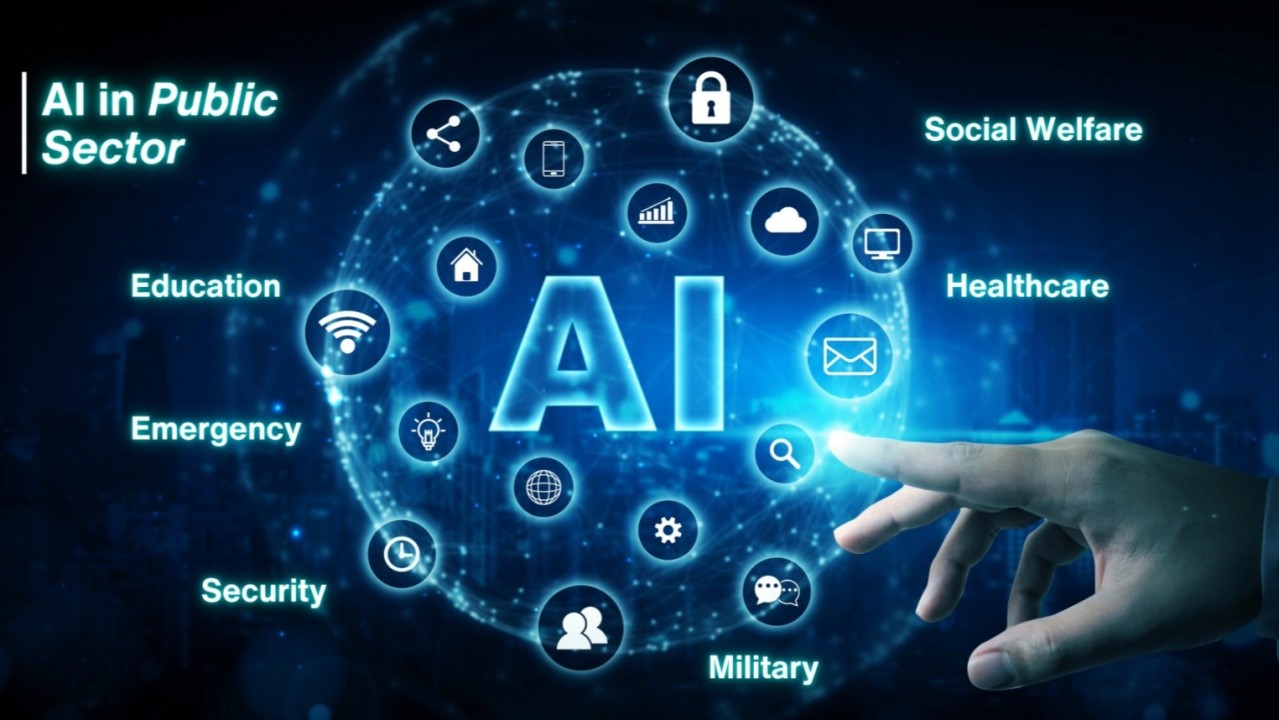
In 2025, AI for public sector is no longer optional—it is essential to effective governance. Governments worldwide are adopting intelligent systems to enhance public services, optimize infrastructure, improve policy making, and bolster civic engagement. Below is a comprehensive look at how AI is reshaping the public sector landscape.
🏢 1. Citizen Services & Service Delivery
- Chatbots & Virtual Assistants: Governments deploy AI agents to help citizens with license renewals, benefits applications, and tax queries, offering 24/7 support and reducing wait times.
- Multilingual Access: AI translation capabilities ensure services are available in multiple languages, increasing inclusivity and access.
- Automated Form Processing: AI systems extract data from citizen-submitted documents, verify information, and route cases to the appropriate teams.
🌍 2. Smart Cities & Urban Management
- Traffic & Mobility Optimization: AI analyzes real-time data from sensors and cameras to manage traffic flow, reduce congestion, and coordinate public transit.
- Waste Management Automation: Machine learning schedules collection routes based on fill-level analytics, improving efficiency and reducing costs.
- Public Safety Monitoring: AI-powered cameras detect unusual public behavior, and alert authorities to potential threats or emergencies.
📈 3. Policy Design & Public Planning
- Predictive Analytics for Planning: AI models forecast population growth, infrastructure needs, and environmental impact, guiding urban planners.
- Budget Optimization: Intelligent systems analyze historical spending and outcomes to help allocate public funds more efficiently.
- Impact Simulations: Policy scenarios are tested using simulations that evaluate costs, benefits, and unintended consequences.
🛡️ 4. Security & Emergency Response
- Crisis Prediction & Management: AI detects early signs of public health threats, natural disasters, or civil unrest, enabling earlier intervention.
- Resource Allocation Optimization: In emergencies, AI helps allocate first responders, medical teams, and supplies dynamically.
- Border & Port Security: AI-driven surveillance monitors ports and border points, flagging unauthorized entries or high-risk cargo.
📊 5. Regulatory Compliance & Public Records
- Automated Document Audits: Intelligent systems scan records, contracts, and policies to flag compliance issues, outdated regulation references, or financial anomalies.
- Transparency Tools: Generative dashboards present government performance data in easy-to-understand formats for citizens.
- Fraud Detection: Machine learning identifies patterns indicative of fraud in grants, benefits programs, or procurement.
🏥 6. Public Health & Social Services
- Epidemic Surveillance: AI aggregates and analyzes health data to detect outbreaks early and track disease spread.
- Social Benefits Monitoring: Predictive models ensure vulnerable populations receive targeted support, reducing waste.
- Mental Health Support: Chat-based AI services offer initial mental health triage and route cases to professionals.
🌾 7. Environmental & Infrastructure Management
- Climate Risk Monitoring: AI forecast floods, droughts, and extreme weather by analyzing satellite and sensor data.
- Resource Optimization: Intelligent systems manage water usage, energy distribution, and public housing logistics.
- Maintenance Predictive Tools: AI predicts failures in roads, bridges, and public utilities before damage escalates.
📈 Public Sector AI Impact & ROI
| Application Area | Key Benefits |
|---|---|
| Citizen Services | Faster service delivery; higher user satisfaction |
| Smart Cities | Reduced congestion; cleaner, safer urban life |
| Policy Planning | Data-driven budgeting; improved civic outcomes |
| Emergency Response | Faster crisis response; better resource use |
| Public Health | Lower outbreak risk; optimized social spending |
| Infrastructure Management | Cost savings through preventive maintenance |
🔍 What to Watch in 2025 and Beyond
- Federated Government AI Models: Shared models across departments without exposing citizen data.
- Ethical Standards & Auditing: Stronger frameworks ensure transparency, accountability, and bias mitigation in public-use AI.
- Citizen-Informed Systems: Co-designed AI platforms where community input shapes service features.
- Regional Infrastructure Builds: Sovereign data centers enabling full control over government AI workloads.
Conclusion
By 2025, AI for public sector has matured from experimental pilots to mission-critical systems—transforming governance, boosting civic trust, and delivering more equitable public services. Governments that adopt AI thoughtfully will be best positioned to meet the challenges of the modern age.