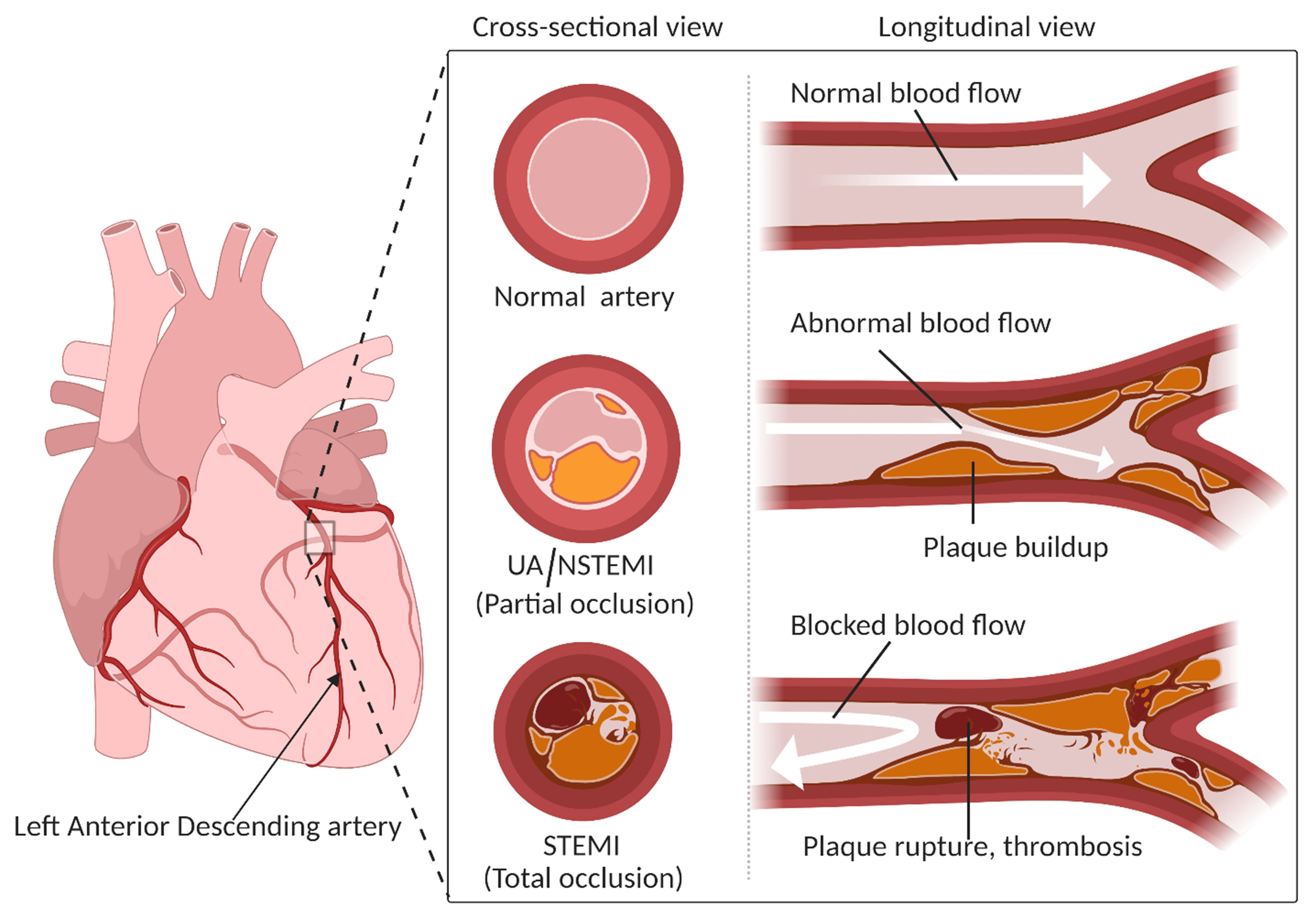
Acute coronary syndrome (ACS) refers to a range of conditions that involve sudden, reduced blood flow to the heart. It is a medical emergency that requires immediate attention. ACS encompasses two major conditions: heart attack (myocardial infarction) and unstable angina.
- Heart attack: Occurs when blood flow is severely restricted or blocked, causing heart tissue damage or death.
- Unstable angina: Involves reduced blood flow to the heart without cell death, increasing the risk of a heart attack.
Prompt diagnosis and treatment are critical to restoring blood flow, preventing complications, and reducing the risk of future events.
Symptoms of Acute Coronary Syndrome
The symptoms of ACS can vary, but they typically occur suddenly and require immediate medical attention.
Common Symptoms:
- Chest Pain or Discomfort (Angina):
- Often described as aching, pressure, tightness, or burning in the chest.
- Radiating Pain:
- Pain that begins in the chest and spreads to the shoulders, arms, upper abdomen, back, neck, or jaw.
- Additional Symptoms:
- Nausea or Vomiting: Feeling sick or actually throwing up.
- Indigestion: A burning sensation that may mimic heartburn.
- Shortness of Breath (Dyspnea): Difficulty breathing.
- Sudden Sweating: Heavy, cold sweating.
- Rapid Heartbeat: A racing or irregular heartbeat.
- Dizziness or Fainting: Feeling lightheaded or passing out.
- Fatigue: Unusual and unexplained tiredness.
Symptoms in Special Populations:
- Women, older adults, and people with diabetes may experience ACS without the classic symptom of chest pain. Symptoms like nausea, fatigue, or shortness of breath may dominate.
When to Seek Help:
Chest pain or discomfort can signal a life-threatening condition. Seek emergency medical care immediately. Do not attempt to drive yourself to the hospital—call for emergency services.
Causes of Acute Coronary Syndrome
ACS typically results from a blockage in the coronary arteries, which supply blood and oxygen to the heart.
How Blockages Form:
- Plaque Buildup: Fatty deposits (plaques) accumulate on the walls of coronary arteries over time.
- Plaque Rupture: The plaque can rupture or split, triggering the formation of a blood clot.
- Blood Flow Blockage: The clot obstructs blood flow, reducing oxygen supply to the heart muscle.
Effects on the Heart:
- Heart Attack: Occurs when heart cells die due to lack of oxygen. This leads to permanent damage to the heart muscle.
- Unstable Angina: Involves reduced blood flow without cell death, but it may progress to a heart attack if untreated.
Risk Factors for Acute Coronary Syndrome
The risk factors for ACS overlap with those for other heart diseases.
Major Risk Factors:
- Age: Risk increases as you get older.
- High Blood Pressure: Damages arteries over time, promoting plaque buildup.
- High Cholesterol: Leads to fatty deposits in blood vessels.
- Smoking: Damages blood vessels and increases clotting risk.
- Physical Inactivity: Contributes to obesity and other heart risk factors.
- Unhealthy Diet: Diets high in saturated fats, trans fats, and sugars increase risk.
- Obesity or Overweight: Strains the heart and promotes high blood pressure, cholesterol, and diabetes.
- Diabetes: Raises blood sugar levels, damaging blood vessels.
- Family History: A history of chest pain, heart attacks, or stroke in close relatives increases risk.
- Hormonal Factors:
- High blood pressure, preeclampsia, or diabetes during pregnancy.
- Early menopause.
Emerging Risk Factors:
- COVID-19 Infection: Associated with inflammation and increased clotting risk, which may elevate ACS risk.
Diagnosis of Acute Coronary Syndrome
Prompt diagnosis is essential for effective treatment. A healthcare provider will typically use the following methods to evaluate ACS:
Tests and Procedures:
- Electrocardiogram (ECG):
- Measures the heart’s electrical activity to detect abnormalities.
- Helps distinguish between unstable angina and heart attack.
- Blood Tests:
- Troponin Levels: Elevated levels of this protein indicate heart muscle damage.
- Imaging Studies:
- Chest X-ray: Rules out other causes of chest pain.
- Echocardiogram: Uses sound waves to assess heart function.
- Coronary Angiography: Identifies blockages in coronary arteries using dye and X-rays.
Treatment of Acute Coronary Syndrome
The primary goals of ACS treatment are to restore blood flow, relieve symptoms, prevent further damage, and reduce future risk.
Immediate Treatment:
- Medications:
- Nitroglycerin: Improves blood flow by relaxing blood vessels.
- Aspirin: Prevents blood clots by reducing platelet aggregation.
- Anticoagulants (Blood Thinners): Reduce clot formation.
- Supplemental Oxygen: For severe cases of oxygen deprivation.
- Emergency Procedures:
- Percutaneous Coronary Intervention (PCI): A minimally invasive procedure to open blocked arteries using a balloon or stent.
- Coronary Artery Bypass Grafting (CABG): Surgery to reroute blood flow around blocked arteries.
Ongoing Treatment and Prevention:
- Medications:
- Beta-Blockers: Slow the heart rate and reduce blood pressure.
- ACE Inhibitors: Lower blood pressure and improve heart function.
- Statins: Lower cholesterol levels to prevent further plaque buildup.
- Lifestyle Changes:
- Quit Smoking: Smoking cessation significantly lowers ACS risk.
- Adopt a Healthy Diet: Focus on whole grains, lean proteins, fruits, and vegetables.
- Exercise Regularly: Aim for at least 150 minutes of moderate aerobic activity weekly.
- Manage Stress: Techniques like meditation and yoga can help.
- Regular Monitoring:
- Follow-up care is essential to track progress and adjust treatments.
Complications of Acute Coronary Syndrome
Without prompt treatment, ACS can lead to severe complications, including:
- Heart Failure: Weakened heart muscles may not pump effectively.
- Arrhythmias: Irregular heart rhythms can develop.
- Cardiogenic Shock: The heart fails to supply enough blood to the body.
- Sudden Cardiac Arrest: A potentially fatal condition where the heart stops beating.
Prevention of Acute Coronary Syndrome
Steps to Lower Risk:
- Control Blood Pressure and Cholesterol:
- Regular checkups and medications as prescribed.
- Adopt a Heart-Healthy Lifestyle:
- Balanced diet, regular exercise, and weight management.
- Avoid Tobacco Use:
- Seek support if needed to quit smoking.
- Manage Chronic Conditions:
- Diabetes, high blood pressure, and other conditions should be well-controlled.
- Limit Alcohol Intake:
- Drink in moderation or not at all.
Conclusion
Acute coronary syndrome is a life-threatening condition requiring immediate medical attention. Early recognition and treatment can significantly improve outcomes, reducing the risk of complications and future heart problems.
Adopting a heart-healthy lifestyle and managing risk factors like high blood pressure, cholesterol, and smoking can help prevent ACS. If you experience symptoms such as chest pain, shortness of breath, or dizziness, seek emergency care immediately.
Disclaimer: This article is for informational purposes only and is not a substitute for professional medical advice. Always consult your healthcare provider for personalized care.