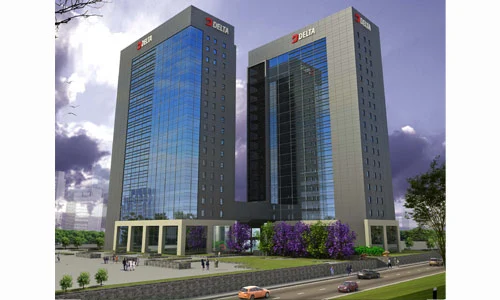
Westlands buildings have become a defining feature of Nairobi’s modern skyline. Over the last two decades, the area has transformed from a low-rise commercial district into one of Kenya’s most vertical and valuable real estate zones. Offices, hotels, apartments, and mixed-use developments now dominate the landscape along Waiyaki Way, Chiromo Road, Woodvale Grove, and surrounding streets.
This growth reflects Westlands’ strategic position close to Nairobi’s Central Business District while offering larger plots and flexible zoning. As multinational firms, regional headquarters, and high-end residential developments continue to cluster here, vertical construction has become the preferred solution to rising land demand.
This article presents a researched and structured overview of the Westlands buildings, focusing on the tallest towers and other major landmarks. Where official heights in metres are publicly available, they are stated. Where height figures are not formally published, the article relies on widely reported floor counts to give context.
Tallest Buildings in Westlands by Height
| Rank | Building Name | Primary Use | Floors | Height |
|---|---|---|---|---|
| 1 | Global Trade Centre Office Tower | Office | 42–43 | 184 m |
| 2 | Global Trade Centre Hotel Tower | Hotel | 35 | 143 m |
| 3 | Le’Mac Tower | Mixed-use Residential | 32 | 126 m |
| 4 | Sanlam Tower Westlands | Office | 19–20 | 88–89 m |
| 5 | Skynest Apartments | Residential | 18 | 71.6 m |
| 6 | Delta Corner Tower A | Office | 21 | 61 m |
| 7 | Delta Corner Tower B | Office | 21 | 61 m |
| 8 | One Africa Place | Office | 21 | 61 m |
These towers form the vertical core of Westlands. The Global Trade Centre complex stands out as the tallest development in the area, combining offices, hotel accommodation, residences, and retail within a single master-planned site.
Other Major High-Rise and Landmark Buildings in Westlands
Beyond the tallest towers, Westlands hosts many significant buildings that define its commercial and social life, even when their heights are not formally published.
Mövenpick Hotel and Residences is one of the most prominent hospitality developments in the area, rising more than 20 floors and combining hotel rooms with serviced residences. Oak West Residency is another high-rise residential development frequently cited as exceeding 25 floors, reflecting the growing demand for vertical living.
Office developments such as The Address, The Piano, and The Oval contribute to Westlands’ reputation as Nairobi’s leading Grade A office location. These buildings typically range between 15 and 16 floors and attract multinational firms, professional services, and technology companies.
Retail and mixed-use landmarks also play a major role. Sarit Centre and Westgate Shopping Mall remain central to Westlands’ identity, anchoring retail, entertainment, and office activity even though they are lower-rise structures compared to the newer towers.
Why Westlands Continues to Build Upward
Several factors explain the rapid rise of Westlands buildings. Land scarcity has pushed developers to maximize vertical space. Proximity to diplomatic missions, affluent residential neighborhoods, and major transport corridors has sustained demand for premium office and residential space.
Westlands also benefits from a live-work-play model. Offices sit next to malls, hotels, and apartments, reducing commute times and increasing the area’s attractiveness to both investors and tenants. This has encouraged more mixed-use developments rather than single-purpose buildings.
Gaps in Published Building Height Data
One challenge in documenting all Westlands buildings is the lack of a single public registry that lists official heights for every structure. While major towers often publish precise height figures, many mid-rise and even high-rise developments only disclose the number of floors.
For this reason, any comprehensive list of Westlands buildings must clearly distinguish between verified heights and buildings known primarily by storey count. Despite this limitation, the overall pattern is clear: Westlands has the densest cluster of tall buildings in Kenya outside Nairobi’s Upper Hill district.
What the Westlands Skyline Represents
The vertical growth of Westlands signals Nairobi’s evolution into a regional business and lifestyle hub. Tall office towers reflect confidence in Kenya’s services sector, while high-rise apartments point to changing urban living patterns.
As infrastructure, transport, and planning policies evolve, Westlands is likely to remain one of the most important zones for high-rise development in the country. New projects will continue to reshape the skyline, adding height, density, and architectural diversity to one of Nairobi’s most dynamic districts.