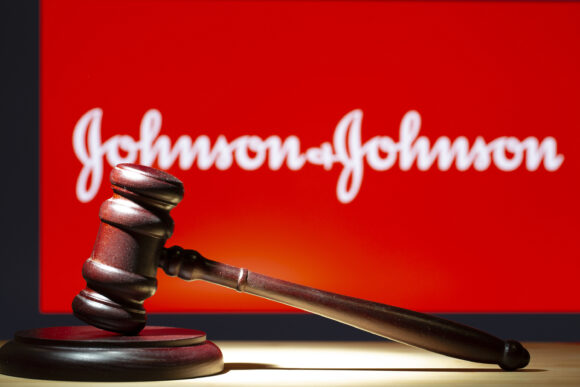
Johnson & Johnson has vowed to appeal after a Baltimore jury ordered the company to pay more than $1.5 billion in damages to a woman who said long-term use of its talc-based baby powder caused her cancer. The verdict marks one of the largest single-plaintiff awards ever issued against the healthcare giant in talc litigation.
Jurors in the Circuit Court for Baltimore City found Johnson & Johnson, two of its subsidiaries, and spinoff Kenvue liable for failing to warn consumers that talc products allegedly contained asbestos.
Details of the $1.5 Billion Jury Award
The jury awarded damages to Cherie Craft, who was diagnosed with peritoneal mesothelioma in January 2024. Court records show the verdict includes approximately $59.84 million in compensatory damages and $1.5 billion in punitive damages.
Of the punitive award, $1 billion was assessed against Johnson & Johnson, while $500 million was assigned to Pecos River Talc, a J&J subsidiary involved in talc sourcing.
Plaintiff attorneys described the ruling as the largest jury award ever issued against Johnson & Johnson in a single talc cancer case.
Understanding Peritoneal Mesothelioma
Peritoneal mesothelioma is a rare and aggressive cancer that develops in the lining of the abdomen and abdominal organs. Medical research has long linked the disease to asbestos exposure.
Although there is no known cure, patients may undergo surgery, chemotherapy, or palliative treatment to manage symptoms and improve quality of life. Asbestos exposure remains the primary risk factor identified in most cases.
Plaintiff’s Legal Team Accuses J&J of Ignoring Risks
According to Craft’s legal team, the cancer diagnosis followed decades of daily use of Johnson’s Baby Powder. Her attorneys argued that the company knew about potential asbestos contamination risks but failed to provide adequate warnings.
The law firm representing Craft emphasized her personal background, noting that she runs a nonprofit organization and dedicated her life to helping others. They described her illness as preventable and accused Johnson & Johnson of refusing to accept responsibility throughout the trial.
Johnson & Johnson Calls Verdict “Unconstitutional”
Johnson & Johnson sharply criticized the jury’s decision and confirmed it will appeal. The company labeled the ruling “egregious” and “patently unconstitutional,” arguing that trial court errors led to an unjust outcome.
Erik Haas, the company’s worldwide vice president of litigation, said the verdict contradicts the majority of talc cases in which Johnson & Johnson has prevailed. He maintained that the company’s talc products are safe and asbestos-free, citing decades of scientific studies.
Ongoing Talc Litigation Facing J&J
Johnson & Johnson continues to face legal claims from more than 67,000 plaintiffs who allege cancer diagnoses linked to talc-based baby powder and related products. The company has consistently denied those claims.
In recent years, J&J has attempted to resolve the litigation through proposed bankruptcy settlements that would channel billions of dollars to claimants. Courts have repeatedly rejected those efforts, forcing the company to continue defending cases individually.
Earlier this month, a California jury awarded $40 million to two women who claimed Johnson’s Baby Powder caused their ovarian cancer, adding to mounting legal pressure.
Shift Away From Talc-Based Baby Powder
Johnson & Johnson stopped selling talc-based baby powder in the United States in 2020. The company expanded that move globally in 2023, replacing talc with cornstarch-based formulations.
Despite those changes, legacy claims continue to move through US courts. While some large verdicts have been reduced or overturned on appeal, the Maryland decision reinforces the financial and reputational risks tied to the long-running litigation.
What the Verdict Means Going Forward
The $1.5 billion award adds to a growing list of high-profile talc verdicts against Johnson & Johnson. Legal analysts expect the appeal process to take years, with outcomes that could influence how future talc cases are tried and valued.
As appeals proceed, the ruling underscores the ongoing uncertainty facing the company as it balances shareholder interests, consumer trust, and one of the most complex product-liability battles in US legal history.