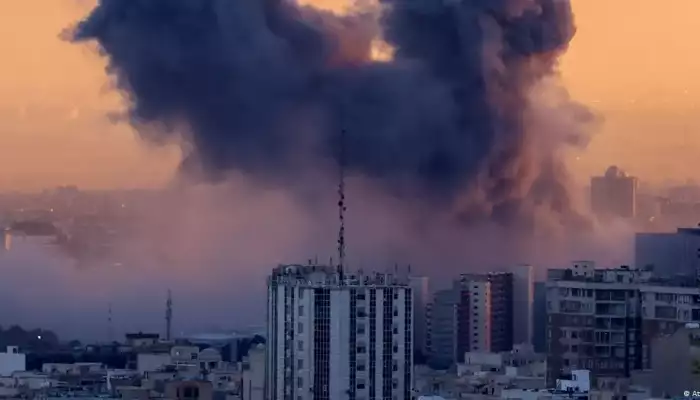
US Evacuation Oman measures were announced after the State Department ordered all nonemergency government employees and family members of US personnel to leave the country, citing unspecified “safety risks.”
The directive comes as tensions across the Middle East intensify, prompting Washington to reassess the security posture of its diplomatic missions in the region.
US Evacuation Oman Directive Issued
In a brief statement, the State Department said the decision was made out of an abundance of caution. While officials did not detail specific threats, the move reflects heightened concern over regional instability.
The order applies to nonessential staff and dependents, while core diplomatic and security personnel are expected to remain in place.
Such directives typically indicate elevated risk assessments rather than confirmed imminent attacks.
Oman’s Strategic Importance
Oman occupies a key position along the Strait of Hormuz, one of the world’s most critical maritime chokepoints. The country has historically maintained a neutral stance in regional conflicts and often serves as a diplomatic intermediary.
Despite its reputation for stability, Oman’s proximity to ongoing hostilities has increased its strategic exposure.
US military assets operate across the Gulf region, and diplomatic facilities remain on heightened alert.
Broader Regional Security Concerns
The US Evacuation Oman order follows a series of missile and drone incidents across multiple Middle Eastern countries.
Washington has recently adjusted travel advisories and security measures in several Gulf states as conflict between Iran and Israel escalates.
Analysts note that partial evacuations are common precautionary steps during periods of uncertainty.
Diplomatic and Operational Impact
The departure of nonemergency staff may temporarily reduce embassy services, including visa processing and routine consular assistance.
However, core diplomatic operations are expected to continue.
Historically, such measures are reversible if the security environment improves.
Why This Matters
US Evacuation Oman underscores how regional conflict can ripple beyond immediate battle zones.
Even countries not directly involved in hostilities may face heightened risk due to geographic proximity and strategic alignment.
The move also signals Washington’s willingness to prioritize personnel safety amid fluid security conditions.
What Happens Next
The State Department is likely to reassess the situation regularly. If tensions ease, evacuated personnel could be permitted to return.
For now, the advisory reflects caution rather than escalation.