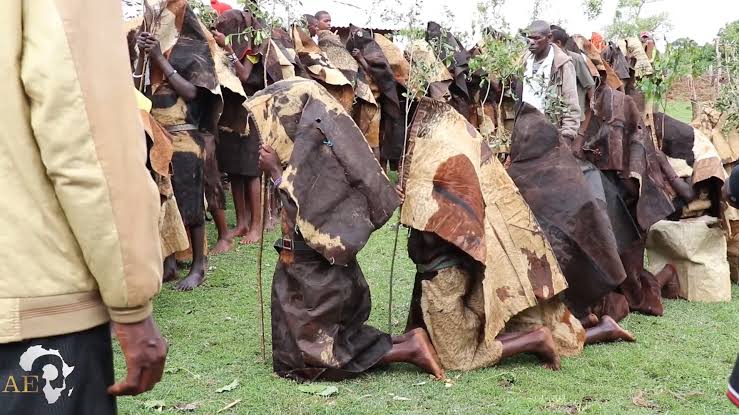
Kalenjin taboos offer a powerful window into one of Kenya’s most culturally rooted communities.
The Kalenjin are a cluster of related peoples mainly found in Kenya’s Rift Valley and western highlands. They include communities such as the Nandi, Kipsigis, Keiyo, Marakwet, Tugen, Pokot, Sabaot and Terik. Although these groups share related languages and cultural links, their customs are not always identical. A taboo observed strictly in one subgroup may be interpreted differently in another.
Traditionally, taboos were used to guide behaviour, protect families, preserve respect for elders, regulate marriage, mark life transitions and maintain spiritual order. They were not random rules. They helped communities teach discipline, define social boundaries and prevent actions believed to bring shame, misfortune or spiritual imbalance.
Modern education, religion, urban life and legal systems have changed how many people observe these traditions. Some taboos are now symbolic, while others remain influential in rural homes, initiation ceremonies, family negotiations and marriage customs.
This article explains the top 20 Kalenjin taboos, their cultural meaning and how they continue to shape identity across generations.
Important Note on Kalenjin Taboos
Kalenjin customs vary across subgroups, clans, families and locations.
A practice known among the Nandi may differ among the Kipsigis, Marakwet, Keiyo, Tugen, Pokot, Sabaot or Terik. Some taboos are widely remembered, while others survive mainly through elders, oral history and local ceremonies.
This guide explains traditional beliefs for cultural education. It should not be read as legal, medical or universal instruction for all Kalenjin people today.
Quick Summary of Top Kalenjin Taboos
| No. | Taboo | Traditional Meaning |
|---|---|---|
| 1 | Initiates avoiding the kitchen | Marks separation from childhood and domestic dependence |
| 2 | Women avoiding beekeeping | Protects a traditionally male-controlled activity |
| 3 | Pregnancy food restrictions | Protects mother and unborn child in traditional belief |
| 4 | Same-clan marriage forbidden | Prevents incest and protects lineage |
| 5 | Cutting the Seetyo tree forbidden | Protects sacred age-set and ritual order |
| 6 | Women barred from Menjo | Protects sacred initiation space |
| 7 | Spousal violence taboo | Protects household honour and social order |
| 8 | Initiates’ leftovers restricted | Preserves sacred initiation symbolism |
| 9 | Girls avoiding cow testicles | Protects gender symbolism in traditional belief |
| 10 | Circumcised men avoiding parents’ bedroom | Marks adulthood and respect |
| 11 | Children insulting parents forbidden | Protects elder authority and family order |
| 12 | Men avoiding new mother’s house | Protects postpartum seclusion |
| 13 | Abstinence after childbirth | Supports recovery and newborn protection |
| 14 | Rope around cow’s neck taboo in some traditions | Protects cattle dignity and sacred value |
| 15 | Avoiding snakes and tortoises | Protects against spiritual danger |
| 16 | Incest forbidden | Protects kinship and moral order |
| 17 | Eating dogs, donkeys or cats forbidden | Defines clean and unclean foods |
| 18 | Son-in-law and mother-in-law avoidance | Preserves respect and family boundaries |
| 19 | Menjo firewood restricted | Protects sacred initiation materials |
| 20 | Joking during funerals taboo | Protects dignity of mourning |
1. Initiates Were Forbidden from Entering the Kitchen
Among many Kalenjin communities, newly initiated boys were traditionally expected to avoid the kitchen for a set period after circumcision and initiation.
This period represented separation from childhood and preparation for adult responsibility. The kitchen was seen as a domestic space strongly associated with mothers, sisters and everyday family dependence. By avoiding it, the initiate symbolically moved away from boyhood and entered a new stage of discipline.
The restriction also reduced casual interaction with women during the seclusion period. Elders used this time to teach initiates about courage, restraint, respect, family duty and community expectations.
Today, the practice may be observed differently depending on family, religion and location, but the symbolic meaning remains important in cultural memory.
2. Women Were Traditionally Prohibited from Beekeeping
In some Kalenjin traditions, women were not allowed to install, climb to, harvest from or maintain beehives.
Beekeeping was often treated as a male activity linked to courage, protection, trees, forests, honey collection and ancestral responsibility. Men were expected to handle the risks associated with bees and to manage honey production for household and ceremonial use.
This taboo reflected older gender roles rather than modern farming realities.
Today, many women participate in beekeeping as an income-generating activity. Modern agricultural training, women’s enterprise groups and climate-smart farming have changed the old restriction in many areas. Still, the taboo remains part of traditional discussions about gendered work in Kalenjin society.
3. Pregnant Women Were Restricted from Certain Foods
Pregnancy food taboos were among the most important Kalenjin beliefs.
Expectant mothers were traditionally advised to avoid certain foods because elders believed these foods could affect the unborn child, the mother’s health or the birth process.
Commonly mentioned restricted foods included:
| Restricted Food | Traditional Belief |
| Meat from strangled animals | Believed to carry danger or bad spiritual effects |
| Animal tongues | Associated with excessive talking in children |
| Some animal organs | Linked to moral or physical concerns |
| Eggs | Considered too strong or heavy in some communities |
| Some leftover foods | Believed to affect pregnancy or delivery |
| Excess oily or heavy foods | Believed to burden the mother or child |
These beliefs were passed down by elders, mothers-in-law, grandmothers and traditional birth attendants.
Modern health advice may differ. Pregnant women should follow guidance from qualified health workers, especially on nutrition, safe food, anaemia prevention and maternal health. Cultural beliefs can be respected while still protecting the health of mother and child through medical care.
4. Marriage Within the Same Clan Was Forbidden
Marriage within the same clan is one of the strongest Kalenjin taboos.
Clan identity, known in many Kalenjin settings as oret, helps families trace lineage and avoid marrying close relatives. During traditional marriage negotiations, families exchange clan names and sometimes totems to confirm that the union is acceptable.
This rule protects kinship boundaries and prevents incest.
It also preserves family honour. If two people from the same clan attempt to marry, elders may reject the union or require serious discussion to establish whether the relationship is culturally allowed.
Even among modern Kalenjin families, clan checks remain important in many marriage negotiations.
5. Cracking or Cutting the Seetyo Tree Was Taboo
The Seetyo or Setyoot tree is remembered in some Kalenjin traditions as a sacred tree connected to age-set transitions, initiation and ritual order.
Cutting, splitting or damaging such a sacred tree without permission was considered a serious violation. The tree was not treated like ordinary firewood or construction material. It carried symbolic meaning connected to the continuity of community ceremonies.
In traditional belief, disturbing the tree could interrupt age-set progression, initiation rites or spiritual harmony.
This taboo shows how nature and ritual were closely connected. Certain trees, hills, stones, rivers and forests were protected because they carried cultural meaning.
6. Women Were Forbidden from Entering the Menjo
Menjo refers to the sacred seclusion site associated with male initiation in some Kalenjin communities.
Traditionally, women and girls were not allowed to enter this space. The Menjo was reserved for initiates, elders and male instructors who guided boys through the transition into adulthood.
The restriction protected secrecy, discipline and ritual order.
Initiation was more than a physical event. It was a period of teaching, identity formation and social training. The Menjo therefore represented a protected cultural classroom.
Today, views on initiation have changed in many families, especially because of health, religion, education and legal protections for children. Still, Menjo remains culturally significant in discussions of Kalenjin rites of passage.
7. Beating a Spouse Was Considered a Grave Social Violation
Traditional Kalenjin society placed strong emphasis on household order and respect.
In older cultural framing, a woman physically attacking her husband was viewed as a major taboo because it was seen as disrupting family authority and public honour. However, it is important to state clearly that violence by any spouse is harmful and unacceptable.
In modern law and ethics, domestic violence is wrong regardless of who commits it.
A culturally sensitive explanation should therefore treat this taboo as part of older social values around marriage discipline, while also recognising today’s principle that marriage should be based on mutual respect, dignity and safety.
8. Women and Girls Were Forbidden from Eating Initiates’ Leftovers
Food served to initiates carried symbolic meaning.
It was not treated as ordinary food. It was associated with strength, discipline, transition and the sacred journey into adulthood. For that reason, women and girls were traditionally restricted from eating food left by male initiates.
This taboo preserved the separation between ordinary household life and initiation life.
It also reinforced the belief that initiation food belonged to a protected ritual process. To eat it casually was seen as disrespecting the sacredness of the ceremony.
Today, this taboo may not be observed in all households, but it remains part of oral memory about initiation discipline.
9. Girls Were Forbidden from Eating Cow Testicles
In traditional Kalenjin symbolism, some animal parts were associated with gender, fertility and social identity.
Cow testicles were considered masculine symbols. Young girls eating them was taboo because elders believed it disrupted gender order or spiritual balance.
This belief reflected a wider cultural system where food was sometimes divided by gender, age and ceremonial meaning.
Modern families may no longer follow such restrictions strictly, especially in urban areas. However, the taboo remains useful for understanding how traditional communities used food to teach social boundaries.
10. Circumcised Men Were Not Allowed into Their Parents’ Bedroom
Once a boy had gone through initiation, he was considered socially transformed.
He was no longer treated as a small child who could move freely into all private family spaces. Entering the parents’ bedroom, especially the mother’s sleeping space, was considered disrespectful.
This taboo taught modesty, adulthood and separation from childhood dependence.
It also protected privacy within the household. A young man was expected to carry himself with dignity and recognise that his parents’ bedroom was a restricted adult space.
In modern homes, the same idea may be expressed simply as respect for personal privacy.
11. Children Were Forbidden from Beating or Insulting Parents
Respect for parents and elders is a foundation of Kalenjin culture.
A child who insulted, cursed, threatened or physically attacked a parent was believed to invite misfortune, curses or social rejection. Such behaviour was seen not only as a family problem but as a violation of community morality.
Parents were viewed as sources of blessing, lineage continuity and moral instruction.
This taboo remains relevant today because respect for parents is still valued strongly. However, it should also be balanced with modern child protection principles, where both children and parents deserve safety, dignity and fair treatment.
12. Men Avoided the House of a New Mother
After childbirth, a mother and newborn were traditionally treated as spiritually and physically sensitive.
In some Kalenjin customs, men were restricted from entering the house of a woman who had recently given birth. The mother and child needed rest, protection and seclusion before returning fully to normal social life.
This taboo recognised childbirth as a powerful transition.
It also allowed women, grandmothers and traditional caregivers to support the mother during recovery. In many African cultures, postpartum seclusion served practical and symbolic purposes: rest, hygiene, protection and bonding.
Today, medical care, hospital delivery and family support have changed the practice, but the importance of postpartum recovery remains.
13. Marital Relations Were Restricted After Childbirth
A period of abstinence after childbirth was traditionally observed in some Kalenjin communities.
The length of this period varied by subgroup, family and local custom. Some traditions mention two months, while others describe longer periods. The main idea was to protect the mother’s recovery and the newborn’s wellbeing.
This taboo also gave the mother time to regain strength.
Modern health workers also recognise the importance of postpartum healing, although medical guidance should come from qualified professionals. Couples today may observe the cultural principle of recovery while following health advice and mutual agreement.
14. Tying a Rope Around a Cow’s Neck Was Taboo in Some Nandi Traditions
Cattle hold deep cultural value among many Kalenjin communities.
They represent wealth, bridewealth, food, social status and family continuity. In some Nandi traditions, tying a rope around a cow’s neck in a careless or disrespectful way was considered taboo.
The belief was that cattle should not be treated like wild or low-status animals. They deserved dignity because they carried economic and ritual value.
This taboo reflects the pastoral roots of Kalenjin identity. Animals were not only property. They were part of household survival, marriage systems and social honour.
15. Touching or Eating Snakes and Tortoises Was Taboo
Snakes and tortoises were traditionally treated with caution.
In many Kalenjin beliefs, such animals carried spiritual meaning and were not considered ordinary food. Children were warned against playing with them, touching them or eating them.
The taboo served both spiritual and practical purposes.
Snakes can be dangerous, so warning children to avoid them helped protect life. Tortoises and other unusual animals were also linked to mystery, omens or ancestral interpretation in some communities.
Whether interpreted spiritually or practically, the rule taught respect for certain creatures and caution in the natural environment.
16. Incest Was Forbidden in All Forms
Incest was one of the most serious taboos in Kalenjin society.
Relations between close relatives, clan relatives or people considered kin were strongly condemned. The taboo protected lineage, family honour and social order.
If such a violation occurred, elders could demand cleansing, separation, penalties or public correction depending on the community and circumstances.
This taboo explains why clan identity matters so much in marriage negotiations. Families must know each other’s lineage before approving a union.
Even today, avoiding close-kin marriage remains important culturally, legally and socially.
17. Eating Meat from Dogs, Donkeys or Cats Was Taboo
Traditional Kalenjin food systems classified some animals as acceptable for food and others as unclean, unsuitable or culturally forbidden.
Dogs, donkeys and cats were not considered proper food animals. Eating them was associated with impurity, shame or bad fortune.
This taboo helped define community food identity.
Cattle, goats, sheep and some wild or domestic animals had recognised roles in food and ritual life. Other animals were excluded because they served different household roles or were considered spiritually inappropriate.
Food taboos like this helped distinguish what was culturally acceptable from what was not.
18. Sons-in-Law and Mothers-in-Law Avoided Direct Familiarity
Among many Kalenjin families, the relationship between a son-in-law and mother-in-law was surrounded by strong respect boundaries.
Direct familiarity, casual joking, inappropriate closeness, direct eye contact in some settings or sharing sleeping space under the same roof could be discouraged. The purpose was to preserve dignity, prevent suspicion and protect family honour.
This is part of a wider African pattern of in-law avoidance customs.
The taboo did not necessarily mean hostility. It meant respect. The son-in-law was expected to show restraint and honour toward his wife’s mother.
Modern families may observe this symbolically rather than strictly, but the idea of respectful distance remains meaningful.
19. Young Girls Were Forbidden from Using Menjo Firewood
Firewood used in constructing or supporting Menjo spaces had ritual value.
It was not ordinary firewood for cooking, warmth or casual household use. In some traditions, young girls were not allowed to touch or use it because it belonged to a sacred male initiation context.
Elder women, where permitted, could handle certain materials according to custom. Younger girls were excluded because they were not part of the ritual responsibility surrounding the Menjo.
This taboo shows how ordinary objects could become sacred when used in ceremony.
A piece of wood was no longer just wood. Its meaning changed because of the ritual process attached to it.
20. Cracking Jokes During Funeral Rites Was Taboo
Funerals were sacred moments of mourning, transition and communal respect.
Laughing loudly, joking carelessly or making light comments during burial rites was traditionally seen as disrespectful to the dead and offensive to the grieving family.
This taboo protected the dignity of mourning.
It reminded people that death required seriousness, restraint and compassion. A funeral was not only a family event. It was a community gathering where people honoured life, comforted the bereaved and recognised the spiritual weight of death.
Even today, many Kalenjin families expect respectful behaviour during funerals, memorials and mourning gatherings.
Why Kalenjin Taboos Still Matter
Kalenjin taboos still matter because they reveal how the community understood discipline, respect and identity.
They governed major areas of life, including:
- Birth
- Childhood
- Initiation
- Marriage
- Food
- Gender roles
- Elders
- Cattle
- Sacred places
- Death
- Clan relations
- Family honour
Even where the literal rule is no longer followed, the moral lesson may survive.
For example, not all modern families observe old food restrictions during pregnancy, but the idea of protecting mothers remains important. Not every household follows strict in-law avoidance, but respect between families is still valued.
Modern Changes in Kalenjin Taboos
Modern life has changed many traditions.
Christianity, formal education, urban migration, intermarriage, medical care, national law, women’s empowerment and digital media have all influenced how Kalenjin people interpret taboos today.
Some taboos are now viewed as cultural heritage rather than rules. Others are still taken seriously in rural communities and during ceremonies.
Younger generations may question some restrictions, especially those linked to gender roles. At the same time, many still value the deeper principles behind the taboos: respect, discipline, family responsibility and moral order.
Culture is not frozen. It changes while carrying memory.
Key Takeaways
- Kalenjin taboos are traditional rules that guided social, moral and spiritual behaviour.
- They vary across Kalenjin subgroups, clans and families.
- Many taboos are linked to initiation, marriage, pregnancy, food, elders and sacred spaces.
- Same-clan marriage is strongly discouraged because it protects lineage and prevents incest.
- Pregnancy food taboos were meant to protect mother and child in traditional belief.
- Menjo was a sacred male initiation space, traditionally restricted from women and girls.
- Cattle carried deep cultural value, which explains several animal-related taboos.
- Funeral respect remains important in many families.
- Some taboos are now symbolic rather than strictly enforced.
- Cultural taboos should be studied respectfully, without assuming all Kalenjin people observe them in the same way today.
Frequently Asked Questions
What are Kalenjin taboos?
Kalenjin taboos are traditional rules or prohibitions that guided behaviour in areas such as family life, marriage, initiation, pregnancy, food, respect for elders and sacred ceremonies.
Are Kalenjin taboos still followed today?
Some are still followed, especially in rural areas and during cultural ceremonies. Others are now symbolic or remembered mainly through elders and oral tradition.
Why is same-clan marriage forbidden among the Kalenjin?
Same-clan marriage is forbidden because members of the same clan are considered related. The rule helps prevent incest and protects lineage identity.
What is Menjo in Kalenjin culture?
Menjo refers to a sacred initiation space associated with male rites of passage in some Kalenjin communities. It was traditionally restricted and protected from casual access.
Why were pregnant women restricted from certain foods?
Pregnancy food restrictions were based on traditional beliefs about protecting the mother and unborn child. Modern mothers should also follow medical advice from qualified health workers.
Why are cattle important in Kalenjin taboos?
Cattle are linked to wealth, food, bridewealth, family status and ritual meaning. Because of this, some customs regulate how cattle are handled and respected.
Are all Kalenjin taboos the same across all subgroups?
No. The Nandi, Kipsigis, Keiyo, Marakwet, Tugen, Pokot, Sabaot, Terik and other related groups may have different versions of similar customs.
Why were initiates separated from women and kitchens?
The separation marked the transition from childhood to adulthood and allowed elders to teach discipline, responsibility and cultural values.
Why were jokes during funerals forbidden?
Funerals were considered sacred periods of mourning. Joking carelessly was seen as disrespectful to the dead and hurtful to the grieving family.
Should Kalenjin taboos be preserved?
They should be documented and understood as cultural heritage. However, harmful interpretations should be reconsidered in light of dignity, health, equality and modern law.
Conclusion
Kalenjin taboos reflect a society that valued discipline, respect, order and spiritual awareness.
They shaped how people married, raised children, treated elders, approached pregnancy, respected sacred spaces and mourned the dead. Some rules may seem strict today, but they carried meaning within the traditional world that created them.
Modern life has changed how many Kalenjin families observe these customs. Education, religion, medicine, law and urban life have softened or transformed several taboos. Still, the deeper lessons remain visible: honour your parents, respect sacred ceremonies, protect mothers and children, avoid incest, behave with dignity and recognise the wisdom of elders.
Understanding Kalenjin taboos is not about freezing culture in the past. It is about appreciating the values that helped communities organise life, protect identity and pass moral knowledge from one generation to the next.