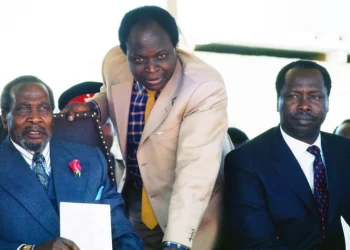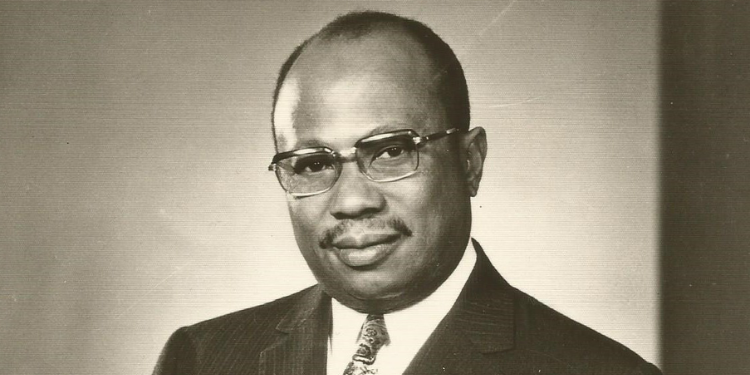
On April 12, 1980, the world witnessed one of the most violent political transitions in Africa when Liberia President William Tolbert was killed inside the Executive Mansion. The assassination marked the end of Americo-Liberian dominance and ushered in an era of military rule under Samuel Kanyon Doe.
The coup was carried out by 17 soldiers from the Armed Forces of Liberia, led by 29-year-old Master Sergeant Samuel Doe. Reports indicate that soldiers stormed the Executive Mansion in Monrovia around 1 a.m. They captured President Tolbert and shot him three times in the head, killing him instantly.
Liberia President Killed During 1980 Coup
Following the coup, Tolbert’s body was buried in a mass grave alongside other victims of the violent takeover. Soon after, Doe arrested 13 members of Tolbert’s Cabinet. Within days, they were publicly executed on a beach in Monrovia, without trial or appeal. This brutal act shocked the continent and the world.
The executions were justified by Doe as a purge of the Americo-Liberian elite, a small group of descendants of freed African-American slaves who had dominated Liberia’s politics, economy, and land ownership for over 133 years.
Why Samuel Doe Seized Power
The coup was fueled by deep resentment among the indigenous Liberians. For decades, they had been excluded from meaningful participation in government, facing systemic inequality under Americo-Liberian leadership.
Tensions had peaked after the 1979 rice riots, when government forces violently cracked down on protestors demonstrating against increased rice prices. The unrest left dozens dead, worsening dissatisfaction with Tolbert’s regime. In retaliation, Tolbert banned the Progressive Alliance of Liberia (PAL), which represented the indigenous majority, further heightening political tensions.
Samuel Doe capitalized on this anger, presenting himself as a leader for the marginalized majority. The coup ended more than a century of Americo-Liberian rule, but it also opened the door to years of authoritarianism and conflict.
Legacy of the 1980 Coup
Although the Liberia President was killed to bring change, Samuel Doe’s leadership soon mirrored the authoritarian style of his predecessor. His government became notorious for ethnic favoritism, corruption, and violent repression.
By 1989, Doe faced a rebellion led by Charles Taylor. In September 1990, Doe was captured and brutally tortured to death by forces loyal to Prince Johnson. The chilling footage of his execution was broadcast globally, showing how violence had come full circle in Liberia’s tragic history.
The death of President William Tolbert remains a defining moment in African history. It marked the fall of an entrenched political order but also set Liberia on a path of instability that culminated in decades of civil war.