
Nyongesa Sande
No Result
View All Result
  • News
    • World
    • Africa
  • Politics
  • Business
  • Tech
  • AI
  • Telecom
  • Sports
  • Opinion
  • Lifestyle
  • Live
Nyongesa Sande
No Result
View All Result
Nyongesa Sande
No Result
View All Result
  • News
  • Politics
  • Business
  • Tech
  • AI
  • Telecom
  • Sports
  • Opinion
  • Lifestyle
  • Live
ADVERTISEMENT

Home » The Nuclear Non Proliferation Treaty (NPT)

The Nuclear Non Proliferation Treaty (NPT)

NyongesaSande News Desk by NyongesaSande News Desk
12 months ago
in Military
Reading Time: 3 mins read
A A
How to Make a Nuclear Bomb

Missile

The Nuclear Non Proliferation Treaty (NPT) is a foundational international agreement aimed at curbing the spread of nuclear weapons, promoting peaceful nuclear energy, and achieving global nuclear disarmament. Signed in 1968 and entering into force in 1970, it is the cornerstone of the global nonproliferation regime. The treaty is based on three core pillars: preventing the spread of nuclear weapons to nonnuclear states, facilitating the peaceful use of nuclear energy, and pursuing nuclear disarmament among existing nuclear powers.

  • Origins of the Nuclear Non Proliferation Treaty
  • Membership and Outliers
  • Evaluating the Treaty’s Success
  • Supplementary Treaties and Agreements
  • Future Prospects

Origins of the Nuclear Non Proliferation Treaty

The devastation caused by atomic bombs in Hiroshima and Nagasaki in 1945 prompted early calls for the elimination of nuclear weapons. Despite these calls, the following two decades saw a growing number of countries—namely the Soviet Union, United Kingdom, France, and China—acquire nuclear capabilities. In response, the United States and Soviet Union spearheaded negotiations for a global nonproliferation framework during the Cold War, leading to the submission of a draft treaty in 1967. By July 1968, 59 countries signed the NPT, and today, the treaty has 191 signatories.

Membership and Outliers

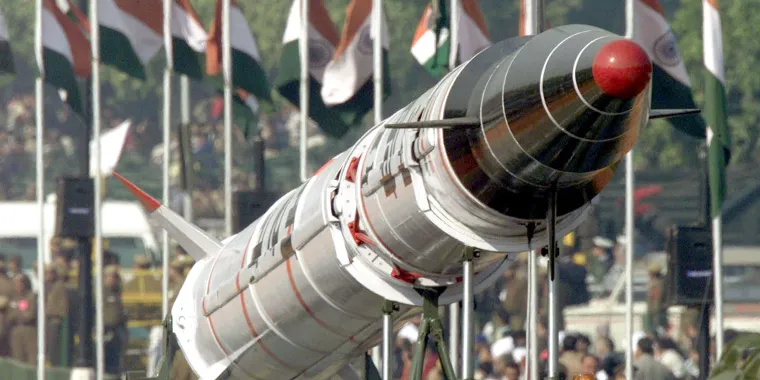
While the NPT enjoys near-universal membership, a few key nations remain outside its framework. India, Pakistan, and Israel never joined, and North Korea, a former signatory, withdrew in 2003. These countries are all believed to possess nuclear weapons, raising concerns about the treaty’s limitations and enforcement capabilities.

ADVERTISEMENT

Evaluating the Treaty’s Success

The NPT has had mixed results:

Nonproliferation: The global stockpile of nuclear weapons has decreased significantly since the Cold War peak, yet the number of nuclear-armed countries has increased. Additionally, the treaty does not adequately address nuclear terrorism or the potential for non-state actors to obtain nuclear material, especially in politically unstable nations like Pakistan.

ADVERTISEMENT

Peaceful Nuclear Energy: One of the NPT’s goals is to support the use of nuclear technology for peaceful purposes. The treaty encourages cooperation between countries in nuclear energy development. However, it lacks strong safeguards to prevent rogue states from misusing civilian nuclear programs for weapons development. To address this, 136 countries have adopted the Additional Protocol, allowing the International Atomic Energy Agency (IAEA) to conduct surprise inspections.

Disarmament: While some states have voluntarily disarmed or returned their nuclear weapons to another country (e.g., South Africa, Ukraine), the five recognized nuclear-weapon states (U.S., U.K., France, Russia, China) maintain extensive arsenals. Non-nuclear states often view this as a failure of the treaty’s disarmament pledge.

Supplementary Treaties and Agreements

Due to perceived inadequacies in the NPT framework, several countries have pursued bilateral and multilateral agreements to reinforce nonproliferation objectives. For example, Australia has signed agreements with 19 nations to ensure uranium exports are only used for peaceful purposes. Moreover, nations have sought security assurances from nuclear-armed allies to deter attacks and bolster defense.

ADVERTISEMENT

Future Prospects

Despite its shortcomings, the NPT remains central to nuclear diplomacy. Every five years, member states convene to review the treaty’s implementation and propose improvements. These regular review conferences help keep the treaty relevant amid evolving geopolitical and technological landscapes.

In summary, while the NPT has succeeded in creating a global norm against nuclear proliferation, its uneven implementation and lack of enforcement mechanisms highlight the need for continuous adaptation and complementary agreements to address modern nuclear threats.

Tags: NPTNuclear Non Proliferation Treaty
Google Add as a Preferred Source on Google
Previous Post

How to Make a Nuclear Bomb

Next Post

Kenya’s 1978 Diplomatic Row With Iran: How Oil Forced Nairobi to Reconcile

NyongesaSande News Desk

NyongesaSande News Desk

Nyongesa Sande offers diverse content across news, technology, entertainment, and more, aiming to provide readers with a wide range of informative and engaging articles. NYONGESA SANDE's dedicated team provides our audience not only with the highly relevant news but also with outstanding interactive experience.

Related Posts

How a Nuclear Bomb Is Made
Military

How a Nuclear Bomb Is Made

by NyongesaSande News Desk
11 months ago
0

How a nuclear bomb is made remains one of the most complex and guarded processes...

Read moreDetails
Xi’an H-20
Military

Xi’an H-20

by NyongesaSande News Desk
11 months ago
0

The Xi’an H-20 is a next-generation subsonic stealth bomber under development by the People’s Liberation...

Read moreDetails
How to Make a Nuclear Bomb
Military

Hypersonic Weapons: Background and Issues for Congress

by NyongesaSande News Desk
11 months ago
0

The United States has actively pursued the development of hypersonic weapons—maneuvering weapons that fly at...

Read moreDetails
Africa’s 20 Strongest Militaries in 2025
Military

Africa’s 20 Strongest Militaries in 2025

by NyongesaSande News Desk
11 months ago
0

As of June 2025, the Global Firepower Index (GFP) ranks Egypt, Algeria, and Nigeria as...

Read moreDetails
What Would U.S. Military Intervention in Iran Look Like?
Military

What Would U.S. Military Intervention in Iran Look Like?

by NyongesaSande News Desk
12 months ago
0

U.S. military intervention in Iran would carry enormous geopolitical, economic, and human consequences. Drawing from...

Read moreDetails
Chyeranovskii BICh-3 – The 1926 Soviet Tailless Flying Wing
Military

Chyeranovskii BICh-3 – The 1926 Soviet Tailless Flying Wing

by NyongesaSande News Desk
12 months ago
0

Chyeranovskii BICh-3 was a Soviet tailless experimental aircraft developed in 1926 by aviation pioneer Boris...

Read moreDetails
Load More
Next Post
Kenya’s 1978 Diplomatic Row With Iran: How Oil Forced Nairobi to Reconcile

Kenya's 1978 Diplomatic Row With Iran: How Oil Forced Nairobi to Reconcile

2026 Nissan Armada NISMO First Look

2026 Nissan Armada NISMO First Look

ADVERTISEMENT

Who We Are

Nyongesa Sande

NyongesaSande.com is a digital news and media platform covering breaking news, business, technology, AI, politics, sports, world affairs and African innovation.

News Sections

  • News
    • World
    • Africa
  • Politics
  • Business
  • Tech
  • AI
  • Telecom
  • Sports
  • Opinion
  • Lifestyle
  • Live

Editorial Standards

  • Editorial Policy
  • Fact Checking Policy
  • Corrections Policy
  • Ethics Policy
  • AI Usage Policy
  • News Tips
  • Submit Press Release

Legal

  • Privacy Policy
  • Terms of Use
  • Cookie Policy
  • Disclaimer
  • Risk Disclaimer
  • DMCA
  • Ad Choices

Our Company

  • About Us
    • Nyosake Designers
      • Nyosake Webmasters
      • Nyosake Investment
  • Contact Us
    • Newsroom Contact
  • Ownership Disclosure
  • Advertise
  • Privacy Policy
  • Terms of Use
  • Cookie Policy
  • Disclaimer
  • Risk Disclaimer
  • DMCA
  • Ad Choices

NyongesaSande.com is an independent digital news and media platform covering Africa, business, technology, AI, politics and global developments.

© 2026 NyongesaSande.com. All rights reserved.

No Result
View All Result
  • News
    • World
    • Africa
  • Politics
  • Business
  • Tech
  • AI
  • Telecom
  • Sports
  • Opinion
  • Lifestyle
  • Live

NyongesaSande.com is an independent digital news and media platform covering Africa, business, technology, AI, politics and global developments.

© 2026 NyongesaSande.com. All rights reserved.